 Call
Call Patient Reports
Best ENT Hospital for Submandibular Salivary Gland Removal
At Medicover Hospitals, the excision of the submandibular salivary gland is performed using the open surgical approach. Our team of ENT specialists, with qualifications like MS and DNB, ensures precise treatment. This approach often results in reduced blood loss, promoting a smoother recovery.
Expert Surgeons
Yearly Surgeries
Patient Satisfaction
What is Excision of Submandibular Salivary Gland?
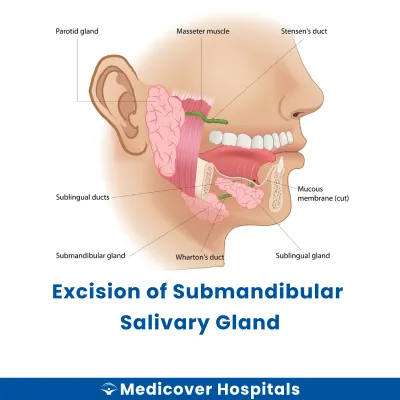
Excision of the submandibular salivary gland is a surgical procedure to remove one of the salivary glands located beneath the lower jaw. The submandibular gland plays a role in producing saliva, which aids in digestion and oral health. This procedure is often performed when there are issues such as chronic infections, stones, or tumors affecting the gland.
This surgery is necessary when conditions like sialolithiasis (salivary gland stones), chronic sialadenitis (inflammation), or neoplasms (tumors) occur. If untreated, these conditions can lead to pain, swelling, and infection. Modern surgical approaches for this procedure include minimally invasive techniques and robotic-assisted surgery, which aim to reduce recovery time and complications. Early intervention can prevent further complications and improve quality of life.
Excision of Submandibular Salivary Gland Doctors Near You
Find experienced ENT specialists for excision of submandibular salivary gland at Medicover Hospitals across India. Choose your city and book a consultation to discuss your treatment options today.
Why Choose Medicover Hospitals for Excision of Submandibular Salivary Gland?
Get a second opinion from trusted experts and makeconfident, informed decisions.
 Get Second Opinion
Complete Guide To Excision Of Submandibular Salivary Gland
Everything you need to know about the procedure, preparation, and recovery
Excision of Submandibular Salivary Gland Surgery Indications
Doctors recommend excision of the submandibular salivary gland when conservative treatments fail to resolve persistent issues. This procedure is often necessary for conditions that cause significant discomfort or risk to the patient's health.
Chronic Sialadenitis
Patients experience recurrent pain and swelling in the submandibular area, often worsening during meals. Doctors find persistent inflammation and infection in the gland. Surgery is considered when antibiotics and other treatments do not provide relief.
Salivary Gland Stones (Sialolithiasis)
Patients report pain and swelling under the jaw, especially during eating. Imaging tests reveal stones blocking the duct. Surgery is advised when stones cannot be removed through less invasive methods.
Salivary Gland Tumours
Patients may notice a lump or swelling in the submandibular region. Imaging and biopsy tests confirm the presence of a tumour. Excision is necessary when the tumour is benign but causes discomfort or if malignancy is suspected.
Recurrent Infections
Frequent infections lead to pain, swelling, and sometimes fever. Examination shows repeated episodes despite antibiotic treatment. Surgery is recommended when infections recur and affect quality of life.
Obstructive Symptoms
Patients have difficulty swallowing or experience a sensation of fullness in the throat. Doctors identify obstruction in the gland through imaging. Surgery is considered when obstruction leads to significant symptoms and conservative measures fail.
How to Prepare for Excision of Submandibular Salivary Gland?
Proper preparation for the excision of the submandibular salivary gland is crucial to ensure a smooth surgical process and recovery. Following the guidelines helps minimise risks and complications.
- Medication Review: Stop NSAIDs, anticoagulants, and herbal supplements at least a week before surgery. Consult your doctor for specific instructions.
- Fasting Requirement: Do not eat or drink anything for 8 hours before the surgery to prepare for general anaesthesia.
- Pre-Surgery Hygiene: Bathe with antibacterial soap the night before and the morning of the surgery to reduce infection risk.
- Clothing Choice: Wear loose, comfortable clothing on the day of the surgery for ease of changing and comfort post-operation.
- Transportation Arrangement: Arrange for someone to drive you home after the procedure, as you will not be able to drive yourself.
- Medication List: Bring a list of all medications you are currently taking, including dosages, to share with the medical team.
- Smoking and Alcohol: Avoid smoking and alcohol for at least 24 hours before the surgery to aid in recovery.
- Pre-Surgery Consultation: Attend all pre-surgery appointments to discuss any concerns and finalise preparations.
Excision of Submandibular Salivary Gland Surgery (Step-by-Step)
Excision of the submandibular salivary gland is performed by experienced specialists from the ENT department. The procedure usually takes 1-2 hours and is carried out under general anaesthesia.
- Preparation: The patient is positioned comfortably on the operating table. General anaesthesia is administered to ensure the patient is asleep and pain-free.
- Incision: A small incision, about 2-3 cm, is made under the jawline. This provides access to the submandibular gland.
- Dissection: Using surgical instruments like a scalpel and bipolar cautery, the surgeon carefully dissects the tissue to expose the gland. Care is taken to avoid nearby nerves and blood vessels.
- Gland Removal: The submandibular gland is gently separated from surrounding tissues. A harmonic scalpel may be used to minimize bleeding and ensure precise removal.
- Closure: Once the gland is removed, the incision is closed with sutures. A drain may be placed to prevent fluid accumulation.
- Recovery: The patient is moved to a recovery room. They are monitored as they wake from anaesthesia. Pain management and post-operative care instructions are provided.
Who Performs Excision of Submandibular Salivary Gland Surgery?
This surgery is performed by an ENT (Ear, Nose, and Throat) specialist, also known as an otolaryngologist. These specialists are trained in managing conditions of the head and neck, including salivary gland disorders.
Recovery After Excision of Submandibular Salivary Gland Surgery
Recovery from submandibular salivary gland surgery involves managing discomfort and gradually returning to normal activities. It's essential to follow your doctor's advice for a smooth recovery.
Day 1-3:
- Expect some swelling and bruising around the surgical site.
- Stick to a soft diet. Include foods like curd, dal-rice, and soups.
- Avoid strenuous activities. Rest is crucial.
Day 4-7:
- Swelling should start to reduce. Mild discomfort may persist.
- Continue with a soft diet. Khichdi and moong dal are good options.
- Begin gentle movements but avoid heavy lifting.
Day 8-14:
- Most swelling and bruising should subside.
- Gradually reintroduce regular foods, but avoid spicy or hard-to-chew items.
- You may resume work or school if you feel comfortable.
Phase 3 (Week 3-4):
- Return to normal diet and activities as tolerated.
- Continue to avoid any activity that causes discomfort.
When to Seek Urgent Help
- Severe pain not relieved by medication.
- Excessive swelling or bleeding.
- Fever or signs of infection like pus or foul smell.
- Difficulty swallowing or breathing.
Benefits of Excision of Submandibular Salivary Gland Surgery
Excision of the submandibular salivary gland can provide relief from various symptoms and improve quality of life.
- Symptom Relief: Alleviates pain and swelling caused by gland disorders.
- Prevention of Infections: Reduces the risk of recurrent infections in the gland.
- Improved Function: Enhances oral function by removing the problematic gland.
- Cosmetic Improvement: Addresses visible swelling or asymmetry in the neck area.
Risks and Complications of Excision of Submandibular Salivary Gland Surgery
While generally safe, this surgery carries some risks and potential complications.
- Common: Swelling and bruising around the surgical site.
- Common: Temporary numbness in the tongue or lower lip.
- Rare: Permanent nerve damage affecting tongue movement.
- Rare: Infection at the incision site.
- Rare: Bleeding or hematoma formation.
- Rare: Scar formation that may be noticeable.
Cost of Excision of Submandibular Salivary Gland Surgery
The cost of excision of the submandibular salivary gland surgery at Medicover Hospitals ranges from Rs. 90,000 to Rs. 2,43,000. The price varies depending on the ward category chosen, such as day care, general, or private rooms. Medicover Hospitals offers transparent pricing and supports insurance and TPA services, including CGHS, ESI, and major TPAs.
Cashless facilities are also available to ease the payment process. Please contact the hospital for the latest insurance panel details as these may change periodically.
Frequently Asked Questions
1. How much does Excision of submandibular salivary gland surgery cost at Medicover Hospitals?
The cost of excision of submandibular salivary gland surgery ranges from Rs. 90,000 to Rs. 2,43000 across Medicover Hospitals.
2. Is Excision of submandibular salivary gland surgery covered under health insurance at Medicover?
Yes, it is often covered by CGHS, ESI, and major TPAs. Please contact the hospital for current panel details.
3. Will I have trouble swallowing after submandibular gland surgery?
Some patients may experience mild swallowing difficulties initially. This usually improves within a few weeks after the surgery.
4. Can I eat spicy food after submandibular gland surgery?
It's advisable to avoid spicy foods like curries and pickles for a few weeks. Soft foods like dal-rice and khichdi are recommended during recovery.
5. Will my saliva production decrease after the surgery?
Saliva production may decrease slightly, but other glands compensate. Most patients do not notice significant changes in saliva production.
6. Can the submandibular gland stone reoccur after removal?
There is a possibility of recurrence, but it is rare. Regular follow-ups and hydration can help prevent stone formation.
7. Is there a risk of nerve damage during the surgery?
There is a small risk of nerve damage affecting tongue movement or sensation. Surgeons take precautions to minimise this risk.
8. Is excision of the submandibular gland a major surgery?
Yes, submandibular gland excision is considered a moderate to major surgery, as it involves removal of a salivary gland in a delicate area near important nerves and blood vessels.
9. What is the most common cause of submandibular gland excision?
The most common reason is salivary gland stones (sialolithiasis) causing recurrent pain and infection. Other causes include chronic infections and tumors.
10. How long is a submandibular gland excision surgery?
The procedure typically takes about 1 to 2 hours, depending on the complexity and underlying condition.
11. What nerves are injured during submandibular gland excision?
Important nerves at risk include the marginal mandibular nerve (affecting lower lip movement), lingual nerve (affecting tongue sensation), and hypoglossal nerve (affecting tongue movement). Care is taken to preserve these nerves during surgery.


