 Call
Call Patient Reports
Excision of Small Growth from Tongue Surgery by Expert Ent
At Medicover Hospitals, the excision of small growths from the tongue is performed using the open surgical approach. Our team of ENT specialists, with qualifications like MS and DNB, ensures precise removal. This approach often results in reduced blood loss and a shorter hospital stay.
Expert Surgeons
Yearly Surgeries
Patient Satisfaction
What is Excision of Small Growth From Tongue?
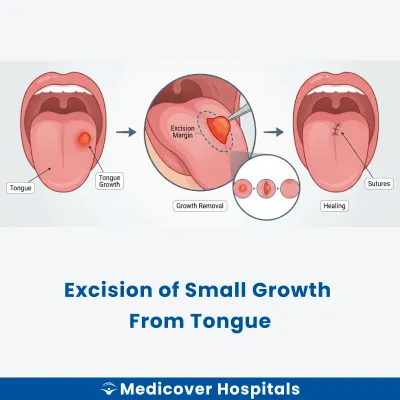
Excision of small growth from the tongue is a surgical procedure to remove abnormal tissue or lesions from the tongue. The tongue is a muscular organ in the mouth, essential for speaking, chewing, and swallowing. The procedure involves cutting out (excising) the growth to prevent further complications. It is typically performed under local or general anaesthesia, depending on the size and location of the growth.
This surgery is needed when there are benign (non-cancerous) or malignant (cancerous) growths on the tongue. Conditions like leukoplakia (white callus disease), fibromas, or papillomas may require excision. If untreated, these growths can interfere with oral functions or become cancerous. Modern surgical approaches include laser excision and electrocautery, which aim to minimise bleeding and promote faster healing.
Excision of Small Growth From Tongue Doctors Near You
Find experienced ENT specialists for excision of small growth from the tongue at Medicover Hospitals across India. Choose your city and book a consultation to address your health needs today.
Why Choose Medicover Hospitals for Excision of Small Growth From Tongue?
Get a second opinion from trusted experts and makeconfident, informed decisions.
 Get Second Opinion
Complete Guide To Excision Of Small Growth From Tongue
Everything you need to know about the procedure, preparation, and recovery
Excision of Small Growth from Tongue Surgery Indications
Doctors may recommend excision of a small growth from the tongue when conservative treatments fail. This procedure helps alleviate symptoms and prevent complications.
Persistent Pain or Discomfort
Patients may experience ongoing pain or discomfort in the tongue. Upon examination, doctors may find a small growth causing irritation. If pain persists despite medication, surgery is considered.
Difficulty in Speaking or Swallowing
Some patients report trouble speaking or swallowing. A growth may obstruct normal tongue movement. If speech therapy or dietary changes do not help, surgical removal is advised.
Bleeding or Ulceration
Bleeding or ulceration of the tongue can occur. Doctors may observe a growth with irregular surface causing these issues. If topical treatments fail, excision becomes necessary.
Suspicion of Malignancy
A growth may appear suspicious during examination or imaging. Biopsy results may indicate potential malignancy. In such cases, removal is crucial to prevent the spread of cancer.
Recurrent Infections
Patients may suffer from frequent infections around the tongue area. A growth might harbour bacteria, leading to repeated infections. If antibiotics do not resolve the issue, surgery is recommended.
How to Prepare for Excision of small growth from tongue?
Proper preparation is crucial for a smooth excision of a small growth from the tongue. It helps in reducing complications and ensures a quicker recovery.
- Medication Review: Stop NSAIDs, anticoagulants, and herbal supplements as advised by your doctor.
- Fasting Instructions: Fast for at least 6 hours before the procedure if general anaesthesia is used.
- Oral Hygiene: Maintain good oral hygiene. Brush and rinse your mouth thoroughly before the procedure.
- Comfortable Clothing: Wear loose, comfortable clothing on the day of the surgery.
- Transportation: Arrange for someone to drive you home after the procedure.
- Medication List: Bring a list of your current medications with dosages to the hospital.
- Pre-Surgery Consultation: Attend any scheduled pre-surgery consultations to discuss the procedure and address concerns.
- Smoking and Alcohol: Avoid smoking and alcohol for at least 24 hours before the surgery.
Excision of small growth from the tongue Surgery (Step-by-Step)
This procedure is performed by experienced specialists from the ENT department. It usually takes 30-60 minutes and is commonly performed under local anaesthesia.
- Preparation: The patient is positioned comfortably. Local anaesthesia is administered to numb the tongue area.
- Accessing the Growth: The surgeon uses a small retractor to gently hold the tongue in place. This provides a clear view of the growth.
- Incision: A small incision, usually 1-2 cm, is made around the growth using a scalpel. This allows access to the underlying tissue.
- Excision: The growth is carefully removed using a curette or a harmonic scalpel. The surgeon ensures complete removal to prevent recurrence.
- Bleeding Control: Bipolar cautery may be used to control any bleeding. This helps in sealing blood vessels and ensuring a clean surgical field.
- Closure: The incision may be left to heal naturally or closed with a few dissolvable stitches, depending on the size and location.
- Recovery: The patient is monitored briefly for any immediate reactions. They may experience mild discomfort or swelling, which typically subsides in a few days.
Who Performs Excision of small growth from tongue Surgery?
This surgery is performed by an ENT (Ear, Nose, and Throat) specialist. These doctors are trained to handle conditions affecting the head and neck region, including the tongue.
Recovery After Excision of Small Growth from Tongue Surgery
Recovering from the excision of a small growth from the tongue involves a few days of rest and care. You may experience mild discomfort, swelling, or slight bleeding initially. Following your doctor's instructions will help ensure a smooth recovery.
Day 1-2:
- Rest is crucial. Avoid talking excessively.
- Stick to a soft diet. Include foods like curd, dal-rice, and soups.
- Apply ice packs externally to reduce swelling.
Day 3-5:
- Continue with soft foods. Try khichdi or moong dal.
- Maintain oral hygiene by gently rinsing with salt water.
- Avoid strenuous activities and heavy lifting.
Day 6-7:
- Gradually reintroduce regular foods as tolerated.
- Resume light activities but avoid vigorous exercise.
- Most people can return to work or school by the end of the week.
When to Seek Urgent Help:
- Persistent or severe bleeding from the surgical site.
- Signs of infection such as fever, increased pain, or pus.
- Difficulty breathing or swallowing.
Following these guidelines will aid in a smooth recovery. Always consult your healthcare provider if you have any concerns or questions about your recovery process.
Benefits of Excision of Small Growth from Tongue Surgery
Excision of a small growth from the tongue helps improve oral comfort, function, and overall health.
- Improved Speech and Eating: Removing the growth can make speaking, chewing, and swallowing easier by eliminating irritation or obstruction.
- Relief from Pain or Discomfort: The procedure helps reduce pain, soreness, or irritation caused by the tongue growth.
- Prevention of Further Complications: Early removal lowers the risk of infection, bleeding, ulceration, or increase in the size of the growth.
- Better Oral Health: Eliminating abnormal tissue can improve tongue hygiene and overall oral function.
- Accurate Diagnosis: The removed tissue can be sent for biopsy to determine whether the growth is benign or cancerous.
Risks and Complications of Excision of Small Growth from Tongue Surgery
Excision of a tongue growth is generally a safe procedure, but like any surgery, it may involve certain risks and complications.
- Common - Bleeding: Mild bleeding can occur during or shortly after the surgery.
- Common - Swelling: Temporary swelling and tenderness of the tongue are common during recovery.
- Rare - Infection: There is a small chance of infection at the surgical site, which may require medications.
- Rare - Nerve Injury: In some cases, temporary or permanent numbness or altered sensation of the tongue may occur.
- Rare - Scar Formation: Scar tissue may develop and occasionally affect tongue movement or flexibility.
- Rare - Allergic Reactions: Some patients may experience allergic reactions to anaesthesia, medications, or surgical materials used during the procedure.
Cost of Excision of small growth from tongue Surgery
The cost for excision of a small growth from the tongue surgery at Medicover Hospitals ranges from Rs. 12,000 to Rs. 52,000. This variation depends on the ward category chosen. We offer transparent pricing to ensure clarity for our patients.
Insurance and TPA support are available, with acceptance of CGHS, ESI, and major TPAs. A cashless facility is also provided for added convenience. Please contact the hospital for the latest insurance panel details as these may change periodically.
Frequently Asked Questions
1. How much does Excision of small growth from tongue surgery cost at Medicover Hospitals?
The cost for excision of small growth from tongue surgery ranges from Rs. 12,000 to Rs. 52,000 across Medicover Hospitals.
2. Is Excision of small growth from tongue surgery covered under health insurance at Medicover?
Yes, it may be covered under CGHS, ESI, and major TPAs with cashless options. Please contact the hospital for current panel details.
3. Will I have difficulty speaking after tongue surgery?
You may experience temporary speech difficulties after the surgery. Speech usually improves as healing progresses.
4. Can I eat spicy food after tongue surgery?
Avoid spicy food for at least two weeks post-surgery. Soft foods like curd, dal-rice, and khichdi are recommended initially.
5. Will I need stitches on my tongue?
Yes, stitches are often required to close the surgical site on the tongue. They typically dissolve within a week or two.
6. Can the growth recur after removal?
While recurrence is possible, it is generally rare after complete excision. Regular follow-ups can help monitor for any regrowth.
7. Will my taste be affected after tongue surgery?
Temporary changes in taste may occur post-surgery. Most patients regain normal taste sensation within a few weeks.
8. What is excision of a small growth from the tongue?
Excision of a small growth from the tongue is a surgical procedure where an abnormal lump, lesion, or tumor is carefully removed. It may be done for benign conditions or to treat early-stage tongue cancer, and the removed tissue is usually sent for biopsy.
9. Is excision a major surgery?
Excision of a small tongue growth is usually considered a minor surgical procedure, especially when the lesion is small. However, larger or cancerous growths may require more extensive surgery.
10. How long is recovery after tongue cancer surgery?
Recovery typically takes about 2 to 4 weeks for minor procedures, while more extensive tongue cancer surgeries may require 4 to 8 weeks or longer, depending on the complexity and healing process.
11. Is tongue cancer 100% curable?
Tongue cancer is highly treatable, especially when detected early, but it is not always 100% curable. Early diagnosis and timely treatment significantly improve the chances of successful outcomes.


