 Call
Call Patient Reports
Hospital with Advanced Surgical Care for Excision of Pilonidal Sinus Surgery
At Medicover Hospitals, our general surgeons, with qualifications like MS, DNB, and FMAS, perform open excision of pilonidal sinus. This procedure effectively removes the sinus, leading to a shorter hospital stay and reduced recovery time for patients across India.
Expert Surgeons
Yearly Surgeries
Patient Satisfaction
What is Excision of Pilonidal Sinus?
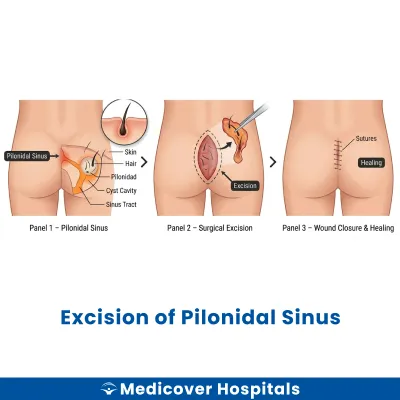
Excision of Pilonidal Sinus is a surgical procedure to remove a pilonidal cyst or sinus. This condition occurs near the tailbone (coccyx) at the top of the buttocks. The procedure involves removing the cyst, sinus tract, and surrounding tissue to prevent infection and recurrence. It is typically performed under local or general anaesthesia.
This surgery is needed when a pilonidal sinus becomes infected or causes discomfort. Conditions like ingrown hairs, prolonged sitting, or trauma can lead to this issue. If left untreated, it can cause chronic pain, recurrent infections, or abscess formation. Modern surgical approaches include open excision, primary closure, and minimally invasive techniques like endoscopic pilonidal sinus treatment (EPSiT). These methods aim to reduce recovery time and minimise recurrence.
Excision of Pilonidal Sinus Doctors Near You
Find experienced general-surgeons for excision of pilonidal sinus at Medicover Hospitals across India. Choose your city and book a consultation to discuss your treatment options today.
Why Choose Medicover Hospitals for Excision of Pilonidal Sinus?
Get a second opinion from trusted experts and makeconfident, informed decisions.
 Get Second Opinion
Complete Guide To Excision Of Pilonidal Sinus
Everything you need to know about the procedure, preparation, and recovery
Excision of Pilonidal Sinus Surgery Indications
Excision of pilonidal sinus is recommended when conservative treatments fail to resolve symptoms. This procedure is often necessary to prevent recurrent infections and complications.
Recurrent Infections
Patients may experience repeated episodes of pain, swelling, and pus discharge from the sinus area. Doctors find persistent infection despite antibiotics and drainage. Surgery is advised when these infections recur frequently.
Chronic Pain
Some individuals suffer from ongoing pain at the base of the spine. Examination reveals tenderness and inflammation. When pain persists despite medication and lifestyle changes, excision is considered.
Non-Healing Sinus
Patients may have a sinus that fails to heal over time. Doctors observe a persistent opening with fluid discharge. Surgery is suggested when the sinus does not close with conservative care.
Abscess Formation
Severe pain and swelling may indicate an abscess. Imaging or examination shows a fluid-filled cavity. Surgical intervention is needed when drainage and antibiotics do not resolve the abscess.
Frequent Recurrence
Some patients experience repeated sinus formation. Examination reveals multiple tracts or pits. Excision is recommended when the condition recurs despite previous treatments.
How to Prepare for Excision of Pilonidal Sinus?
Proper preparation for the excision of a pilonidal sinus is crucial to ensure a smooth procedure and recovery. It helps in minimizing complications and aids in a faster healing process.
- Medication Review: Stop NSAIDs, anticoagulants, and herbal supplements 7-10 days before surgery.
- Fasting: Follow a fasting period of 6-8 hours before the procedure, as advised for general anaesthesia.
- Hygiene: Clean the area around the sinus thoroughly on the day of surgery to reduce infection risk.
- Clothing: Wear loose, comfortable clothing to the hospital to avoid pressure on the surgical site.
- Transport: Arrange for someone to drive you home post-surgery, as you may feel drowsy from anaesthesia.
- Medication List: Bring a list of all medications you are currently taking, including dosages, for the medical team.
- Smoking and Alcohol: Avoid smoking and alcohol for at least 24 hours before the procedure to promote better healing.
- Pre-Surgery Instructions: Follow any additional instructions provided by your healthcare provider for optimal results.
Excision of Pilonidal Sinus Surgery (Step-by-Step)
Performed by general surgeons. The procedure typically lasts 30 to 60 minutes. It is usually done under general anaesthesia.
- Preparation: The patient is positioned comfortably. Anaesthesia is administered to ensure no pain during the procedure.
- Incision: A small incision, usually about 1-2 cm, is made over the affected area to access the sinus.
- Excision: The surgeon uses a scalpel to carefully remove the pilonidal sinus and any surrounding infected tissue.
- Cleaning: A curette may be used to clean the area thoroughly, ensuring all debris and infected tissue are removed.
- Closure: The incision is closed using stitches or left open to heal naturally, depending on the case.
- Dressing: A sterile dressing is applied to protect the wound and promote healing.
- Recovery: The patient is monitored as they wake from anaesthesia. Post-operative care instructions are provided.
Who Performs Excision of Pilonidal Sinus Surgery?
This surgery is performed by general surgeons. They have the expertise to handle conditions like pilonidal sinus. Their training allows them to manage surgical procedures effectively, ensuring patient safety and comfort.
Recovery After Excision of Pilonidal Sinus Surgery
Recovery from excision of pilonidal sinus surgery involves gradual healing and care to prevent infection. Expect some discomfort, but it should improve over time. Follow your surgeon's instructions for a smooth recovery.
Day 1-3:
- Rest is crucial. Avoid sitting for long periods.
- Keep the wound clean and dry. Follow dressing change instructions.
- Consume light meals like dal-rice, khichdi, and soups to aid digestion.
Day 4-7:
- Gradually increase activity, but avoid strenuous tasks.
- Continue with a soft diet. Include curd and moong dal for protein and probiotics.
- Monitor the wound for any signs of infection.
Day 8-14:
- Most can resume work or school if the job is not physically demanding.
- Introduce more variety in your diet while maintaining hydration.
- Follow up with your doctor for a check-up.
Phase 3 (Week 3-4):
- Resume normal activities gradually. Avoid heavy lifting until fully healed.
- Continue with a balanced diet to support recovery.
- Regularly check the wound area for any unusual changes.
When to Seek Urgent Help
- Increased redness, swelling, or pain at the wound site.
- Pus or foul-smelling discharge from the wound.
- Fever or chills indicating possible infection.
Benefits of Excision of Pilonidal Sinus Surgery
Excision of pilonidal sinus is a surgical procedure aimed at removing the sinus tract and preventing recurrence.
- Relief from Pain: Alleviates discomfort and pain associated with the sinus.
- Prevention of Infection: Reduces the risk of recurrent infections in the affected area.
- Improved Mobility: Enhances movement by eliminating the sinus and associated swelling.
- Long-term Solution: Offers a more permanent solution compared to non-surgical treatments.
Risks and Complications of Excision of Pilonidal Sinus Surgery
While generally safe, excision of pilonidal sinus surgery carries certain risks and potential complications.
- Infection at the surgical site, which may require antibiotics.
- Bleeding during or after the procedure.
- Pain and discomfort in the operated area.
- Recurrence of the pilonidal sinus.
- Delayed wound healing, requiring additional care.
- Scarring at the site of surgery.
Cost of Excision of Pilonidal Sinus Surgery
The cost for excision of pilonidal sinus surgery at Medicover Hospitals varies based on the ward category. Prices range from Rs.30,000 to Rs.1,00,000. The cost is influenced by the type of accommodation chosen, such as general, twin sharing, or private rooms.
We offer transparent pricing and support for insurance and TPA, including CGHS, ESI, and major TPAs. Cashless facilities are available for your convenience. Please contact the hospital for the latest insurance panel details as these may change periodically.
Frequently Asked Questions
1. How much does Excision of Pilonidal Sinus surgery cost at Medicover Hospitals?
The cost of Excision of Pilonidal Sinus surgery across Medicover Hospitals ranges from Rs.30,000 to Rs.1,00,000, depending on the room type and care level.
2. Is Excision of Pilonidal Sinus surgery covered under health insurance at Medicover?
Excision of Pilonidal Sinus surgery may be covered by CGHS, ESI, and major TPAs. Please contact the hospital for current panel details.
3. Can I sit comfortably after Pilonidal Sinus surgery?
Sitting may be uncomfortable for a few weeks post-surgery. Using a cushion can help alleviate pressure and improve comfort during recovery.
4. Will I need to change my dressing frequently?
Yes, regular dressing changes are crucial to prevent infection. Your doctor will guide you on the frequency and proper technique for dressing changes.
5. Is recurrence possible after Pilonidal Sinus excision?
There is a possibility of recurrence after surgery. Following post-operative care instructions diligently can help reduce this risk.
6. What lifestyle changes are needed post-surgery?
Avoid prolonged sitting and maintain good hygiene to aid recovery. Regular follow-ups with your doctor are essential to monitor healing.
7. Can I exercise after Pilonidal Sinus surgery?
Strenuous activities should be avoided for at least 4-6 weeks post-surgery. Light walking is encouraged to promote circulation and healing.


