 Call
Call Patient Reports
Excision of Lesion with Hematoma Evacuation Surgery Hospital With Expert Neurosurgeons
At Medicover Hospitals, our neurosurgeons, with qualifications like MS, MCh, and DNB, perform open excision of lesions with hematoma evacuation. This approach effectively addresses brain conditions, ensuring smaller incisions and reduced blood loss, enhancing recovery and reducing hospital stay.
Expert Surgeons
Yearly Surgeries
Patient Satisfaction
What is Excision of Lesion With Hematoma Evacuation?
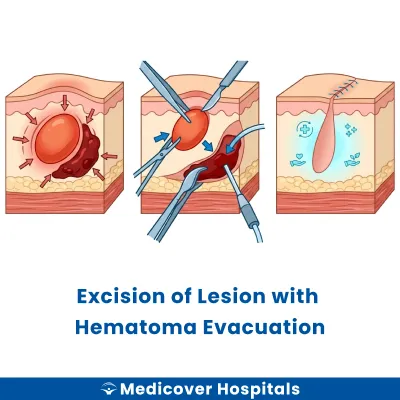
Excision of Lesion with Hematoma Evacuation is a surgical procedure involving the removal of an abnormal tissue growth (lesion) and the drainage of a blood clot (hematoma) from a specific body part, such as the skin, brain, or other organs. This procedure helps in relieving pressure and preventing further complications. The lesion is carefully excised, and the hematoma is evacuated to restore normal function and appearance.
This surgery is necessary when a lesion causes discomfort, pain, or risk of infection. Conditions like trauma, infections, or certain diseases can lead to the formation of lesions and hematomas. If left untreated, these can cause severe complications, including infection or impaired function. Modern surgical approaches, such as minimally invasive techniques and endoscopic procedures, are available for performing Excision of Lesion with Hematoma Evacuation, enhancing recovery and outcomes.
Excision of Lesion With Hematoma Evacuation Doctors Near You
Find expert neurosurgeons for excision of lesion with hematoma evacuation at Medicover Hospitals across India. Choose your city and book a consultation to discuss your treatment options today.
Why Choose Medicover Hospitals for Excision of Lesion With Hematoma Evacuation?
Get a second opinion from trusted experts and makeconfident, informed decisions.
 Get Second Opinion
Complete Guide To Excision Of Lesion With Hematoma Evacuation
Everything you need to know about the procedure, preparation, and recovery
Excision of Lesion with Hematoma Evacuation Surgery Indications
Doctors recommend excision of lesion with hematoma evacuation when a patient presents with symptoms that indicate a significant lesion causing complications. This procedure is often considered when conservative treatments do not alleviate the symptoms.
Intracranial Pressure
Patients may experience severe headaches, nausea, or vomiting due to increased intracranial pressure. Imaging tests like CT or MRI scans reveal lesions causing pressure on the brain. When medications fail to reduce pressure, surgery is considered.
Neurological Deficits
Symptoms like weakness, numbness, or difficulty speaking can indicate a lesion affecting brain function. Neurological exams and imaging confirm the lesion's impact. Surgery is recommended when these deficits worsen despite medical management.
Seizures
Frequent or severe seizures unresponsive to medication may suggest a lesion as the underlying cause. EEG and imaging help identify the lesion. Surgery is advised when seizures persist despite optimal medical therapy.
Persistent Headaches
Chronic headaches not relieved by medication may be due to a lesion. Imaging studies help identify the lesion's presence. Surgery is considered when headaches severely impact quality of life and other treatments fail.
Hematoma Expansion
Sudden worsening of symptoms like confusion or loss of consciousness can indicate hematoma expansion. Imaging confirms the hematoma's growth. Surgery is necessary when conservative measures do not control the expansion.
How to Prepare for Excision of Lesion with Hematoma Evacuation?
Proper preparation is crucial for a smooth surgical experience and recovery. It helps reduce risks and ensures the procedure goes as planned.
- Medication Review: Stop NSAIDs, anticoagulants, and herbal supplements as advised by your doctor.
- Fasting: Fast for at least 8 hours before the procedure if general anaesthesia is used.
- Pre-Surgery Instructions: Follow any specific instructions given by your surgeon, such as skin preparation.
- Clothing: Wear loose, comfortable clothing on the day of the surgery for easy dressing post-procedure.
- Transportation: Arrange for someone to drive you home after the surgery, as you may feel drowsy.
- Medication List: Bring a list of all medications you take, including dosages, for the medical team.
- Smoking and Alcohol: Avoid smoking and alcohol for at least 24 hours before the surgery.
- Rest and Relaxation: Ensure you get a good night's sleep before the procedure to help your body prepare.
Excision of Lesion with Hematoma Evacuation Surgery (Step-by-Step)
Overview: This procedure is performed by neurosurgeons. It typically lasts between 2 to 4 hours. General anaesthesia is used to ensure the patient is completely unconscious and pain-free during the surgery.
- Preparation: The patient is positioned on the operating table. The area of the lesion is cleaned and sterilised. General anaesthesia is administered.
- Incision: A small incision, usually about 1-2 cm, is made over the lesion site. This allows access to the affected area.
- Exposure: Surgical instruments like retractors are used to gently separate tissues. This provides a clear view of the lesion and hematoma.
- Excision: The lesion is carefully excised using a harmonic scalpel or curette. These instruments help in precise removal while minimising damage to surrounding tissues.
- Hematoma Evacuation: The hematoma is evacuated using suction devices. This helps in reducing pressure and preventing further complications.
- Closure: After ensuring complete removal, the incision is closed with sutures or staples. A sterile dressing is applied to protect the site.
- Recovery: The patient is moved to the recovery room. Vital signs are monitored as the patient wakes up from anaesthesia.
Who Performs Excision of Lesion with Hematoma Evacuation Surgery?
This surgery is performed by neurosurgeons. They specialise in surgeries involving the brain and nervous system. Their expertise ensures precision in removing lesions and evacuating hematomas.
Recovery After Excision of Lesion with Hematoma Evacuation Surgery
Recovery from excision of lesion with hematoma evacuation surgery involves gradual healing and care. Patients can expect some discomfort, swelling, and bruising initially. Following the doctor's advice is crucial for a smooth recovery.
Day 1-3:
- Rest is essential. Avoid any strenuous activities.
- Keep the surgical area clean and dry to prevent infection.
- Follow prescribed pain management and medication schedules.
- Consume soft, easily digestible foods like curd, dal-rice, and soups.
Day 4-7:
- Swelling and bruising should start to subside.
- Continue to avoid heavy lifting and intense physical activities.
- Introduce light activities as tolerated, but listen to your body.
- Maintain a balanced diet with foods like khichdi and moong dal to aid healing.
Day 8-14:
- Most patients can resume work or school, depending on the nature of their activities.
- Gradually increase activity levels, but avoid any activity that causes discomfort.
- Regular follow-up appointments are important to monitor healing.
Phase 3 (Week 3-4):
- Full recovery is expected for most patients.
- Resume normal activities, but continue to avoid any high-impact exercises until cleared by the doctor.
When to Seek Urgent Help
- Severe pain not relieved by medication.
- Excessive swelling or redness around the surgical site.
- Fever or chills indicating possible infection.
- Uncontrolled bleeding or discharge from the wound.
Benefits of Excision of Lesion with Hematoma Evacuation Surgery
This procedure can offer significant relief and improve quality of life for patients.
- Symptom Relief: Alleviates pain and discomfort caused by the lesion and hematoma.
- Improved Functionality: Restores normal function to the affected area.
- Reduced Swelling: Helps decrease swelling by removing the hematoma.
- Prevention of Complications: Minimises the risk of infection and other complications associated with untreated lesions.
Risks and Complications of Excision of Lesion with Hematoma Evacuation Surgery
While generally safe, this surgery carries certain risks and potential complications.
- Common: Infection at the surgical site.
- Common: Bleeding during or after the procedure.
- Rare: Nerve damage leading to numbness or weakness.
- Rare: Recurrence of the lesion or hematoma.
- Rare: Adverse reaction to anaesthesia.
- Rare: Scarring at the site of surgery.
Cost of Excision of Lesion with Hematoma Evacuation Surgery
The cost of excision of lesion with hematoma evacuation surgery varies starting from ₹1,50,000 - ₹4,50,000 based on factors such as the surgical approach, duration of hospital stay, room category, required diagnostics, and post-operative care.
At Medicover Hospitals, we ensure transparent pricing. We offer support for insurance and TPA, including CGHS, ESI, and major TPAs. A cashless facility is available for your convenience. Please contact the hospital for the latest insurance panel details as these may change periodically.
Frequently Asked Questions
1. How much does Excision of Lesion with Hematoma Evacuation surgery cost at Medicover Hospitals?
The cost of Excision of Lesion with Hematoma Evacuation surgery varies starting from ₹1,50,000 - ₹4,50,
2. Please contact Medicover Hospitals for detailed pricing information. 2. Is Excision of Lesion with Hematoma Evacuation surgery covered under health insurance at Medicover?
This surgery is often covered by CGHS, ESI, and major TPAs. Please contact the hospital for current panel details.
3. Will I have a scar after skin lesion excision?
A small scar may remain after the excision of a skin lesion. Over time, it usually fades and becomes less noticeable.
4. Can I shower immediately after hematoma evacuation?
You should avoid showering for 48 hours after the procedure. Follow your doctor's instructions for wound care and hygiene.
5. Will I need physiotherapy after joint lesion excision?
Physiotherapy may be recommended to restore joint function. It helps in regaining strength and mobility post-surgery.
6. Can I drive after brain hematoma evacuation?
Driving is usually restricted for a few weeks after brain surgery. Your doctor will advise when it's safe to resume driving.
7. What foods should I avoid after abdominal lesion excision?
Avoid spicy and oily foods for a week post-surgery. Opt for light meals like dal-rice and khichdi to aid recovery.


