 Call
Call Patient Reports
Excision of Hard Palate Tumor Surgery by Expert Oncologists
Excision of a hard palate tumour at Medicover Hospitals is performed using an open surgical approach. Our team of oncologists, with qualifications like MS, DNB, and MCh, ensures precise tumour removal. This method often results in reduced blood loss, contributing to a smoother recovery.
Expert Surgeons
Yearly Surgeries
Patient Satisfaction
What is Excision of Hard Palate Tumor?
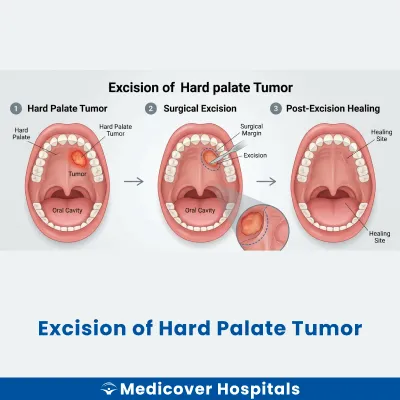
Excision of Hard Palate Tumor is a surgical procedure to remove a tumor from the hard palate. The hard palate is the bony front part of the roof of the mouth. This surgery involves cutting out the tumor and some surrounding tissue to ensure complete removal. It is performed by oral and maxillofacial surgeons.
This surgery is needed to treat benign or malignant tumors in the hard palate. If left untreated, these tumors can cause pain, difficulty in eating, and speech problems. They may also spread to other areas. Modern surgical approaches include laser surgery and endoscopic techniques. These methods aim to minimize damage to surrounding tissues and promote quicker recovery.
Excision of Hard Palate Tumor Doctors Near You
Find experienced oncologists for excision of hard palate tumors across Medicover locations in India. Choose your city and book a consultation to discuss your treatment options today.
Why Choose Medicover Hospitals for Excision of Hard Palate Tumor Surgery?
Get a second opinion from trusted experts and makeconfident, informed decisions.
 Get Second Opinion
Complete Guide To Excision Of Hard Palate Tumor
Everything you need to know about the procedure, preparation, and recovery
Excision of Hard Palate Tumor Surgery Indications
Doctors recommend excision of a hard palate tumor when non-surgical treatments are ineffective. Surgery is often necessary to remove malignant or benign growths causing significant symptoms or complications.
Persistent Oral Pain
Patients may experience ongoing pain in the mouth or jaw. Examination might reveal a mass on the hard palate. If pain persists despite medication, surgery is considered.
Difficulty Swallowing
Some patients report trouble swallowing or a sensation of a lump in the throat. Imaging may show a tumor obstructing the oral cavity. When swallowing issues worsen, surgical removal is advised.
Bleeding from the Mouth
Unexplained bleeding in the mouth can be a sign of a tumor. Doctors may find abnormal growths during an oral exam. If bleeding is recurrent and conservative measures fail, surgery is needed.
Speech Difficulties
Changes in speech or difficulty speaking clearly can occur. Examination might detect a mass affecting the palate. When speech issues impact daily life, surgical intervention is recommended.
Non-Healing Ulcers
Persistent ulcers on the hard palate that do not heal with standard treatments may indicate a tumor. Biopsy results confirming malignancy necessitate surgical excision.
How to Prepare for the Excision of a Hard Palate Tumor?
Proper preparation is crucial for a successful excision of a hard palate tumor. It helps minimise risks and ensures a smoother recovery. Follow these steps to prepare effectively for your surgery.
- Medication Review: Stop NSAIDs, anticoagulants, and herbal supplements at least 7 days before surgery. Consult your doctor for guidance.
- Fasting Guidelines: Do not eat or drink anything for at least 8 hours before the procedure to ensure safety during anaesthesia.
- Oral Hygiene: Maintain good oral hygiene by brushing and rinsing with an antiseptic mouthwash as advised by your doctor.
- Health Assessment: Complete any pre-surgery tests such as blood tests or imaging scans as instructed by your healthcare provider.
- Comfortable Clothing: Wear loose, comfortable clothing on the day of surgery for ease of changing and comfort post-procedure.
- Transportation: Arrange for someone to drive you home after the surgery, as you may feel drowsy from anaesthesia.
- Medication List: Bring a list of all medications you are currently taking, including dosages, to share with the medical team.
- Smoking and Alcohol: Avoid smoking and alcohol for at least 48 hours before the surgery to promote better healing.
Excision of Hard Palate Tumor Surgery (Step-by-Step)
This surgery is performed by experienced specialists from the Oncology department. The procedure usually takes 2-4 hours and is carried out under general anaesthesia.
- Preparation: The patient is positioned comfortably, and general anaesthesia is administered to ensure a pain-free procedure.
- Incision: A precise incision is made in the hard palate to access the tumour while minimising damage to surrounding tissues.
- Tumour Removal: Specialised surgical instruments are used to carefully remove the tumour while preserving as much healthy tissue as possible.
- Bleeding Control: Surgical techniques such as cautery may be used to control bleeding and maintain a clear operative field.
- Closure: The surgical site is closed with sutures to support proper healing and restore oral function.
- Recovery: After surgery, the patient is monitored in the recovery area, and pain management along with post-operative care instructions are provided.
Who Performs Excision of Hard Palate Tumor Surgery?
This surgery is performed by a skilled cancer doctor trained in managing head and neck tumours and complex procedures involving delicate oral structures.
Recovery After Excision of Hard Palate Tumor Surgery
Recovery from excision of a hard palate tumor surgery involves gradual healing and adjustment. Patients can expect some discomfort and dietary changes as they heal. Regular follow-ups with the healthcare team are essential to monitor progress.
Day 1-3:
- Expect some swelling and discomfort in the mouth.
- Stick to a liquid diet, including soups and broths, to avoid irritation.
- Rest is crucial. Avoid any strenuous activities.
Day 4-7:
- Swelling should start to reduce. Pain management may still be necessary.
- Introduce soft foods like curd, dal-rice, and moong dal.
- Continue avoiding hard or spicy foods.
- Light activities can be resumed, but avoid bending or lifting heavy objects.
Week 2-4:
- Most patients can return to work or school, depending on comfort levels.
- Gradually reintroduce more solid foods like soft khichdi.
- Maintain good oral hygiene but be gentle around the surgical area.
Phase 4-6 Weeks:
- Full recovery is expected. Regular diet can be resumed with caution.
- Continue follow-up appointments to ensure proper healing.
When to Seek Urgent Help
- Excessive bleeding or swelling that doesn't reduce.
- Severe pain not relieved by prescribed medication.
- Fever or signs of infection.
- Difficulty breathing or swallowing.
Benefits of Excision of Hard Palate Tumor Surgery
Excision of a hard palate tumor can provide significant health benefits. Here are a few:
- Removal of Tumor: Eliminates the tumor, reducing the risk of further complications.
- Improved Oral Function: Enhances speech and swallowing by removing obstructions.
- Pain Relief: Alleviates discomfort caused by the tumor.
- Prevention of Spread: Reduces the chance of the tumor spreading to other areas.
Risks and Complications of Excision of Hard Palate Tumor Surgery
While the surgery is generally safe, there are potential risks and complications:
- Common - Bleeding: Some bleeding during or after the procedure is possible.
- Common - Infection: Risk of infection at the surgical site.
- Rare - Nerve Damage: Potential for nerve injury affecting sensation or movement.
- Rare - Speech Difficulties: Temporary or permanent changes in speech.
- Rare - Scarring: Formation of scar tissue in the oral cavity.
- Rare - Recurrence: Possibility of the tumor returning.
Cost of Excision of Hard Palate Tumor Surgery
The cost of excision of a hard palate tumor surgery at Medicover Hospitals ranges from Rs. 99,000 to Rs. 446,000. The price varies depending on the ward category chosen, such as general, twin sharing, or private rooms.
We offer transparent pricing and support for insurance and TPA, including CGHS, ESI, and major TPAs. A cashless facility is also available for your convenience. Please contact the hospital for the latest insurance panel details as these may change periodically.
Frequently Asked Questions
1. How much does Excision of Hard Palate Tumor surgery cost at Medicover Hospitals?
The cost for Excision of Hard Palate Tumor surgery at Medicover Hospitals ranges from Rs.99000 to Rs.446000, depending on the type of room and care required.
2. Is Excision of Hard Palate Tumor surgery covered under health insurance at Medicover?
Excision of Hard Palate Tumor surgery is often covered by CGHS, ESI, and major TPAs. Please contact the hospital for current panel details.
3. Will my speech be affected after hard palate surgery?
Speech may be temporarily affected after hard palate tumor excision. Speech therapy can help improve clarity and articulation during recovery.
4. Can I eat normally after hard palate tumor surgery?
Initially, soft foods like curd, dal-rice, and khichdi are recommended. Gradually, you can return to a normal diet as healing progresses.
5. Is there a risk of nasal regurgitation post-surgery?
Nasal regurgitation can occur if the palate does not seal properly. Surgical adjustments or therapy may be needed to address this issue.
6. How long until I can speak clearly after surgery?
Clear speech may take a few weeks to months post-surgery. Regular follow-ups and speech therapy can aid in faster recovery.
7. Will I need a prosthesis after hard palate tumor excision?
A prosthesis may be required if a significant portion of the palate is removed. It helps in speech and swallowing functions.
8. What is the surgery for hard palate cancer?
Surgery for hard palate cancer typically involves wide local excision of the tumor, where the affected tissue is removed along with a margin of healthy tissue. In more advanced cases, reconstruction using grafts or flaps may be required to restore function and appearance.
9. Is excision a major surgery?
Excision can be minor or major, depending on the size and spread of the tumor. Small lesions may be removed with a minor procedure, while larger or cancerous tumors may require more extensive surgery.
10. How long is recovery from palate surgery?
Recovery usually takes about 2 to 6 weeks, depending on the extent of surgery. Patients may need a soft diet, pain management, and follow-up care during healing.
11. What is the most common tumor of the hard palate?
The most common tumors of the hard palate are minor salivary gland tumors, particularly pleomorphic adenoma (benign) and mucoepidermoid carcinoma (malignant).


