 Call
Call Patient Reports
Best Hospital for Excision of Benign Nasal or Sinonasal Tumors with Advanced ENT Care
At Medicover Hospitals, our ENT specialists, qualified with MS and DNB, perform excision of benign nasal or sinonasal tumors using advanced endoscopic techniques. This minimally invasive approach results in smaller incisions and reduced blood loss, promoting a quicker recovery and shorter hospital stay for patients.
Expert Surgeons
Yearly Surgeries
Patient Satisfaction
What is Excision of Benign Nasal of Sinonasal Tumors?
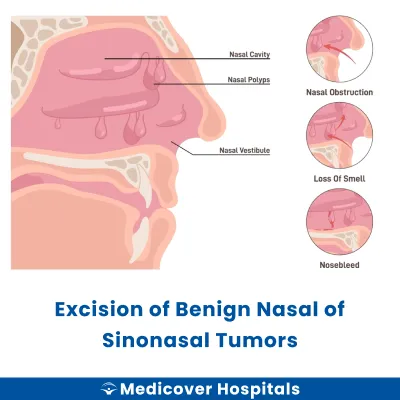
Excision of Benign Nasal or Sinonasal Tumors is a surgical procedure to remove non-cancerous growths in the nasal cavity or sinuses. The nasal cavity and sinuses are air-filled spaces in the skull. These tumors, though benign, can cause discomfort and obstruct normal breathing. The procedure involves carefully excising (removing) these growths to restore normal function.
This surgery is necessary when benign tumors cause symptoms like nasal obstruction, sinus infections, or facial pain. If untreated, these tumors can lead to chronic sinusitis or other complications. Modern surgical approaches include endoscopic sinus surgery, which uses a thin tube with a camera (endoscope) for precise removal. This minimally invasive technique often results in quicker recovery and less discomfort.
Excision of Benign Nasal of Sinonasal Tumors Doctors Near You
Discover experienced ENT specialists for excision of benign nasal or sinonasal tumors at Medicover Hospitals across India. Choose your city and book a consultation to address your health needs.
Why Choose Medicover Hospitals for Excision of Benign Nasal of Sinonasal Tumors?
Get a second opinion from trusted experts and makeconfident, informed decisions.
 Get Second Opinion
Complete Guide To Excision Of Benign Nasal Of Sinonasal Tumors
Everything you need to know about the procedure, preparation, and recovery
Excision of Benign Nasal of Sinonasal Tumors Surgery Indications
Doctors recommend excision of benign nasal or sinonasal tumors when these growths cause significant symptoms or complications. Surgery is often considered when conservative treatments do not provide relief or when the tumor's presence leads to functional impairments.
Chronic Nasal Obstruction
Patients may experience persistent nasal blockage, leading to difficulty breathing through the nose. Examination reveals a mass obstructing the nasal passage. When medications and nasal sprays fail to alleviate the obstruction, surgery is advised.
Recurrent Sinus Infections
Frequent sinus infections, unresponsive to antibiotics, can be a sign of a benign tumor. Imaging tests might show a mass causing sinus drainage issues. Surgery is considered when infections become chronic and impact quality of life.
Nasal Bleeding
Unexplained, recurrent nosebleeds can indicate a benign tumor. Doctors may find a visible mass during nasal examination. If bleeding persists despite conservative measures, surgical removal is recommended.
Facial Pain or Pressure
Patients might report persistent facial pain or pressure, especially around the sinus areas. Scans may reveal a tumor pressing on sinus cavities. Surgery is suggested when pain management strategies are ineffective.
Loss of Smell
Some patients experience a reduced sense of smell. Examination and imaging can show a tumor affecting olfactory pathways. If smell loss persists and impacts daily life, excision may be necessary.
How to Prepare for Excision of Benign Nasal of Sinonasal Tumors?
Proper preparation is crucial for a successful excision of benign nasal or sinonasal tumors. It helps minimise risks and ensures a smoother recovery.
- Medication Review: Inform your doctor about all medications you take, including over-the-counter drugs and supplements.
- Stop Certain Medications: Discontinue NSAIDs, anticoagulants, and herbal supplements at least a week before surgery, as advised by your doctor.
- Fasting Guidelines: Follow a fasting period of 6-8 hours before the procedure if general anaesthesia is used.
- Nasal Preparation: Use prescribed nasal sprays to reduce inflammation and clear nasal passages before surgery.
- Clothing Choice: Wear loose, comfortable clothing on the day of surgery to ease movement post-procedure.
- Transportation Arrangements: Arrange for someone to drive you home after the surgery, as you may feel drowsy from anaesthesia.
- Medication List: Bring a list of your current medications, including dosages, to the hospital for reference.
- Pre-Surgery Instructions: Follow any additional instructions provided by your healthcare team to ensure a smooth surgical experience.
Excision of Benign Nasal of Sinonasal Tumors Surgery (Step-by-Step)
This procedure is performed by an ENT specialist. It typically lasts between 1 to 2 hours and is done under general anaesthesia.
- Preparation: The patient is positioned comfortably. Anaesthesia is administered to ensure they are asleep and pain-free.
- Accessing the Nasal Cavity: A small incision, usually 1-2 cm, is made inside the nostril. This allows access to the nasal cavity without external scarring.
- Tumor Identification: The surgeon uses an endoscope to visualize the nasal passages. This helps in accurately locating the tumor.
- Tumor Excision: Instruments like a curette or coblation wand are used to carefully excise the tumor. The surgeon ensures complete removal while preserving surrounding tissues.
- Bleeding Control: Bipolar cautery may be used to control any bleeding. This ensures a clear surgical field and reduces post-operative complications.
- Closure: The incision is closed with absorbable sutures. This helps in healing and minimizes discomfort.
- Recovery: The patient is moved to a recovery room. They are monitored as they wake up from anaesthesia, ensuring stable vital signs.
Who Performs Excision of Benign Nasal of Sinonasal Tumors Surgery?
This surgery is performed by an ENT (Ear, Nose, and Throat) specialist. These surgeons are trained to handle conditions affecting the nasal passages and sinuses. They use their expertise to ensure safe and effective removal of benign tumors.
Recovery After Excision of Benign Nasal of Sinonasal Tumors Surgery
Recovery from excision of benign nasal or sinonasal tumors involves gradual healing and careful monitoring. Patients can expect some discomfort and nasal congestion initially, but these symptoms usually improve over time.
Day 1-3:
- Rest is crucial. Avoid strenuous activities.
- Expect some nasal congestion and mild bleeding.
- Stick to soft foods like curd, dal-rice, and soups to avoid irritation.
Day 4-7:
- Swelling and discomfort should start to decrease.
- Continue with a soft diet. Include khichdi and moong dal for nutrition.
- Avoid blowing your nose to prevent complications.
Day 8-14:
- Most patients can resume light activities.
- Gradually reintroduce regular foods, but avoid spicy or hot items.
- Follow-up appointments are essential to monitor healing.
Phase 3 (Week 3-4):
- Normal activities can usually be resumed, including work or school.
- Continue to avoid heavy lifting and vigorous exercise.
- Maintain a balanced diet to support recovery.
When to Seek Urgent Help
If you experience severe bleeding, high fever, persistent headache, or vision changes, seek medical attention immediately. These could indicate complications that need prompt care.
Benefits of Excision of Benign Nasal of Sinonasal Tumors Surgery
Excision of benign nasal or sinonasal tumors can offer significant improvements in quality of life.
- Symptom Relief: Alleviates nasal obstruction and breathing difficulties.
- Improved Sense of Smell: Restores olfactory function affected by the tumor.
- Reduced Risk of Infection: Decreases the likelihood of sinus infections.
- Prevention of Complications: Stops the tumor from causing further structural issues.
Risks and Complications of Excision of Benign Nasal of Sinonasal Tumors Surgery
While generally safe, this surgery carries some risks and potential complications.
- Bleeding during or after the procedure.
- Infection at the surgical site.
- Damage to surrounding tissues or structures.
- Changes in sense of smell or taste.
- Recurrence of the tumor.
- Cerebrospinal fluid leak.
What is the Cost of Excision of Benign Nasal of Sinonasal Tumors Surgery?
The cost for excision of benign nasal or sinonasal tumors surgery at Medicover Hospitals ranges from Rs. 52,500 to Rs. 2,02,000. The price varies based on the ward category chosen, such as general, private, or deluxe rooms.
We offer transparent pricing with support for insurance and TPA, including CGHS, ESI, and major TPAs. Cashless facilities are available for your convenience. Please contact the hospital for the latest insurance panel details as these may change periodically.
Frequently Asked Questions
1. How much does Excision of Benign Nasal of Sinonasal Tumors surgery cost at Medicover Hospitals?
The cost of Excision of Benign Nasal of Sinonasal Tumors surgery at Medicover Hospitals ranges from Rs. 52,500 to Rs. 202,000, depending on various factors.
2. Is Excision of Benign Nasal of Sinonasal Tumors surgery covered under health insurance at Medicover?
Yes, it is often covered by CGHS, ESI, and major TPAs. Please contact the hospital for current panel details.
3. Will my sense of smell change after surgery?
Temporary changes in the sense of smell can occur after surgery. Most patients regain normal smell within a few weeks.
4. Can I blow my nose after the surgery?
Avoid blowing your nose for at least two weeks after surgery. This helps prevent bleeding and allows proper healing.
5. Will I experience nasal congestion post-surgery?
Nasal congestion is common and usually resolves within a few weeks. Saline sprays can help alleviate this symptom.
6. Can I return to work immediately after surgery?
Most patients return to work within one to two weeks. It depends on the nature of your job and your recovery progress.
7. Are headaches common after nasal tumor surgery?
Mild headaches can occur due to sinus pressure changes. These usually improve with time and proper post-operative care.


