 Call
Call Patient Reports
Excision and Primary Closure of Pilonidal Sinus Surgery by Expert Gastroenterologists Surgical
At Medicover Hospitals, our team of Consultant Surgical Gastroenterologists, with qualifications like MS, DNB, and MCh, perform open excision and primary closure of pilonidal sinus. This approach often results in shorter hospital stays and quicker recovery for patients across India.
Expert Surgeons
Yearly Surgeries
Patient Satisfaction
What is Excision and Primary Closure of Pilonidal Sinus?
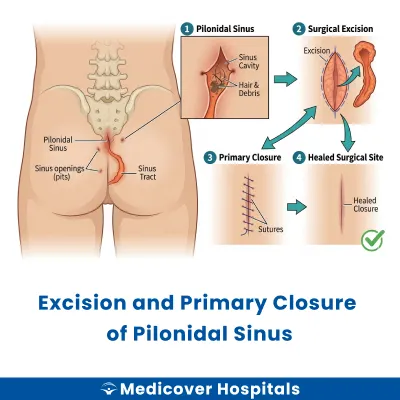
Excision and Primary Closure of Pilonidal Sinus is a surgical procedure to remove a pilonidal sinus, which is a small cyst or abscess that occurs in the cleft at the top of the buttocks. This procedure involves cutting out (excision) the sinus and closing the wound immediately (primary closure). The goal is to remove the infected tissue and close the area to promote healing.
This surgery is needed when a pilonidal sinus becomes infected or causes discomfort. Conditions like recurrent infections, pain, and drainage can lead to this procedure. If left untreated, the sinus can cause chronic infection and pain. Modern surgical approaches for this procedure include minimally invasive techniques and laser treatments. These methods aim to reduce recovery time and improve outcomes.
Excision and Primary Closure of Pilonidal Sinus Doctors Near You
Discover experienced gastroenterologists-surgical for excision and primary closure of pilonidal sinus at Medicover Hospitals across India. Choose your city and book a consultation today for expert care.
Why Choose Medicover Hospitals for Excision and Primary Closure of Pilonidal Sinus?
Get a second opinion from trusted experts and makeconfident, informed decisions.
 Get Second Opinion
Complete Guide To Excision And Primary Closure Of Pilonidal Sinus
Everything you need to know about the procedure, preparation, and recovery
Excision and Primary Closure of Pilonidal Sinus Surgery Indications
Doctors recommend excision and primary closure of pilonidal sinus when conservative treatments fail to provide relief. This procedure is often necessary to prevent recurrent infections and complications.
Chronic Pain and Discomfort
Patients often experience persistent pain and discomfort in the sacrococcygeal region. This is usually due to inflammation and infection. When pain persists despite antibiotics and drainage, surgery may be advised.
Recurrent Infections
Frequent infections in the pilonidal sinus can lead to abscess formation. Patients may notice swelling, redness, and pus discharge. If infections recur despite medical management, surgical intervention is considered.
Non-Healing Sinus Tract
A non-healing sinus tract may develop, causing continuous drainage. This can be confirmed through physical examination and imaging. Surgery is recommended when the tract does not respond to conservative care.
Abscess Formation
Patients may develop a painful, swollen abscess in the affected area. This is often accompanied by fever and tenderness. When drainage and antibiotics fail to resolve the abscess, excision is necessary.
Cosmetic Concerns
Visible sinus openings and scarring can cause cosmetic distress. Patients may seek surgical options when these issues affect their quality of life. Surgery offers a more definitive solution than non-surgical methods.
How to Prepare for Excision and Primary Closure of Pilonidal Sinus?
Proper preparation is crucial for a smooth surgery and recovery. It helps minimise risks and ensures the procedure goes as planned.
- Medication Review: Stop NSAIDs, anticoagulants, and herbal supplements as advised by your doctor.
- Fasting: Do not eat or drink anything for at least 8 hours before the surgery.
- Hygiene: Clean the area around the pilonidal sinus thoroughly the night before surgery.
- Clothing: Wear loose, comfortable clothing on the day of the surgery for ease and comfort.
- Transportation: Arrange for someone to drive you home post-surgery, as you will not be able to drive yourself.
- Medication List: Bring a list of all medications you take, including dosages, to the hospital.
- Smoking and Alcohol: Avoid smoking and alcohol for at least 24 hours before the procedure.
- Rest: Ensure you get a good night's sleep before the surgery to help your body prepare.
Excision and Primary Closure of Pilonidal Sinus Surgery (Step-by-Step)
Overview: This procedure is performed by gastroenterologists-surgical. It typically lasts 30-60 minutes. General anaesthesia is commonly used.
- Preparation: The patient is positioned face down. The surgical area is cleaned and sterilised.
- Incision: A small incision, usually 1-2 cm, is made over the pilonidal sinus. This allows access to the affected area.
- Excision: The surgeon uses a scalpel to remove the sinus tract and surrounding tissue. This ensures all infected tissue is excised.
- Closure: The wound is closed using sutures. This helps in faster healing and reduces the risk of recurrence.
- Dressing: A sterile dressing is applied over the incision site. This protects the area and aids in recovery.
- Recovery: The patient is moved to a recovery room. Vital signs are monitored as the anaesthesia wears off.
Who Performs Excision and Primary Closure of Pilonidal Sinus Surgery?
This surgery is typically performed by surgical gastroenterologists. They specialise in treating conditions of the gastrointestinal tract, including the pilonidal sinus. Their expertise ensures precise removal and closure of the sinus tract.
Recovery After Excision and Primary Closure of Pilonidal Sinus Surgery
Recovery from excision and primary closure of pilonidal sinus surgery involves gradual healing and resuming daily activities. It's important to follow your doctor's advice for a smooth recovery.
Day 1-3:
- Rest is crucial. Avoid sitting for long periods.
- Keep the surgical area clean and dry. Follow wound care instructions.
- Start with a light diet. Include curd, dal-rice, and soups.
- Take prescribed pain medications as needed.
Day 4-7:
- Gradually increase light activities. Avoid strenuous exercises.
- Continue with a balanced diet. Add moong dal and khichdi for easy digestion.
- Monitor the wound for any signs of infection.
- Most patients can resume work or school by the end of this week, depending on comfort.
Week 2-4:
- Resume normal activities slowly. Avoid heavy lifting or intense workouts.
- Maintain a healthy diet to support healing.
- Attend follow-up appointments to ensure proper healing.
When to Seek Urgent Help:
- Fever or chills, which could indicate an infection.
- Excessive redness, swelling, or discharge from the wound.
- Severe pain not relieved by medication.
- Any unusual symptoms or concerns.
Remember, recovery times can vary. Always consult your healthcare provider for personalized advice. Please contact the hospital for current details as insurance panels may change.
Benefits of Excision and Primary Closure of Pilonidal Sinus Surgery
This procedure aims to remove the pilonidal sinus and close the wound, promoting faster healing.
- Reduced Recurrence: Decreases the chances of the sinus returning.
- Faster Recovery: Primary closure often leads to quicker healing compared to open healing methods.
- Less Pain: Patients may experience reduced post-operative discomfort.
- Improved Aesthetics: The closed wound can result in a more cosmetically pleasing scar.
Risks and Complications of Excision and Primary Closure of Pilonidal Sinus Surgery
While generally safe, this surgery carries some risks, as with any surgical procedure.
Common Risks
- Infection at the surgical site may occur.
- Seroma or fluid accumulation under the skin might develop.
- Temporary numbness around the incision area.
Rare Risks
- Recurrence of the pilonidal sinus despite surgery.
- Allergic reaction to anaesthesia or surgical materials.
- Delayed wound healing in some patients.
Cost of Excision and Primary Closure of Pilonidal Sinus Surgery
The cost of excision and primary closure of pilonidal sinus surgery can vary from ₹30,000 to ₹1,00,000, based on several factors. These include the surgical approach, duration of hospital stay, room category, required diagnostics, and post-operative care.
At Medicover Hospitals, we offer transparent pricing to ensure clarity. We support insurance and TPA services, including CGHS, ESI, and major TPAs, with a cashless facility available. Please contact the hospital for the latest insurance panel details as these may change periodically.
Frequently Asked Questions
1. How much does Excision and Primary Closure of Pilonidal Sinus surgery cost at Medicover Hospitals?
The cost of Excision and Primary Closure of Pilonidal Sinus surgery varies from ₹30,000 to ₹1,00,
2. Please contact Medicover Hospitals for detailed pricing information. 2. Is Excision and Primary Closure of Pilonidal Sinus surgery covered under health insurance at Medicover?
Yes, it is often covered by CGHS, ESI, and major TPAs. Please contact the hospital for current panel details.
3. Will the pilonidal sinus return after surgery?
Recurrence of a pilonidal sinus is possible but less likely with proper care. Regular follow-ups and hygiene are essential to prevent it.
4. Can I sit comfortably after pilonidal sinus surgery?
Sitting may be uncomfortable for a few weeks post-surgery. Using a cushion can help alleviate pressure on the surgical site.
5. What foods aid recovery after pilonidal sinus surgery?
A diet rich in fibre, like dal-rice and khichdi, is recommended. Include curd for probiotics to support healing.
6. How soon can I return to work after pilonidal sinus surgery?
Most patients can resume work within 2-4 weeks, depending on recovery. Consult your doctor before returning to physically demanding tasks.
7. What complications should I watch for post-surgery?
Watch for signs of infection like redness or pus at the site. Report any unusual pain or fever to your doctor promptly.


