 Call
Call Patient Reports
Esophageal Dilation Procedure Hospital with Advanced Endoscopy Care
At Medicover Hospitals, our skilled gastroenterologists, with qualifications like DM and DNB, perform esophageal dilation using endoscopic techniques. This procedure helps treat complex esophageal strictures effectively. Endoscopic dilation often results in shorter hospital stays and quicker recovery for patients.
Expert Specialists
Yearly Treatments
Patient Satisfaction
What is Esophageal Dilation?
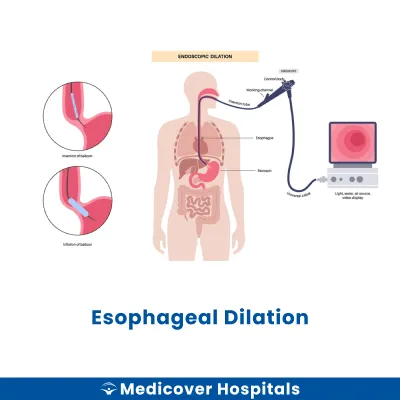
Esophageal Dilation is a medical procedure that involves widening the esophagus (the tube that carries food from the throat to the stomach). This is done using special instruments to stretch the narrowed area. It helps improve swallowing by allowing food to pass more easily.
This procedure is needed when the esophagus becomes narrowed due to conditions like strictures, achalasia, or scarring from acid reflux. If left untreated, these conditions can lead to difficulty swallowing, malnutrition, or weight loss. Modern approaches for Esophageal Dilation include balloon dilation and bougie dilation. These techniques help restore normal swallowing function effectively.
Esophageal Dilation Doctors Near You
Find skilled gastroenterologists-medical for esophageal dilation at Medicover Hospitals across India. Choose your city and book a consultation to address your healthcare needs effectively.
Why Choose Medicover Hospitals for Esophageal Dilation?
Get a second opinion from trusted experts and makeconfident, informed decisions.
 Get Second Opinion
Complete Guide To Esophageal Dilation
Everything you need to know about the procedure, preparation, and recovery
Esophageal Dilation Procedure Indications
Doctors recommend esophageal dilation when a patient experiences difficulty swallowing due to a narrowed esophagus. This procedure helps widen the esophagus, improving the passage of food and liquids.
Esophageal Stricture
Patients often report difficulty swallowing and a sensation of food getting stuck. Imaging or endoscopy may show a narrowed esophagus. When medications or dietary changes do not alleviate symptoms, dilation is considered.
Achalasia
Symptoms include difficulty swallowing, regurgitation, and chest pain. Manometry or barium swallow tests reveal impaired esophageal motility. When medications or botulinum toxin injections fail, dilation offers relief.
Esophageal Rings and Webs
Patients experience intermittent swallowing difficulties, especially with solid foods. Endoscopy can identify these thin mucosal constrictions. Dilation is recommended when dietary modifications are insufficient.
Radiation-Induced Stricture
Post-radiation patients may develop swallowing difficulties due to scarring. Imaging or endoscopy confirms narrowing. When nutritional intake is compromised, dilation becomes necessary.
Eosinophilic Esophagitis
Symptoms include difficulty swallowing and food impaction. Endoscopy with biopsy shows eosinophil infiltration. When dietary management and medications do not resolve strictures, dilation is considered.
How to Prepare for Esophageal Dilation?
Proper preparation is crucial for a smooth esophageal dilation procedure. It helps reduce risks and ensures a successful outcome.
- Medication Review: Stop NSAIDs, anticoagulants, and herbal supplements a few days before the procedure. Consult your doctor for specific guidance.
- Fasting: Do not eat or drink anything for at least 6-8 hours before the procedure to ensure safety during anaesthesia.
- Medical History: Bring a list of all medications you are taking, including dosages, to inform the medical team.
- Clothing: Wear loose, comfortable clothing on the day of the procedure for ease and comfort.
- Transportation: Arrange for someone to drive you home after the procedure, as you may feel drowsy from the anaesthesia.
- Pre-Procedure Instructions: Follow any additional instructions provided by your healthcare provider, such as avoiding certain foods.
- Health Status: Inform your doctor of any recent illnesses or changes in your health condition.
- Support: Consider having a family member or friend accompany you for support and assistance.
Esophageal Dilation Procedure (Step-by-Step)
Esophageal dilation is performed by medical gastroenterologists. The procedure typically takes 15-30 minutes. Local anaesthesia is commonly used to minimize discomfort.
- Preparation: The patient is asked to fast for several hours before the procedure. A sedative may be administered to help the patient relax.
- Positioning: The patient lies on their side on the examination table. A mouth guard is placed to protect the teeth.
- Endoscope Insertion: A flexible endoscope is gently inserted through the mouth into the esophagus. The endoscope allows the doctor to view the esophagus and locate the narrowing.
- Dilation: A dilator, such as a balloon dilator or bougie, is passed through the endoscope. The balloon is inflated or the bougie is advanced to widen the narrowed area. This may cause mild discomfort or pressure.
- Monitoring: The doctor monitors the dilation process using the endoscope. Adjustments are made as needed to achieve the desired dilation.
- Completion: Once the esophagus is adequately dilated, the instruments are carefully removed. The patient is monitored for a short period to ensure there are no immediate complications.
- Recovery: The patient may experience a sore throat or mild discomfort, which usually subsides within a day. Eating and drinking are typically resumed gradually.
Who Performs Esophageal Dilation Procedure?
Esophageal dilation is performed by gastroenterologists. These specialists are trained in diagnosing and treating conditions of the gastrointestinal tract. They use specialized instruments and techniques to safely perform the procedure.
Recovery After Esophageal Dilation Procedure
Recovery from an esophageal dilation procedure is generally quick, but it is important to follow specific guidelines for a smooth healing process. You may experience mild discomfort or a sore throat, which usually resolves in a few days.
Day 1:
- Rest is crucial. Avoid strenuous activities.
- Start with a liquid diet. Opt for clear soups and broths.
- Stay hydrated with water, coconut water, or herbal teas.
Days 2-3:
- Gradually introduce soft foods like curd, dal-rice, and khichdi.
- Avoid spicy, hot, or hard foods that may irritate the esophagus.
- Continue to avoid heavy lifting or vigorous exercise.
Days 4-7:
- Incorporate semi-solid foods such as moong dal and soft fruits.
- Monitor for any discomfort while swallowing.
- You may resume light activities but avoid strenuous tasks.
Week 2:
- Gradually return to a normal diet, introducing regular foods slowly.
- Resume work or school if you feel comfortable, but listen to your body.
- Continue to avoid any activity that causes strain or discomfort.
When to Seek Urgent Help
If you experience severe chest pain, difficulty breathing, fever, or vomiting, contact your healthcare provider immediately. These could be signs of complications requiring prompt attention.
Benefits of Esophageal Dilation Procedure
Esophageal dilation is a procedure aimed at relieving difficulty in swallowing by widening the esophagus. It offers several benefits for patients experiencing esophageal narrowing.
- Improved Swallowing: Helps patients swallow food and liquids more easily.
- Quick Relief: Provides immediate relief from symptoms of esophageal strictures.
- Minimally Invasive: Performed using endoscopic techniques, reducing recovery time.
- Outpatient Procedure: Often completed without the need for an overnight hospital stay.
Risks and Complications of Esophageal Dilation Procedure
While esophageal dilation is generally safe, it does carry some risks and potential complications. Patients should be aware of these before undergoing the procedure.
- Mild discomfort or sore throat following the procedure.
- Temporary difficulty swallowing immediately after dilation.
- Perforation of the esophagus, which may require surgical repair.
- Bleeding, which might occur during or after the procedure.
- Infection, though uncommon, can develop post-procedure.
Common Risks:
Rare Complications:
Cost of Esophageal Dilation Procedure
The cost of an Esophageal Dilation procedure typically ranges from Rs. 27,500 to Rs. 49,500 depending on factors such as hospital stay, room category, diagnostics, medications, and post-procedure care.
At Medicover Hospitals, we ensure transparent pricing with access to advanced care and experienced specialists. We support insurance and Third Party Administrators (TPA), including CGHS, ESI, and major providers, with cashless treatment options available. Please contact the hospital for the latest insurance panel details, as these may change periodically.
Frequently Asked Questions
1. How much does Esophageal Dilation cost?
The cost of an Esophageal Dilation procedure typically ranges from Rs. 27,500 to Rs. 49,
2. Please contact Medicover Hospitals for detailed pricing information. 2. Is Esophageal Dilation covered by insurance?
Esophageal Dilation may be covered by CGHS, ESI, or major TPAs. Please contact the hospital for current panel details.
3. Can I eat solid food immediately after dilation?
After esophageal dilation, you should start with soft foods like curd and khichdi. Gradually reintroduce solid foods over the next few days.
4. Will I experience chest discomfort post-procedure?
Some patients may feel mild chest discomfort after esophageal dilation. This usually subsides within a few days.
5. Is there a risk of esophagus perforation?
Esophagus perforation is a rare complication of dilation. Your doctor will take precautions to minimize this risk.
6. How soon can I return to normal activities?
Most patients can resume normal activities within a day or two. Avoid strenuous activities for at least a week.
7. Will I need multiple dilation sessions?
Some patients may require multiple sessions for optimal results. Your doctor will assess and advise based on your condition.


