 Call
Call Patient Reports
Advanced ERCP with Stent Placement Procedure Hospital with Expert Care
At Medicover Hospitals, our skilled gastroenterologists, with qualifications like MS, DNB, and MCh, perform ERCP with Stent Placement using advanced endoscopic techniques. This minimally invasive approach ensures smaller incisions and often results in a shorter hospital stay, enhancing patient recovery.
Expert Procedures
Yearly Procedures
Patient Satisfaction
What is Ercp With Stent Placement?
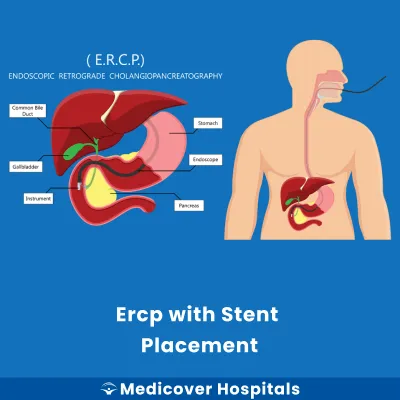
ERCP with Stent Placement is a medical procedure involving the pancreas and bile ducts. ERCP stands for Endoscopic Retrograde Cholangiopancreatography. It combines endoscopy and X-ray to diagnose and treat problems in these areas. A stent (a small tube) is placed to keep the ducts open, ensuring proper drainage of bile or pancreatic fluids.
This procedure is necessary for conditions like gallstones, strictures (narrowing), or tumors blocking the ducts. If untreated, these issues can lead to severe pain, infections, or pancreatitis. ERCP with Stent Placement helps relieve obstructions and prevent complications. Modern techniques include minimally invasive endoscopic methods, which reduce recovery time and improve patient comfort.
Ercp With Stent Placement Doctors Near You
Discover skilled gastroenterologists-surgical for ERCP with stent placement at Medicover Hospitals across India. Choose your city and book a consultation to address your gastrointestinal health needs.
Why Choose Medicover Hospitals for Ercp With Stent Placement?
Get a second opinion from trusted experts and makeconfident, informed decisions.
 Get Second Opinion
Complete Guide To Ercp With Stent Placement
Everything you need to know about the procedure, preparation, and recovery
ERCP with Stent Placement Procedure Indications
Doctors recommend ERCP with stent placement when there are blockages or narrowing in the bile or pancreatic ducts. This procedure helps relieve symptoms and prevent complications associated with these conditions.
Biliary Obstruction
Patients may experience jaundice, dark urine, and pale stools. Imaging tests like ultrasound or MRCP may show blocked bile ducts. When medications or other non-invasive treatments fail, ERCP with stent placement is considered.
Pancreatic Duct Stricture
Symptoms include abdominal pain and digestive issues. CT or MRI scans can reveal narrowing of the pancreatic duct. If dietary changes and medications do not alleviate symptoms, stent placement may be necessary.
Cholangitis
Signs include fever, chills, and right upper quadrant pain. Blood tests may show elevated white blood cells and liver enzymes. When antibiotics and supportive care do not resolve the infection, ERCP with stent placement is needed.
Choledocholithiasis
Patients often report abdominal pain and nausea. Ultrasound or CT scans may detect stones in the bile duct. If stone removal through other means is ineffective, stent placement can help ensure bile flow.
Post-Surgical Bile Leak
Symptoms include abdominal pain and bile drainage. Imaging may show bile leakage after gallbladder surgery. When conservative management fails, stent placement can help seal the leak.
How to Prepare for ERCP with Stent Placement?
Proper preparation for ERCP with stent placement helps ensure a smooth procedure and reduces complications. Follow these steps to get ready for your procedure.
- Medication Review: Stop NSAIDs, anticoagulants, and herbal supplements as advised by your doctor.
- Fasting: Do not eat or drink anything for at least 8 hours before the procedure to ensure anaesthesia safety.
- Medication List: Bring a list of all medications you take, including dosages, to share with the medical team.
- Clothing: Wear loose, comfortable clothing on the day of the procedure for ease of changing and comfort.
- Transportation: Arrange for someone to drive you home after the procedure, as you may feel drowsy from anaesthesia.
- Health Conditions: Inform your doctor about any allergies or existing health conditions that may affect the procedure.
- Pre-Procedure Tests: Complete any required blood tests or imaging studies as directed by your healthcare provider.
- Emergency Contact: Provide the hospital with an emergency contact number for any urgent communication.
ERCP with Stent Placement Procedure (Step-by-Step)
ERCP with stent placement is performed by Gastro surgeon. The procedure typically lasts 1-2 hours. It is usually done under local anaesthesia with sedation.
- Preparation: The patient is positioned on their side. A sedative is administered to help them relax and minimise discomfort.
- Endoscope Insertion: A flexible endoscope is gently inserted through the mouth, passing through the oesophagus and stomach to reach the duodenum.
- Guidewire and Cannulation: A guidewire is introduced through the endoscope. The doctor uses a cannula to access the bile or pancreatic duct.
- Contrast Dye Injection: A contrast dye is injected to highlight the ducts on X-ray images. This helps in identifying blockages or narrowing.
- Stent Placement: A stent is placed using a catheter over the guidewire. It helps in keeping the duct open to allow bile or pancreatic juices to flow.
- Endoscope Removal: The endoscope is carefully withdrawn. The patient is monitored as they wake from sedation.
- Recovery: The patient may experience mild throat discomfort. They are observed for a few hours before being discharged.
Who Performs ERCP with Stent Placement Procedure?
ERCP with stent placement is performed by gastroenterologists with expertise in endoscopic procedures. They are trained to handle the endoscope and related instruments, ensuring precise stent placement.
Recovery After ERCP with Stent Placement Procedure
After undergoing an ERCP with stent placement, patients can expect a recovery period where rest and gradual return to normal activities are essential. It's important to follow your doctor's advice for a smooth recovery.
Day 1-2:
- Rest is crucial. Avoid any strenuous activities.
- Stick to a liquid diet initially. Include clear soups and fruit juices.
- Monitor for any immediate post-procedure discomfort or nausea.
Day 3-5:
- Gradually introduce soft foods such as curd, dal-rice, and khichdi.
- Continue to avoid heavy, oily, or spicy foods.
- Light activities can be resumed, but avoid lifting heavy objects.
Day 6-7:
- Most patients can return to work or school, depending on comfort.
- Maintain a balanced diet with moong dal and soft-cooked vegetables.
- Ensure adequate hydration and rest.
Phase 2 (Week 2 and Beyond):
- Gradually resume normal diet, introducing more variety.
- Increase physical activity as tolerated, but listen to your body.
- Regular follow-up with your doctor to monitor stent function.
When to Seek Urgent Help:
- Severe abdominal pain or persistent vomiting.
- Fever or chills indicating possible infection.
- Yellowing of the skin or eyes (jaundice).
- Bleeding from the digestive tract.
Benefits of ERCP with Stent Placement Procedure
ERCP with stent placement is a procedure used to treat blockages in the bile or pancreatic ducts.
- Relieves Blockages: Helps to clear obstructions in the ducts, improving bile and pancreatic juice flow.
- Minimally Invasive: Performed using an endoscope, reducing the need for open surgery.
- Quick Recovery: Patients often experience a faster recovery time compared to traditional surgery.
- Diagnostic and Therapeutic: Allows for both diagnosis and treatment in a single procedure.
Risks and Complications of ERCP with Stent Placement Procedure
While generally safe, ERCP with stent placement carries certain risks and complications.
- Common: Pancreatitis, which is inflammation of the pancreas, can occur after the procedure.
- Common: Infection in the bile duct or pancreas may develop post-procedure.
- Rare: Bleeding can occur, especially if a sphincterotomy is performed.
- Rare: Perforation of the duodenum or bile duct may happen, requiring further intervention.
- Rare: Allergic reactions to the sedatives or contrast dye used during the procedure.
Cost of ERCP with Stent Placement Procedure
The cost of an ERCP with stent placement procedure can vary Rs.20000 to Rs.100000 based on several factors, including the surgical approach, duration of hospital stay, room category, required diagnostics, and post-operative care.
At Medicover Hospitals, we offer transparent pricing to ensure clarity for our patients. We support insurance and TPA services, including CGHS, ESI, and major TPAs, with a cashless facility available for added convenience. Please contact the hospital for the latest insurance panel details as these may change periodically.
Frequently Asked Questions
1. How much does ERCP with Stent Placement cost?
The cost of ERCP with Stent Placement varies Rs.20000 to Rs.
2. Please contact Medicover Hospitals for the most accurate pricing information. 2. Is ERCP with Stent Placement covered by insurance?
ERCP with Stent Placement may be covered by CGHS, ESI, and major TPAs. Please contact the hospital for current panel details.
3. Will I need to change my diet after ERCP?
Yes, a light diet including curd, dal-rice, and khichdi is recommended post-ERCP. Avoid fatty foods for a few days to aid recovery.
4. Can I experience pancreatitis after ERCP?
Yes, pancreatitis is a potential complication after ERCP. It is important to follow up with your doctor if you experience severe abdominal pain.
5. Will I feel pain after stent placement?
Mild discomfort or pain is common after stent placement. Pain relief medication can help manage symptoms effectively.
6. How long does it take to recover from ERCP?
Recovery from ERCP with Stent Placement typically takes a few days. Most patients can resume normal activities within a week.
7. Can the stent move after placement?
Stent migration is a possible complication after ERCP. Regular follow-ups are important to ensure the stent remains in place.
8. How long do ERCP stents last?
Stents placed during ERCP can last from a few weeks to several months, depending on whether they are plastic or metal. Plastic stents usually need replacement every 3–6 months, while metal stents can last longer, sometimes up to a year or more.
9. Is ERCP stent removal painful?
Stent removal during ERCP is generally not painful because it is done under sedation. You may feel mild discomfort or a sore throat afterward, but it usually settles quickly.


