 Call
Call Patient Reports
Advanced ERCP with Mechanical Lithotripsy Procedure Hospital with Expert Care
At Medicover Hospitals, our experienced gastroenterologists, with qualifications like DM and DNB, perform ERCP with Mechanical Lithotripsy using advanced endoscopic techniques. This approach effectively treats bile duct stones, often resulting in shorter hospital stays and quicker recovery for patients across India.
Expert Experts
Yearly Procedures
Patient Satisfaction
What is ERCP With Mechanical Lithotripsy?
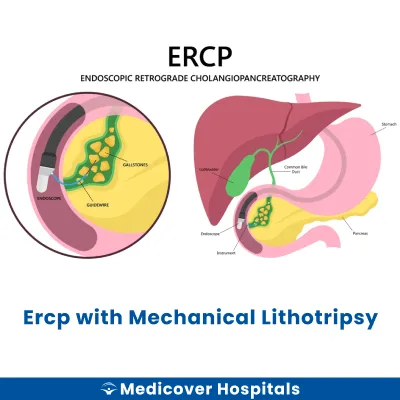
ERCP with Mechanical Lithotripsy is a procedure used to remove stones from the bile duct (a tube that carries bile from the liver to the small intestine). ERCP stands for Endoscopic Retrograde Cholangiopancreatography. It involves using an endoscope (a flexible tube with a camera) to access the bile duct. Mechanical lithotripsy is a technique that breaks down large stones into smaller pieces, making them easier to remove.
This procedure is needed when stones block the bile duct, causing pain, infection, or jaundice (yellowing of the skin). If left untreated, these blockages can lead to severe complications like pancreatitis or liver damage. Modern approaches include minimally invasive techniques that reduce recovery time and improve outcomes. These methods help ensure effective stone removal with less discomfort.
ERCP With Mechanical Lithotripsy Doctors Near You
Find expert gastroenterologists-medical for ERCP with mechanical lithotripsy at Medicover Hospitals across India. Choose your city and book a consultation to address your digestive health needs today.
Why Choose Medicover Hospitals for ERCP With Mechanical Lithotripsy?
Get a second opinion from trusted experts and makeconfident, informed decisions.
 Get Second Opinion
Complete Guide To Ercp With Mechanical Lithotripsy
Everything you need to know about the procedure, preparation, and recovery
ERCP with Mechanical Lithotripsy Procedure Indications
Doctors recommend ERCP with Mechanical Lithotripsy when non-invasive treatments fail to relieve symptoms caused by bile duct stones. This procedure is often necessary to remove large or impacted stones that cannot be managed through medication or less invasive methods.
Obstructive Jaundice
Patients may experience yellowing of the skin and eyes, dark urine, and pale stools. Imaging tests like ultrasound or MRCP may reveal bile duct obstruction due to stones. When jaundice persists despite medication, ERCP with Mechanical Lithotripsy is considered.
Acute Cholangitis
Symptoms include fever, chills, abdominal pain, and jaundice. Blood tests may show elevated white blood cell count and liver enzymes. If antibiotics and supportive care do not resolve the infection, this procedure is necessary to clear the obstruction.
Recurrent Biliary Colic
Patients suffer from severe, intermittent abdominal pain. Ultrasound or CT scans may show stones in the bile duct. When pain recurs frequently and disrupts daily life, mechanical lithotripsy via ERCP is advised.
Pancreatitis due to Biliary Stones
Symptoms include severe abdominal pain radiating to the back, nausea, and vomiting. Elevated pancreatic enzymes in blood tests suggest pancreatitis. If caused by bile duct stones, ERCP with Mechanical Lithotripsy can relieve the obstruction.
Failed Endoscopic Stone Extraction
Patients may have persistent symptoms like pain or jaundice despite initial endoscopic attempts to remove stones. Imaging may show large or impacted stones. Mechanical lithotripsy is used when standard endoscopic techniques are insufficient.
How to Prepare for ERCP with Mechanical Lithotripsy?
Proper preparation is crucial for a successful ERCP with Mechanical Lithotripsy. It helps reduce risks and ensures a smoother procedure.
- Medication Review: Inform your doctor about all medications. Stop NSAIDs, anticoagulants, and herbal supplements as advised.
- Fasting: Do not eat or drink for at least 8 hours before the procedure to ensure safety during anaesthesia.
- Bowel Preparation: Follow any specific instructions given by your doctor for bowel prep, if applicable.
- Clothing: Wear loose, comfortable clothing on the day of the procedure for ease and comfort.
- Transportation: Arrange for someone to drive you home post-procedure, as you may feel drowsy from the anaesthesia.
- Medication List: Bring a list of all medications you are taking, including dosages, to the hospital.
- Allergy Information: Inform your healthcare provider about any allergies, especially to medications or anaesthesia.
- Consent Form: Be prepared to sign a consent form after discussing the procedure and its risks with your doctor.
ERCP with Mechanical Lithotripsy Procedure (Step-by-Step)
ERCP with Mechanical Lithotripsy is performed by gastroenterologists. It typically lasts 1-2 hours. General anaesthesia is used to ensure patient comfort.
- Preparation: The patient is given general anaesthesia. This ensures they are asleep and pain-free during the procedure.
- Endoscope Insertion: A flexible endoscope is gently inserted through the mouth, passing through the oesophagus and stomach to reach the duodenum.
- Catheter Placement: A catheter is guided through the endoscope into the bile or pancreatic duct. This helps in injecting a contrast dye for clear imaging.
- Imaging: X-ray images are taken to locate the stones. This helps in planning the next steps of the procedure.
- Mechanical Lithotripsy: A mechanical lithotripter is used to crush the stones. The crushed stones are then removed using a retrieval basket or balloon.
- Endoscope Removal: Once the stones are removed, the endoscope is carefully withdrawn. The patient is then moved to a recovery area.
- Recovery: The patient is monitored as they wake up from anaesthesia. They may experience a sore throat temporarily.
Who Performs ERCP with Mechanical Lithotripsy Procedure?
The procedure is performed by gastroenterologists. These specialists are trained in diagnosing and treating conditions of the gastrointestinal tract using endoscopic techniques.
Recovery After ERCP with Mechanical Lithotripsy Procedure
After undergoing ERCP with Mechanical Lithotripsy, patients can expect a recovery period where rest and gradual return to normal activities are essential. It is important to follow medical advice and attend follow-up appointments for a smooth recovery.
Day 1-3:
- Rest is crucial. Avoid strenuous activities.
- Consume a light diet. Opt for easily digestible foods like curd, dal-rice, and soups.
- Stay hydrated. Drink plenty of water and herbal teas.
Day 4-7:
- Gradually resume light activities. Avoid heavy lifting.
- Continue with a soft diet. Include khichdi and moong dal for nourishment.
- Monitor for any discomfort or unusual symptoms.
Day 8-14:
- Most can return to work or school, depending on recovery progress.
- Introduce regular foods slowly. Avoid spicy or fatty foods.
- Continue to avoid intense physical activities.
Phase: Beyond 2 Weeks
- Resume normal activities as tolerated.
- Maintain a balanced diet. Include a variety of fruits and vegetables.
- Stay active with moderate exercise, like walking.
When to Seek Urgent Help
- Severe abdominal pain or persistent nausea.
- Fever or chills indicating possible infection.
- Jaundice or yellowing of the skin and eyes.
- Difficulty breathing or chest pain.
Benefits of ERCP with Mechanical Lithotripsy Procedure
ERCP with Mechanical Lithotripsy is a procedure used to remove bile duct stones. It combines endoscopic techniques with mechanical tools for effective stone removal.
- Minimally Invasive: It avoids open surgery, reducing recovery time.
- Effective Stone Removal: Successfully breaks and removes large stones that are difficult to manage otherwise.
- Quick Relief: Provides rapid relief from symptoms like pain and jaundice.
- Diagnostic and Therapeutic: Allows for both diagnosis and treatment in one session.
Risks and Complications of ERCP with Mechanical Lithotripsy Procedure
While ERCP with Mechanical Lithotripsy is generally safe, it does carry some risks. Understanding these can help in making informed decisions.
- Pancreatitis can occur post-procedure, causing abdominal pain and nausea.
- Infection of the bile duct (cholangitis) may develop.
- Bleeding can occur, especially if the bile duct is injured.
- Perforation of the bile duct or intestine is a potential risk.
- Allergic reactions to sedatives or contrast dye may happen.
Common Risks:
Rare Complications:
Cost of ERCP with Mechanical Lithotripsy Procedure
The cost of ERCP with Mechanical Lithotripsy ranges from Rs. 49,500 to Rs. 69,500, depending on the surgical approach, duration of hospital stay, room category, required diagnostics, and post-operative care.
At Medicover Hospitals, we offer transparent pricing to ensure clarity for our patients. We support various insurance and TPA options, including CGHS, ESI, and major TPAs, with cashless facilities available for a hassle-free experience. Please contact the hospital for the latest insurance panel details as these may change periodically.
Frequently Asked Questions
1. How much does ERCP with Mechanical Lithotripsy procedure cost at Medicover Hospitals?
The cost of ERCP with Mechanical Lithotripsy typically ranges from Rs. 49,500 to Rs. 69,
2. For exact pricing based on individual needs, please contact Medicover Hospitals. 2. Is ERCP with Mechanical Lithotripsy procedure covered under health insurance at Medicover?
ERCP with Mechanical Lithotripsy may be covered by CGHS, ESI, and major TPAs. Please contact the hospital for current panel details.
3. Can gallstones recur after ERCP with Lithotripsy?
There is a possibility of gallstones recurring after the procedure. Regular follow-ups are essential to monitor and manage any recurrence.
4. What is the recovery time after ERCP with Lithotripsy?
Recovery from ERCP with Mechanical Lithotripsy generally takes a few days. Most patients resume normal activities within a week.
5. Will I need a special diet after ERCP with Lithotripsy?
A light diet including curd, dal-rice, and khichdi is recommended initially. Gradually, you can return to your regular diet as advised by your doctor.
6. Can I experience pancreatitis after ERCP with Lithotripsy?
Pancreatitis is a potential complication post-procedure. Immediate medical attention is required if you experience severe abdominal pain.
7. Is there a risk of infection after ERCP with Lithotripsy?
Infection is a possible risk after the procedure. Follow your doctor's instructions to minimize this risk and report any unusual symptoms promptly.


