 Call
Call Patient Reports
Best Episiotomy Procedure Hospital with Advanced Gyno Care
At Medicover Hospitals, our gynecologists, holding qualifications like MS, DNB, and FMAS, perform episiotomies using the open surgical approach. This procedure is essential during childbirth to prevent severe perineal tears. Patients often experience a shorter recovery period post-surgery.
Expert Surgeons
Yearly Surgeries
Patient Satisfaction
What is Episiotomy?
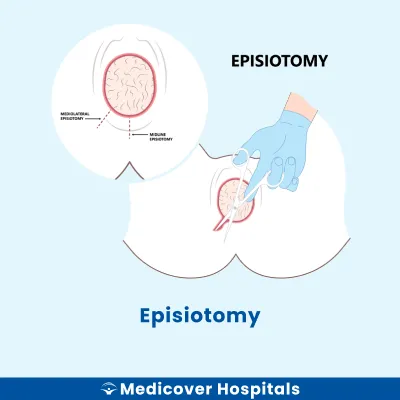
An episiotomy is a surgical incision made in the perineum (the area between the vaginal opening and the anus). This procedure is performed during childbirth. It helps enlarge the vaginal opening to facilitate the baby's delivery. The incision can be either midline (straight down) or mediolateral (angled to the side).
Episiotomies are needed when there is a risk of severe tearing during childbirth. Conditions like fetal distress, prolonged labour, or the need for assisted delivery may lead to an episiotomy. If untreated, severe tearing can occur, leading to complications. Modern surgical approaches include the use of precise incisions and careful suturing to promote healing and reduce discomfort.
Episiotomy Doctors Near You
Find experienced gynecologists for episiotomy at Medicover Hospitals across India. Choose your city and book a consultation to discuss your needs with our specialists today.
Why Choose Medicover Hospitals for Episiotomy?
Get a second opinion from trusted experts and makeconfident, informed decisions.
 Get Second Opinion
Complete Guide To Episiotomy
Everything you need to know about the procedure, preparation, and recovery
Episiotomy Procedure Indications
Doctors may recommend an episiotomy during childbirth to aid in the delivery process. This procedure is often considered when there are concerns about the baby's or mother's health during labour.
Fetal Distress
If the baby shows signs of distress, such as an irregular heartbeat, doctors may consider an episiotomy. This can help speed up delivery to reduce risks to the baby. Monitoring during labour helps identify these signs.
Prolonged Labour
When labour is unusually long and the mother is exhausted, an episiotomy might be suggested. This can facilitate a quicker delivery. Doctors assess the progress of labour and decide if intervention is necessary.
Shoulder Dystocia
In cases where the baby's shoulder gets stuck after the head is delivered, an episiotomy may be needed. This helps create more space for the baby to pass through. Doctors identify this issue during delivery.
Instrumental Delivery
When forceps or a vacuum are needed to assist delivery, an episiotomy might be performed. This reduces the risk of tearing. The decision is based on the baby's position and progress during labour.
Large Baby
If the baby is larger than average, there is a higher risk of tearing. An episiotomy can help manage this risk. Doctors estimate the baby's size through ultrasound and physical examination.
How to Prepare for Episiotomy?
Proper preparation for an episiotomy can help ensure a smoother procedure and recovery. Understanding the steps involved can ease anxiety and improve outcomes.
- Medication Review: Stop NSAIDs, anticoagulants, and herbal supplements as advised by your doctor to reduce bleeding risks.
- Fasting Guidelines: Follow a fasting period of 6-8 hours before the procedure if general anaesthesia is planned.
- Pelvic Floor Exercises: Practice Kegel exercises regularly to strengthen pelvic muscles, aiding recovery.
- Comfortable Clothing: Wear loose, comfortable clothing on the day of the procedure for ease and comfort.
- Transportation Arrangement: Arrange for someone to drive you home post-procedure as you may feel drowsy.
- Medication List: Bring a list of all medications you are taking, including dosages, for the medical team.
- Hygiene: Maintain good personal hygiene to reduce infection risk, as advised by your healthcare provider.
- Relaxation Techniques: Practice relaxation techniques like deep breathing to help manage stress and anxiety.
Episiotomy procedure (Step-by-Step)
An episiotomy is performed by gynecologists during childbirth. It typically takes a few minutes. Local anaesthesia is usually administered to numb the area.
- Preparation: The patient is positioned comfortably on the delivery table. The area around the perineum is cleaned and sterilized.
- Anaesthesia Administration: Local anaesthesia is injected into the perineal area. This numbs the region to prevent pain during the incision.
- Incision: Using surgical scissors, the gynecologist makes a small incision (usually 1-2 cm) in the perineum. This helps enlarge the vaginal opening for childbirth.
- Delivery: The baby is delivered through the enlarged opening. The incision allows for a smoother delivery process.
- Repair: After delivery, the gynecologist stitches the incision using absorbable sutures. This helps the tissue heal properly.
- Post-Procedure Care: The patient is monitored for any immediate complications. Pain relief and care instructions are provided.
Who Performs Episiotomy procedure?
Episiotomies are performed by gynae surgeons. These specialists are trained in managing childbirth and related procedures. They ensure that the procedure is done safely and effectively. Please contact the hospital for current details as insurance panels may change.
Recovery After Episiotomy Procedure
Recovery from an episiotomy involves healing of the incision made during childbirth. Most women experience discomfort, but it gradually improves. Proper care and rest are essential for a smooth recovery.
Day 1-3:
- Expect swelling and soreness around the incision area.
- Use ice packs to reduce swelling and pain.
- Consume soft, easy-to-digest foods like curd, dal-rice, and soups to prevent constipation.
- Avoid strenuous activities; rest as much as possible.
Day 4-7:
- Continue with sitz baths to promote healing and reduce discomfort.
- Introduce light walking to improve circulation.
- Include fibre-rich foods like moong dal and khichdi to maintain bowel regularity.
- Refrain from lifting heavy objects or engaging in vigorous exercise.
Day 8-14:
- Most discomfort should start to subside.
- Gradually increase activity levels, but avoid high-impact exercises.
- Return to work or school if you feel comfortable, but continue to avoid heavy lifting.
- Maintain a balanced diet to support recovery and energy levels.
Phase 3-6 Weeks:
- Full recovery is expected, but individual experiences may vary.
- Resume normal activities, including exercise, as advised by your doctor.
- Continue eating a nutritious diet to aid healing.
When to Seek Urgent Help:
- Severe pain or swelling that worsens.
- Fever or chills indicating possible infection.
- Excessive bleeding or unusual discharge.
- Difficulty urinating or passing stool.
Benefits of Episiotomy procedure
An episiotomy is a surgical cut made in the perineum during childbirth. It can offer several benefits in specific situations.
- Facilitates Delivery: Helps in delivering the baby quickly when there are complications.
- Prevents Severe Tearing: Reduces the risk of uncontrolled tearing of the vaginal tissues.
- Protects Pelvic Floor: May help in preserving pelvic floor muscles in certain cases.
- Reduces Trauma: Can decrease trauma to the baby's head during delivery.
Risks and Complications of Episiotomy procedure
While episiotomies can be beneficial, they also carry potential risks and complications. It is important to be aware of these.
- Common: Pain and discomfort during recovery.
- Common: Infection at the site of the incision.
- Common: Prolonged healing time compared to natural tears.
- Rare: Increased blood loss during the procedure.
- Rare: Scarring that may affect future deliveries.
- Rare: Risk of complications with future sexual activity.
Cost of Episiotomy procedure
The cost of an Episiotomy procedure at Medicover Hospitals ranges from Rs.98,000 to Rs.261,000. This variation depends on the ward category chosen, such as general, private, or deluxe. We offer transparent pricing to ensure clarity for our patients. Additionally, we provide insurance and TPA support, accepting CGHS, ESI, and major TPAs. A cashless facility is also available for your convenience. Please contact the hospital for the latest insurance panel details as these may change periodically.
Frequently Asked Questions
1. How much does Episiotomy procedure cost at Medicover Hospitals?
The cost of an Episiotomy procedure at Medicover Hospitals ranges from Rs. 98,000 to Rs. 261,000, depending on the type of accommodation.
2. Is Episiotomy procedure covered under health insurance at Medicover?
Episiotomy procedures may be covered by CGHS, ESI, and major TPAs with cashless options. Please contact the hospital for current panel details.
3. Will I experience pain during recovery from Episiotomy?
Mild to moderate pain is common after an Episiotomy. Pain relief medications and warm sitz baths can help manage discomfort.
4. Can I sit comfortably after an Episiotomy?
Sitting may be uncomfortable initially after an Episiotomy. Using a cushion or sitting on soft surfaces can ease pressure on the area.
5. When can I resume normal activities post-Episiotomy?
Most women can resume normal activities within 4 to 6 weeks post-Episiotomy. Avoid strenuous activities until fully healed.
6. What foods aid recovery after an Episiotomy?
Eating fibre-rich foods like dal-rice and khichdi, along with curd, can help prevent constipation and aid recovery after an Episiotomy.
7. Can an Episiotomy lead to long-term complications?
Long-term complications from an Episiotomy are rare but can include scar tissue formation. Regular follow-ups can help monitor and manage any issues.
8. How painful are episiotomy stitches?
Episiotomy stitches can cause mild to moderate pain, especially in the first few days after delivery. The discomfort usually improves within 1–2 weeks and can be managed with pain relief, hygiene, and proper care.
9. How many cm is an episiotomy cut?
An episiotomy cut is typically about 2 to 4 cm long, depending on the clinical need during childbirth. The exact length may vary based on the baby’s size and delivery conditions.


