 Call
Call Patient Reports
Endovascular Embolisation Procedure Hospital with Advanced Care
Endovascular embolisation at Medicover Hospitals is performed using advanced endoscopic techniques by our skilled cardiologists with qualifications like DM and DNB. This minimally invasive procedure effectively treats various cardiovascular conditions, resulting in reduced blood loss and shorter hospital stays for patients across India.
Expert Procedures
Yearly Procedures
Patient Satisfaction
What is Endovascular Embolisation?
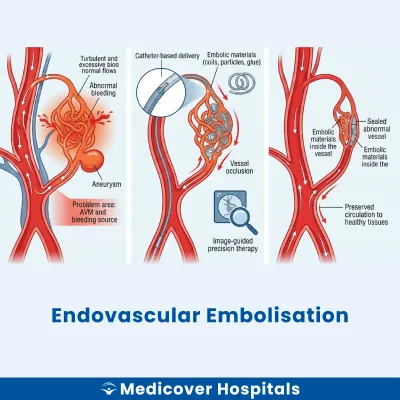
Endovascular embolisation is a minimally invasive procedure used to block blood vessels. It involves inserting a catheter (a thin tube) into the blood vessels to deliver embolic agents. These agents help obstruct the flow of blood to a specific area. This technique is often used in various parts of the body, including the brain, liver, and uterus, to treat abnormal blood vessels or reduce blood supply to tumours.
This procedure is essential for conditions like arteriovenous malformations (abnormal connections between arteries and veins), aneurysms (weakened blood vessel walls), and certain types of tumours. If left untreated, these conditions can lead to serious complications, such as bleeding or organ damage. Modern surgical approaches for endovascular embolisation include the use of coils, glue, or particles to achieve vessel occlusion effectively.
Endovascular Embolisation Doctors Near You
Find experienced interventional radiologists for endovascular embolisation at Medicover Hospitals across India. Choose your city and book a consultation to explore treatment options tailored to your needs.
Why Choose Medicover Hospitals for Endovascular Embolisation?
Get a second opinion from trusted experts and makeconfident, informed decisions.
 Get Second Opinion
Complete Guide To Endovascular Embolisation
Everything you need to know about the procedure, preparation, and recovery
Endovascular Embolisation Procedure Indications
Doctors recommend endovascular embolisation when less invasive treatments are ineffective. It is often used to control bleeding or reduce blood flow to specific areas.
Arteriovenous Malformations (AVMs)
Patients may experience headaches or seizures. Imaging tests often reveal abnormal connections between arteries and veins. When symptoms persist despite medication, embolisation may be advised.
Uterine Fibroids
Women may suffer from heavy menstrual bleeding or pelvic pain. Ultrasound or MRI can show fibroids. If symptoms do not improve with medication, embolisation can be considered.
Gastrointestinal Bleeding
Patients might notice blood in stools or vomit. Endoscopy or angiography can identify the bleeding source. When bleeding is severe or recurrent, embolisation may be necessary.
Trauma-Related Bleeding
Injuries can lead to internal bleeding, causing low blood pressure or shock. CT scans help locate the bleeding site. If bleeding is uncontrolled by other means, embolisation is an option.
Renal Angiomyolipoma
Patients may experience flank pain or blood in urine. Imaging tests show benign kidney tumours. When these tumours cause symptoms or risk rupture, embolisation is recommended.
Postpartum Hemorrhage
New mothers may experience heavy bleeding after childbirth. Ultrasound or clinical examination confirms the source. If bleeding persists despite medical management, embolisation can be performed.
How to Prepare for Endovascular Embolisation?
Proper preparation for endovascular embolisation is crucial to ensure a smooth procedure and recovery. Following the guidelines helps minimise risks and complications.
- Medication Review: Stop NSAIDs, anticoagulants, and herbal supplements as advised by your doctor.
- Fasting: Do not eat or drink for at least 6-8 hours before the procedure due to anaesthesia requirements.
- Medical History: Bring a list of all medications with dosages, including over-the-counter drugs.
- Clothing: Wear loose, comfortable clothing on the day of the procedure for ease of changing.
- Transportation: Arrange for someone to drive you home post-procedure as you may feel drowsy.
- Pre-Procedure Tests: Complete any blood tests or imaging studies as scheduled by your healthcare provider.
- Allergy Check: Inform your doctor about any known allergies, especially to contrast dyes or anaesthesia.
- Personal Items: Leave valuables at home and bring only essentials to the hospital.
Endovascular Embolisation Procedure (Step-by-Step)
Endovascular embolisation is performed by interventional radiologists. The procedure typically lasts 1-3 hours. It is usually done under local anaesthesia with sedation.
- Preparation: The patient is positioned on the procedure table. A local anaesthetic is applied to numb the area, usually the groin.
- Access: A small incision, about 1-2 cm, is made in the groin. A catheter is inserted into the femoral artery using a guide wire.
- Navigation: The catheter is guided through the blood vessels to the target area using fluoroscopy (X-ray imaging). The patient may feel slight pressure but no pain.
- Embolisation: Embolic agents, such as coils or particles, are delivered through the catheter to block the blood flow to the abnormal area. The patient remains still to ensure precise placement.
- Verification: Imaging is used to confirm the successful blockage of blood flow. Adjustments are made if necessary.
- Catheter Removal: The catheter is carefully removed. Pressure is applied to the incision site to prevent bleeding.
- Recovery: The patient is monitored in a recovery area. They may need to lie flat for a few hours to ensure proper healing.
Who Performs Endovascular Embolisation procedure?
Endovascular embolisation is performed by interventional radiologists. These specialists are trained in using imaging techniques to guide instruments through blood vessels. They use catheters and embolic agents to treat conditions without the need for open surgery.
Recovery After Endovascular Embolisation Procedure
Recovery from endovascular embolisation involves rest and gradual return to normal activities. Patients may experience mild discomfort and fatigue. Following the doctor's advice is crucial for a smooth recovery.
Day 1-3:
- Rest is essential. Avoid strenuous activities.
- Keep the puncture site clean and dry.
- Consume light meals. Opt for easily digestible foods like curd, dal-rice, and soups.
Day 4-7:
- Gradually increase light activities such as walking.
- Continue with a balanced diet. Include khichdi and moong dal for protein and energy.
- Avoid lifting heavy objects or bending.
Week 2:
- Most patients can resume work or school, depending on their comfort and doctor's advice.
- Maintain a nutritious diet to support healing.
- Follow up with the doctor for a check-up.
Phase 3 (Week 3-4):
- Resume normal activities gradually, as per medical advice.
- Continue to avoid high-impact exercises until fully cleared by the doctor.
- Regular follow-ups to monitor recovery progress.
When to Seek Urgent Help
- Severe headache or dizziness.
- Sudden swelling or pain at the puncture site.
- Unusual bleeding or discharge from the site.
- Fever or signs of infection.
If any of these symptoms occur, contact your healthcare provider immediately.
Benefits of Endovascular Embolisation Procedure
Endovascular embolisation is a minimally invasive procedure used to treat abnormal blood vessels. It offers several benefits:
- Minimally Invasive: Requires only a small incision, reducing recovery time.
- Targeted Treatment: Directly addresses the affected area, preserving surrounding tissues.
- Reduced Hospital Stay: Often allows for quicker discharge compared to open surgery.
- Less Pain: Generally associated with less postoperative discomfort.
- Versatile Application: Can be used for various conditions like aneurysms and vascular malformations.
Risks and Complications of Endovascular Embolisation Procedure
While generally safe, endovascular embolisation carries some risks and potential complications:
- Common: Bruising or bleeding at the catheter insertion site.
- Common: Mild pain or discomfort post-procedure.
- Rare: Allergic reaction to the contrast dye used.
- Rare: Blood vessel damage during the procedure.
- Rare: Migration of embolic material to unintended areas.
- Rare: Infection at the catheter site.
- Rare: Stroke or other neurological complications.
Cost of Endovascular Embolisation Procedure
The cost of the Endovascular Embolisation procedure at Medicover Hospitals ranges from Rs. 40,000 to Rs. 1,28,000. The price varies depending on the ward category chosen, such as outpatient, day care, general, and more. We offer transparent pricing to ensure clarity for our patients. Insurance and TPA support is available, with acceptance of CGHS, ESI, and major TPAs. A cashless facility is also provided for convenience. Please contact the hospital for the latest insurance panel details as these may change periodically.
Frequently Asked Questions
1. How much does Endovascular Embolisation cost?
The cost of Endovascular Embolisation at Medicover Hospitals ranges from Rs. 40,000 to Rs. 1,28,000, depending on the type of room and care required.
2. Is Endovascular Embolisation covered by insurance?
Endovascular Embolisation may be covered by CGHS, ESI, and major TPAs for cashless treatment. Please contact the hospital for current panel details.
3. Can I drive after Endovascular Embolisation?
Driving is generally not recommended for at least a week after the procedure. It is important to allow time for recovery and avoid complications.
4. Will I need a special diet after embolisation?
A light diet including curd, dal-rice, and khichdi is recommended post-procedure. Avoid spicy and oily foods to aid recovery.
5. Is there a risk of blood vessel damage?
There is a small risk of blood vessel damage during embolisation. The procedure is performed with precision to minimise such risks.
6. Can I exercise after Endovascular Embolisation?
Strenuous exercise should be avoided for at least two weeks post-procedure. Light activities like walking can be resumed after consulting your doctor.
7. Will I experience pain after the procedure?
Mild discomfort or pain is common after embolisation. Pain management will be provided to ensure comfort during the recovery period.
8. What is the recovery time for endovascular embolization?
Recovery is usually quick, with most patients resuming normal activities within a few days to 1 week. Hospital stay is typically short, often 1–2 days.
9. What are the risks of endovascular embolization?
Risks may include bleeding, infection, allergic reaction to contrast dye, or blockage of unintended vessels. Serious complications are rare but can depend on the area being treated.


