 Call
Call Patient Reports
Endoscopic Third Ventriculostomy Surgery Hospital with Advanced Care
Endoscopic Third Ventriculostomy (ETV) is a minimally invasive procedure performed by skilled neurosurgeons at Medicover Hospitals. Our experts, with qualifications such as MS, MCh, and DNB, use advanced endoscopic techniques to treat hydrocephalus. This approach often results in shorter hospital stays and smaller incisions.
Expert Surgeons
Yearly Surgeries
Patient Satisfaction
What is Endoscopic Third Ventriculostomy?
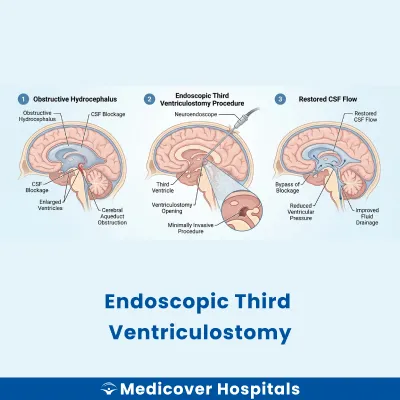
Endoscopic Third Ventriculostomy (ETV) is a surgical procedure involving the brain. It creates an opening in the floor of the third ventricle (a fluid-filled cavity) to allow cerebrospinal fluid (CSF) to flow freely. This helps relieve pressure caused by fluid buildup. The procedure uses an endoscope, a thin tube with a camera, to guide the surgeon.
This surgery is needed for conditions like hydrocephalus, where excess CSF accumulates in the brain. If untreated, it can lead to increased intracranial pressure, headaches, and even brain damage. Modern surgical approaches for ETV include minimally invasive techniques. These reduce recovery time and improve outcomes. Early intervention is crucial to prevent complications.
Endoscopic Third Ventriculostomy Doctors Near You
Discover skilled neurosurgeons for endoscopic third ventriculostomy at Medicover Hospitals across India. Choose your city and book a consultation to address your neurological needs today.
Why Choose Medicover Hospitals for Endoscopic Third Ventriculostomy?
Get a second opinion from trusted experts and makeconfident, informed decisions.
 Get Second Opinion
Complete Guide To Endoscopic Third Ventriculostomy
Everything you need to know about the procedure, preparation, and recovery
Endoscopic Third Ventriculostomy Surgery Indications
Endoscopic Third Ventriculostomy (ETV) is recommended for patients with obstructive hydrocephalus. This procedure is often considered when other treatments are ineffective or unsuitable.
Obstructive Hydrocephalus
Patients may experience headaches, nausea, or vision problems due to fluid build-up in the brain. Imaging tests like MRI or CT scans show blockage in the ventricles. When medications or other treatments fail, ETV is considered.
Aqueductal Stenosis
Symptoms include headaches and balance issues. MRI scans reveal narrowing of the cerebral aqueduct. If symptoms persist despite medication, ETV may be recommended.
Post-Infectious Hydrocephalus
Following an infection, patients might have persistent headaches or cognitive difficulties. Imaging shows ventricular enlargement. When antibiotics and other treatments do not resolve the issue, ETV is an option.
Congenital Hydrocephalus
Infants may present with rapid head growth and irritability. Ultrasound or MRI confirms ventricular dilation. If shunt placement is not feasible, ETV is considered.
Failed Shunt Systems
Patients with shunt systems may experience recurrent headaches or shunt malfunctions. Imaging indicates shunt failure or blockage. ETV is an alternative when shunt revisions are unsuccessful.
How to Prepare for Endoscopic Third Ventriculostomy?
Proper preparation is crucial for a successful Endoscopic Third Ventriculostomy. It helps reduce risks and ensures a smoother recovery.
- Medication Review: Stop NSAIDs, anticoagulants, and herbal supplements as advised by your doctor.
- Fasting: Fast for at least 8 hours before the procedure due to general anaesthesia.
- Pre-Surgery Tests: Complete any blood tests or imaging studies as scheduled by your healthcare provider.
- Personal Items: Wear loose, comfortable clothing on the day of the procedure.
- Transportation: Arrange for someone to drive you home post-surgery.
- Medication List: Bring a list of your current medications with dosages for reference.
- Hydration: Stay well-hydrated up to the fasting period to aid recovery.
- Rest: Ensure you have adequate rest the night before the surgery.
Endoscopic Third Ventriculostomy Surgery (Step-by-Step)
Endoscopic Third Ventriculostomy (ETV) is performed by neurosurgeons. The procedure typically lasts 1-2 hours and is done under general anaesthesia.
- Preparation: The patient is placed under general anaesthesia. The head is positioned and secured to prevent movement during the surgery.
- Incision: A small incision, about 1-2 cm, is made on the scalp. A burr hole is drilled into the skull to access the brain.
- Endoscope Insertion: An endoscope is carefully inserted through the burr hole. This instrument provides a view of the brain's ventricles.
- Ventricular Access: The endoscope is navigated to the third ventricle. A small opening is created in the floor of the ventricle using a bipolar cautery or a curette.
- Creating a Pathway: The opening allows cerebrospinal fluid to bypass the obstruction. This helps relieve pressure caused by fluid buildup.
- Closure: The endoscope is removed. The incision is closed with sutures or staples. A sterile dressing is applied.
- Recovery: The patient is monitored in the recovery room. They may experience mild discomfort or headache, which is managed with medication.
Who Performs Endoscopic Third Ventriculostomy Surgery?
Endoscopic Third Ventriculostomy is performed by neurological surgery specialists. These specialists have expertise in brain surgeries and are trained to use advanced surgical instruments like endoscopes and bipolar cautery. They ensure the procedure is conducted safely and effectively.
Recovery After Endoscopic Third Ventriculostomy Surgery
Recovery from Endoscopic Third Ventriculostomy (ETV) surgery involves gradual healing and adjustment. Patients can expect to stay in the hospital for a few days post-surgery for monitoring. It's important to follow the doctor's advice for a smooth recovery.
Day 1-3:
- Rest is crucial. Avoid any strenuous activities.
- Begin with a liquid diet, including clear soups and diluted fruit juices.
- Pain and discomfort around the incision site are normal. Follow prescribed pain management.
Day 4-7:
- Gradually introduce soft foods like khichdi, dal-rice, and moong dal.
- Continue to avoid heavy lifting or bending over.
- Short walks are encouraged to promote circulation.
Day 8-14:
- Most patients can resume light activities. Avoid strenuous exercise.
- Return to a normal diet, incorporating curd and other easily digestible foods.
- Monitor for any signs of infection or unusual symptoms.
Phase 3-4 Weeks:
- Resume work or school if feeling well, but continue to avoid heavy physical activities.
- Regular follow-up appointments are essential to monitor recovery.
When to Seek Urgent Help:
- Severe headache or persistent nausea and vomiting.
- Fever or signs of infection at the incision site.
- Confusion, drowsiness, or any neurological changes.
It's important to stay in touch with your healthcare provider throughout the recovery process. Please contact the hospital for current details as insurance panels may change.
Benefits of Endoscopic Third Ventriculostomy Surgery
Endoscopic Third Ventriculostomy (ETV) is a surgical procedure used to treat hydrocephalus by creating a bypass for cerebrospinal fluid. It offers several benefits:
- No Shunt Required: ETV eliminates the need for a shunt, reducing the risk of shunt-related complications.
- Long-term Solution: It provides a more permanent solution compared to shunt systems, which may require revisions.
- Less Invasive: The procedure is minimally invasive, leading to quicker recovery times.
- Reduced Infection Risk: As no foreign device is implanted, the risk of infection is lower.
- Improved Quality of Life: Patients often experience significant relief from symptoms, enhancing their daily life.
Risks and Complications of Endoscopic Third Ventriculostomy Surgery
While ETV is generally safe, it carries certain risks and complications that should be considered:
- Common: Bleeding at the surgical site can occur, requiring careful monitoring.
- Common: Infection, though less likely than with shunt systems, is still a possibility.
- Rare: Damage to nearby brain structures, potentially affecting neurological function.
- Rare: Failure of the stoma to remain open, necessitating further intervention.
- Rare: Cerebrospinal fluid leakage, which may require additional treatment.
- Rare: Seizures following the procedure, although this is uncommon.
Cost of Endoscopic Third Ventriculostomy Surgery
The cost of Endoscopic Third Ventriculostomy Surgery can vary Rs.40000 to Rs.300000 based on factors such as the surgical approach, duration of hospital stay, room category, required diagnostics, and post-operative care. At Medicover Hospitals, we offer transparent pricing to ensure clarity for our patients.
We support a range of insurance and TPA options, including CGHS, ESI, and major TPAs, with cashless facilities available for your convenience. Please contact the hospital for the latest insurance panel details as these may change periodically.
Frequently Asked Questions
1. How much does Endoscopic Third Ventriculostomy surgery cost at Medicover Hospitals?
The cost of Endoscopic Third Ventriculostomy surgery varies. Please contact Medicover Hospitals for detailed pricing information.
2. Is Endoscopic Third Ventriculostomy surgery covered under health insurance at Medicover?
Endoscopic Third Ventriculostomy surgery may be covered by CGHS, ESI, and major TPAs. Please contact the hospital for current panel details.
3. Will I have headaches after Endoscopic Third Ventriculostomy?
Some patients may experience headaches post-surgery. These usually subside within a few days with proper rest and medication.
4. Can I resume normal activities after Endoscopic Third Ventriculostomy?
You can gradually resume normal activities in about 2-4 weeks. Avoid strenuous activities until your doctor advises.
5. Will I need follow-up MRIs after Endoscopic Third Ventriculostomy?
Yes, follow-up MRIs are often required to monitor brain ventricles. Your doctor will schedule these based on your recovery progress.
6. Are there any dietary restrictions after Endoscopic Third Ventriculostomy?
You may need a light diet initially, like curd and dal-rice. Gradually return to normal diet as advised by your doctor.
7. Can fluid build-up recur after Endoscopic Third Ventriculostomy?
While rare, fluid build-up can recur post-surgery. Regular follow-ups help in early detection and management.
8. What is the purpose of endoscopic third ventriculostomy?
ETV is done to treat Hydrocephalus by creating a small opening in the brain to allow fluid to drain normally. This helps relieve pressure inside the brain without placing an implant.
9. Is ETV surgery better than a shunt?
ETV can be better than a Ventriculoperitoneal Shunt in selected patients because it avoids long-term device dependence. However, the choice depends on patient condition, as not all types of hydrocephalus are suitable for ETV.


