 Call
Call Patient Reports
Endoscopic Posterior Cervical Foraminotomy or Discectomy Surgery by Expert Orthopedics
Endoscopic Posterior Cervical Foraminotomy or Discectomy at Medicover Hospitals is performed by skilled orthopaedic surgeons with qualifications like MS and DNB. This endoscopic approach allows for smaller incisions, leading to reduced blood loss and shorter hospital stays for patients across India.
Expert Surgeons
Yearly Surgeries
Patient Satisfaction
What is Endoscopic Posterior Cervical Foraminotomy or Discectomy?
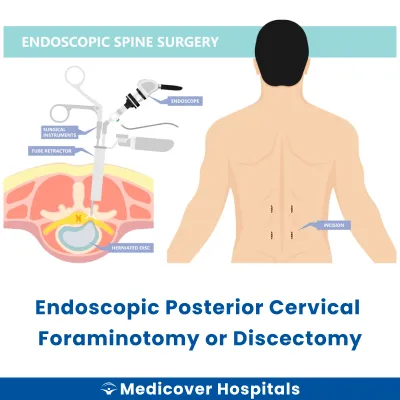
Endoscopic Posterior Cervical Foraminotomy or Discectomy is a minimally invasive surgical procedure. It targets the cervical spine (neck region) to relieve nerve compression. The procedure involves removing bone or disc material to widen the foramen (the passageway where nerve roots exit the spine). This helps alleviate pain and restore nerve function.
This surgery is often needed for conditions like cervical radiculopathy or herniated discs. These conditions can cause neck pain, arm pain, or numbness. If left untreated, they may lead to chronic pain or nerve damage. Modern surgical approaches include endoscopic techniques, which use small incisions and specialised instruments. This often results in quicker recovery and less post-operative discomfort.
Endoscopic Posterior Cervical Foraminotomy or Discectomy Doctors Near You
Discover experienced orthopedics for endoscopic posterior cervical foraminotomy or discectomy at Medicover Hospitals. Choose your city and book a consultation to address your spine health needs.
Why Choose Medicover Hospitals for Endoscopic Posterior Cervical Foraminotomy or Discectomy?
Get a second opinion from trusted experts and makeconfident, informed decisions.
 Get Second Opinion
Complete Guide To Endoscopic Posterior Cervical Foraminotomy Or Discectomy
Everything you need to know about the procedure, preparation, and recovery
Endoscopic Posterior Cervical Foraminotomy or Discectomy Surgery Indications
Doctors recommend endoscopic posterior cervical foraminotomy or discectomy when non-surgical treatments fail to relieve symptoms. This procedure helps address nerve compression in the cervical spine.
Cervical Radiculopathy
Patients often experience neck pain radiating to the arms, along with numbness or tingling. MRI or CT scans show nerve root compression. Surgery is advised when physiotherapy and medications do not alleviate symptoms.
Herniated Cervical Disc
Severe neck pain, arm weakness, and reduced hand function are common symptoms. Imaging reveals disc material pressing on nerves. When conservative management like rest and pain relief fails, surgery is considered.
Cervical Spinal Stenosis
Patients report neck stiffness, pain, and difficulty in hand coordination. Diagnostic imaging shows narrowing of the spinal canal. Surgery is suggested when symptoms persist despite non-surgical interventions.
Bone Spurs (Osteophytes)
Chronic neck pain and restricted movement are typical symptoms. X-rays or MRIs show bony growths compressing nerves. Surgery becomes necessary when physical therapy and medications are ineffective.
Failed Conservative Treatment
Persistent symptoms despite trying medications, physiotherapy, and lifestyle changes. Diagnostic tests confirm nerve compression. Surgery is the next step when non-surgical options do not provide relief.
How to Prepare for Endoscopic Posterior Cervical Foraminotomy or Discectomy?
Proper preparation is crucial for a smooth endoscopic posterior cervical foraminotomy or discectomy. It helps reduce complications and ensures a quicker recovery.
- Medication Review: Stop NSAIDs, anticoagulants, and herbal supplements at least 7 days before surgery.
- Fasting Guidelines: Do not eat or drink anything for at least 8 hours before the procedure due to general anaesthesia.
- Pre-Surgery Consultation: Discuss any allergies or previous reactions to anaesthesia with your doctor.
- Comfortable Clothing: Wear loose-fitting clothes on the day of surgery for comfort and ease of movement.
- Transportation: Arrange for someone to drive you home post-surgery as you may feel drowsy.
- Medication List: Bring a list of all medications with dosages for the medical team to review.
- Smoking and Alcohol: Avoid smoking and alcohol for at least 48 hours before surgery to aid recovery.
- Home Preparation: Prepare your home with essentials at an easy reach for a comfortable recovery.
Endoscopic Posterior Cervical Foraminotomy or Discectomy Surgery (Step-by-Step)
Overview: This procedure is performed by orthopaedic surgeons. It typically lasts 1-2 hours and is done under general anaesthesia.
- Preparation: The patient is positioned face down on the operating table. Vital signs are monitored. General anaesthesia is administered to ensure the patient is asleep and pain-free.
- Incision: A small incision, about 1-2 cm, is made at the back of the neck. This allows access to the cervical spine.
- Insertion of Instruments: A trocar is inserted through the incision. An endoscope is then introduced to provide a clear view of the surgical area.
- Removal of Obstructions: Using a curette or harmonic scalpel, the surgeon removes bone spurs or disc material compressing the nerve roots. This relieves pressure and alleviates symptoms.
- Use of Bipolar Cautery: Bipolar cautery is employed to control bleeding and ensure a clear surgical field.
- Closure: Once the decompression is complete, the endoscope and instruments are removed. The incision is closed with sutures or surgical glue.
- Recovery: The patient is moved to the recovery room. They are monitored as they wake from anaesthesia. Pain management and post-operative care instructions are provided.
Who Performs Endoscopic Posterior Cervical Foraminotomy or Discectomy Surgery?
This surgery is performed by orthopaedic surgeons with expertise in spine surgeries. They are trained to use specialised instruments like the endoscope and curette to address spinal issues safely and effectively.
Recovery After Endoscopic Posterior Cervical Foraminotomy or Discectomy Surgery
Recovery from endoscopic posterior cervical foraminotomy or discectomy surgery is generally quicker compared to traditional surgery. However, it's important to follow your doctor's instructions to ensure a smooth healing process.
Day 1-3:
- Rest is crucial. Avoid any strenuous activities.
- Stick to a soft diet. Include foods like curd, dal-rice, and soups.
- Manage pain with prescribed medications.
Day 4-7:
- Gradually increase light activities, like short walks.
- Continue with a balanced diet. Add moong dal and khichdi for easy digestion.
- Avoid lifting heavy objects or bending your neck excessively.
Week 2-4:
- Most patients can return to work or school, depending on the nature of their activities.
- Resume normal diet, but maintain hydration and nutrition.
- Continue avoiding high-impact activities.
Week 4-6:
- Gradually return to regular activities, including light exercise.
- Follow-up appointments are essential to monitor recovery.
When to Seek Urgent Help:
- Severe neck pain that doesn't improve with medication.
- Signs of infection like fever, redness, or discharge from the incision site.
- Numbness or weakness in the arms or legs.
- Difficulty swallowing or breathing.
Please contact the hospital for current details as insurance panels may change.
Benefits of Endoscopic Posterior Cervical Foraminotomy or Discectomy Surgery
This minimally invasive procedure offers several advantages for patients with cervical spine issues.
- Minimally Invasive: Smaller incisions result in less tissue damage.
- Faster Recovery: Patients often experience quicker recovery times compared to traditional surgery.
- Reduced Pain: Many patients report less postoperative pain.
- Improved Mobility: Helps in relieving nerve compression, enhancing neck and arm movement.
Risks and Complications of Endoscopic Posterior Cervical Foraminotomy or Discectomy Surgery
While generally safe, this procedure carries some risks, as with any surgery.
Common Risks
- Infection at the incision site, though rare, can occur.
- Bleeding during or after the procedure.
Rare Risks
- Nerve damage leading to numbness or weakness.
- Spinal fluid leak, which may require additional treatment.
- Recurrence of symptoms, necessitating further intervention.
Cost of Endoscopic Posterior Cervical Foraminotomy or Discectomy Surgery
The cost of Endoscopic Posterior Cervical Foraminotomy or Discectomy Surgery at Medicover Hospitals ranges from ₹1,50,000 and ₹3,00,000. The price varies based on the ward category selected, such as outpatient, day care, general, or private rooms.
We offer transparent pricing and support for insurance and TPA, including CGHS, ESI, and major TPAs. Cashless facilities are available for your convenience. Please contact the hospital for the latest insurance panel details as these may change periodically.
Frequently Asked Questions
1. How much does Endoscopic Posterior Cervical Foraminotomy or Discectomy surgery cost at Medicover Hospitals?
The cost ranges from ₹1,50,000 and ₹3,00,000 across Medicover Hospitals, depending on the type of care and accommodation chosen.
2. Is Endoscopic Posterior Cervical Foraminotomy or Discectomy surgery covered under health insurance at Medicover?
This surgery is often covered by CGHS, ESI, and major TPAs. Please contact the hospital for current panel details.
3. Will I need neck support after cervical discectomy?
Yes, a cervical collar may be recommended for support. It helps stabilize the neck during the initial recovery period.
4. Can I drive after cervical foraminotomy?
Driving is usually not advised for at least 2 weeks. Consult your doctor for specific guidance based on your recovery.
5. Will my neck pain improve after surgery?
Many patients experience significant relief from neck pain. However, individual results can vary based on the condition's severity.
6. Can I lift weights after cervical surgery?
Heavy lifting should be avoided for at least 6 weeks. Gradual return to normal activities is encouraged under medical supervision.
7. What foods aid recovery after cervical surgery?
Soft foods like curd, dal-rice, and khichdi are recommended. They are easy to digest and help in recovery.


