 Call
Call Patient Reports
Best Hospital for Endoscopic Orbital Decompression with Advanced ENT and Ophthalmology Care
Endoscopic Orbital Decompression Surgery at Medicover Hospitals is performed using advanced endoscopic techniques by experienced ENT Surgeons and orbital specialists with qualifications such as MS and DNB. This minimally invasive approach helps achieve precise treatment with smaller incisions, reduced blood loss, faster recovery, and improved patient outcomes across India.
Expert Surgeons
Yearly Surgeries
Patient Satisfaction
What is Endoscopic Orbital Decompression Surgery?
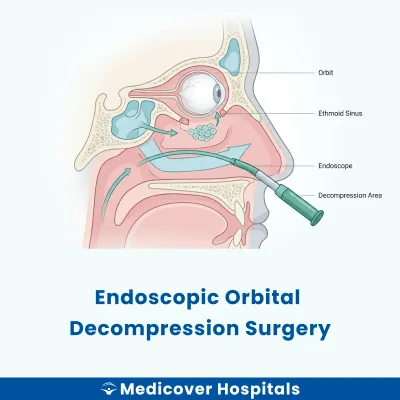
Endoscopic Orbital Decompression Surgery is a procedure to relieve pressure within the orbit (eye socket). It involves removing bone or fat to create more space for the eye and its muscles. This surgery uses an endoscope, a thin tube with a camera, inserted through the nose. It allows surgeons to access the orbit without external incisions.
This surgery is often needed for conditions like thyroid eye disease, where swelling causes the eyes to bulge. If untreated, it can lead to vision problems or damage. Modern approaches include endoscopic techniques that offer a less invasive option compared to traditional methods. These techniques help in faster recovery and reduced scarring.
Endoscopic Orbital Decompression Surgery Doctors Near You
Discover expert ENT Surgeons at Medicover Hospitals across India. Choose your city and book a consultation to address your ear, nose, and throat health needs with experienced specialists.
Why Choose Medicover Hospitals for Endoscopic Orbital Decompression Surgery?
Advanced ENT OT: Equipped with high-definition endoscopic systems, image-guided navigation, and precision instruments to support safe and accurate endoscopic orbital decompression procedures.
Get a second opinion from trusted experts and makeconfident, informed decisions.
 Get Second Opinion
Complete Guide To Endoscopic Orbital Decompression Surgery
Everything you need to know about the procedure, preparation, and recovery
Endoscopic Orbital Decompression Surgery Indications
Doctors recommend endoscopic orbital decompression surgery when patients experience symptoms that do not improve with conservative treatments. This procedure is often considered when there is a need to relieve pressure in the eye socket.
Severe Exophthalmos
Patients may experience bulging eyes, causing discomfort and vision issues. Doctors find increased orbital pressure on imaging. Surgery is considered when medications fail to reduce the bulging.
Optic Neuropathy
Patients report vision loss or blurred vision. Examination reveals swelling and compression of the optic nerve. Surgery is recommended when vision does not improve with steroids or other treatments.
Orbital Pain
Persistent pain around the eyes can be distressing. Doctors may find inflammation or increased pressure in the orbit. Surgery is an option when pain management and anti-inflammatory medications are ineffective.
Corneal Exposure
Patients might experience eye dryness and irritation due to incomplete eyelid closure. Examination shows corneal damage. Surgery is advised when lubricants and protective measures do not help.
Diplopia
Double vision can occur due to eye muscle restrictions. Imaging may show displaced orbital contents. Surgery is considered when prism glasses or other treatments fail to correct vision.
How to Prepare for Endoscopic Orbital Decompression Surgery?
Proper preparation is crucial for a smooth endoscopic orbital decompression surgery. It helps minimise risks and ensures a quicker recovery.
- Medication Review: Stop NSAIDs, anticoagulants, and herbal supplements 7-10 days before surgery. Consult your doctor for guidance.
- Fasting Guidelines: Fast for at least 8 hours before the procedure. This is essential for anaesthesia safety.
- Nasal Preparation: Use prescribed nasal sprays as directed to reduce inflammation and improve surgical access.
- Comfortable Clothing: Wear loose, comfortable clothing on the day of surgery for ease of movement post-procedure.
- Transportation: Arrange for someone to drive you home after the surgery. Anaesthesia effects may linger, affecting your ability to drive.
- Medication List: Bring a list of all medications you take, including dosages, to inform the medical team.
- Pre-Surgery Rest: Ensure a good night's sleep before the surgery to help your body cope better with the procedure.
- Hydration: Stay well-hydrated in the days leading up to the surgery, but avoid drinking fluids during the fasting period.
Endoscopic Orbital Decompression Surgery (Step-by-Step)
This procedure is performed by ophthalmologists. It typically lasts 1 to 2 hours and is done under general anaesthesia.
- Preparation: The patient is placed under general anaesthesia. The surgical area is cleaned and prepped.
- Incision: A small incision, about 1-2 cm, is made inside the nose or behind the eyelid. This approach avoids visible scars.
- Accessing the Orbit: An endoscope is inserted through the incision. This instrument provides a clear view of the orbital area.
- Bone Removal: Using a curette or harmonic scalpel, the surgeon carefully removes small sections of bone from the orbit. This creates more space for the eye.
- Fat Removal: Excess orbital fat is removed to further relieve pressure. This step may involve a coblation wand for precision.
- Closure: The incision is closed with sutures if necessary. Nasal packing may be used to control bleeding.
- Recovery: The patient is monitored in a recovery room. They may experience mild discomfort or swelling, which is normal.
Who Performs Endoscopic Orbital Decompression Surgery?
This surgery is performed by ophthalmologists with specialised training in orbital and oculoplastic procedures. They have expertise in using endoscopic techniques to address conditions affecting the eye socket. Please contact the hospital for current details as insurance panels may change.
Recovery After Endoscopic Orbital Decompression Surgery
Recovery from endoscopic orbital decompression surgery involves gradual healing and care. Patients can expect some swelling and discomfort initially, which will subside over time. It's important to follow the surgeon's instructions for a smooth recovery.
Day 1-3:
- Rest is crucial. Avoid strenuous activities.
- Keep your head elevated to reduce swelling.
- Stick to a soft diet. Include foods like curd, dal-rice, and soups.
Day 4-7:
- Swelling and bruising should start to decrease.
- Continue with light activities but avoid bending or lifting.
- Gradually introduce foods like khichdi and moong dal.
Day 8-14:
- Most patients can resume work or school, depending on their comfort level.
- Normal activities can be resumed, but avoid heavy exercise.
- Maintain a balanced diet to support healing.
Phase 3 (Week 3-4):
- Swelling should be minimal. Bruising should be gone.
- Engage in regular activities but avoid contact sports.
- Continue a nutritious diet to aid recovery.
When to Seek Urgent Help
If you experience sudden vision changes, severe pain, excessive swelling, or any signs of infection like fever or pus, seek medical attention immediately. These could indicate complications that need prompt care.
Benefits of Endoscopic Orbital Decompression Surgery
Endoscopic orbital decompression surgery is a minimally invasive procedure aimed at relieving pressure in the eye socket.
- Improved Vision: Helps in reducing pressure on the optic nerve, potentially improving vision.
- Cosmetic Improvement: Can reduce bulging of the eyes, enhancing facial appearance.
- Minimally Invasive: Utilises endoscopic techniques, resulting in smaller incisions and quicker recovery.
- Symptom Relief: Alleviates symptoms such as pain and double vision associated with orbital pressure.
Risks and Complications of Endoscopic Orbital Decompression Surgery
While generally safe, endoscopic orbital decompression surgery carries certain risks and complications.
- Bruising and swelling around the eyes post-surgery.
- Temporary numbness or tingling in the face.
- Infection at the surgical site.
- Excessive bleeding during or after the procedure.
- Damage to the optic nerve, potentially affecting vision.
- Sinus complications due to proximity to the surgical area.
What is the Cost of Endoscopic Orbital Decompression Surgery?
The cost of Endoscopic Orbital Decompression Surgery at Medicover Hospitals varies based on the ward category chosen. Prices range from Rs. 52,500 to Rs. 2,51,000 across different ward types. Our pricing is transparent, and we offer support for insurance and TPA, including CGHS, ESI, and major TPAs. A cashless facility is also available for your convenience. Please contact the hospital for the latest insurance panel details as these may change periodically.
Frequently Asked Questions
1. How much does Endoscopic Orbital Decompression Surgery cost at Medicover Hospitals?
The cost for Endoscopic Orbital Decompression Surgery at Medicover Hospitals ranges from Rs. 52,500 to Rs. 2,51,000, depending on the type of care and facility.
2. Is Endoscopic Orbital Decompression Surgery covered under health insurance at Medicover?
Endoscopic Orbital Decompression Surgery is often covered by CGHS, ESI, and major TPAs. Please contact the hospital for current panel details.
3. Will my vision improve after orbital decompression?
Many patients notice an improvement in vision after the surgery. However, individual results can vary based on the severity of the condition.
4. Can I wear glasses immediately after surgery?
It is advisable to avoid wearing glasses for the first few weeks post-surgery. Consult your doctor for specific guidance on when to resume.
5. Will I experience double vision post-surgery?
Some patients may experience temporary double vision after the surgery. This usually resolves over time, but follow-up care is essential.
6. What foods should I avoid after orbital surgery?
Avoid spicy and hard-to-chew foods for a few weeks. Soft foods like curd, dal-rice, and khichdi are recommended for easier recovery.
7. Can I fly soon after orbital decompression?
Flying is generally not recommended immediately after surgery. It's best to wait at least a few weeks and seek your doctor's advice.


