 Call
Call Patient Reports
Endonasal Dacryocystorhinostomy Surgery by Expert Ent
Endonasal Dacryocystorhinostomy at Medicover Hospitals is performed using an endoscopic approach by our experienced ENT specialists with qualifications such as MS and DNB. This minimally invasive technique results in smaller incisions and reduced blood loss, enhancing patient recovery and comfort.
Expert Surgeons
Yearly Surgeries
Patient Satisfaction
What is Endonasal Dacryocystorhinostomy?
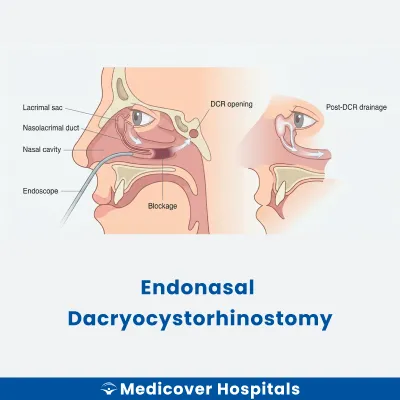
Endonasal Dacryocystorhinostomy is a surgical procedure that creates a new tear drainage pathway. It involves the nasolacrimal duct (tear duct) and the nasal cavity. This surgery is performed through the nose, avoiding external incisions. It helps restore normal tear flow by bypassing a blocked tear duct.
This surgery is needed when the tear duct is blocked, causing excessive tearing or recurrent eye infections. Conditions like chronic dacryocystitis (inflammation of the tear sac) can lead to this procedure. If untreated, it may result in persistent discomfort and vision issues. Modern approaches include endoscopic techniques, which offer a minimally invasive option for patients.
Endonasal Dacryocystorhinostomy Doctors Near You
Discover skilled ENT specialists for endonasal dacryocystorhinostomy at Medicover Hospitals across India. Choose your city and book a consultation to address your tear duct concerns effectively.
Why Choose Medicover Hospitals for Endonasal Dacryocystorhinostomy?
Get a second opinion from trusted experts and makeconfident, informed decisions.
 Get Second Opinion
Complete Guide To Endonasal Dacryocystorhinostomy
Everything you need to know about the procedure, preparation, and recovery
Endonasal Dacryocystorhinostomy Surgery Indications
Doctors recommend Endonasal Dacryocystorhinostomy (DCR) when patients experience persistent issues with tear drainage. This procedure is often suggested after other treatments have failed to resolve the symptoms.
Chronic Dacryocystitis
Patients often experience recurrent eye infections, redness, and swelling near the inner corner of the eye. On examination, doctors may find pus discharge and blockage in the nasolacrimal duct. Surgery is considered when antibiotics and other treatments do not alleviate the condition.
Nasolacrimal Duct Obstruction
Patients report excessive tearing and watery eyes. Imaging tests may show a blockage in the duct. When symptoms persist despite conservative measures like warm compresses or massage, surgery becomes necessary.
Epiphora
Constant tearing without infection is a common complaint. Examination may reveal a partial or complete blockage in the tear duct system. Surgery is recommended when non-surgical interventions fail to improve tear drainage.
Failed Previous DCR Surgery
Some patients experience persistent symptoms even after initial DCR surgery. Doctors may find scar tissue or incomplete healing upon examination. A repeat surgery is suggested to correct these issues.
Congenital Nasolacrimal Duct Obstruction
In children, persistent tearing and discharge can indicate a congenital blockage. If probing and other initial treatments do not resolve the problem, surgery is considered to restore proper drainage.
How to Prepare for Endonasal Dacryocystorhinostomy?
Proper preparation is crucial for a smooth Endonasal Dacryocystorhinostomy. It helps minimise complications and ensures a successful recovery.
- Medication Review: Stop NSAIDs, anticoagulants, and herbal supplements at least a week before surgery, as advised by your doctor.
- Fasting: Fast for at least 6-8 hours before the procedure if general anaesthesia is used.
- Nasal Preparation: Use prescribed nasal sprays to reduce inflammation and clear nasal passages.
- Clothing: Wear loose, comfortable clothing on the day of the surgery for ease and comfort.
- Transportation: Arrange for someone to drive you home post-surgery, as you may feel drowsy from anaesthesia.
- Medication List: Bring a list of all medications you are taking, including dosages, for the medical team.
- Pre-Surgery Consultation: Attend all pre-surgery appointments to discuss any concerns and understand the procedure.
- Rest and Relaxation: Ensure you get adequate rest the night before the surgery to help your body prepare.
Endonasal Dacryocystorhinostomy Surgery (Step-by-Step)
Overview: This procedure is performed by an ENT specialist. It typically lasts 1-2 hours and is done under general anaesthesia.
- Preparation: The patient is given general anaesthesia to ensure comfort and prevent pain during the surgery.
- Accessing the Nasal Cavity: A small endoscope is inserted through the nostril to provide a clear view of the nasal cavity and lacrimal sac.
- Creating the Incision: Using a microdebrider or a coblation wand, a small incision (about 1-2 cm) is made in the nasal mucosa to access the lacrimal sac.
- Bone Removal: A curette or a drill is used to remove a thin piece of bone between the nasal cavity and the lacrimal sac, creating a new drainage pathway.
- Connecting the Lacrimal Sac: The lacrimal sac is opened and connected to the nasal cavity, allowing tears to drain properly.
- Stent Placement: A small silicone stent may be placed to keep the new passage open during healing.
- Completion: The instruments are removed, and the patient is monitored as they wake up from anaesthesia.
Who Performs Endonasal Dacryocystorhinostomy Surgery?
This surgery is performed by an ENT Specialist. They have expertise in nasal and sinus surgeries and are trained to handle delicate structures within the nasal cavity.
Recovery After Endonasal Dacryocystorhinostomy Surgery
After undergoing Endonasal Dacryocystorhinostomy, patients can expect a gradual recovery. It's important to follow post-operative instructions to ensure proper healing and prevent complications.
Day 1-3:
- Rest is crucial. Avoid strenuous activities.
- Expect some nasal congestion and mild discomfort.
- Stick to soft foods like curd, dal-rice, and soups to avoid strain while eating.
Day 4-7:
- Swelling and bruising may start to decrease.
- Continue with light activities; avoid bending or lifting heavy objects.
- Include easily digestible foods like khichdi and moong dal in your diet.
Week 2:
- Most patients can resume work or school, depending on their comfort level.
- Gradually reintroduce regular foods, but avoid spicy or hot items.
- Continue to avoid vigorous activities or contact sports.
Phase 3 (Week 3-4):
- Normal activities can usually be resumed, but follow your doctor's advice.
- Maintain a balanced diet to support healing.
When to Seek Urgent Help:
- Severe pain or swelling that worsens.
- Persistent bleeding from the nose.
- Fever or signs of infection.
- Vision changes or severe headache.
If any of these symptoms occur, contact your healthcare provider immediately.
Benefits of Endonasal Dacryocystorhinostomy Surgery
Endonasal Dacryocystorhinostomy (DCR) is a minimally invasive procedure to treat blocked tear ducts.
- Minimally Invasive: The surgery is performed through the nose, avoiding external scars.
- Quick Recovery: Patients often experience a faster recovery compared to traditional methods.
- Improved Tear Drainage: The procedure effectively restores normal tear drainage, reducing discomfort.
- High Success Rate: Many patients experience significant relief from symptoms.
- Reduced Infection Risk: By addressing the blockage, the risk of recurrent infections decreases.
Risks and Complications of Endonasal Dacryocystorhinostomy Surgery
While generally safe, like any surgery, Endonasal DCR carries potential risks.
Common Risks
- Bleeding from the nose may occur post-surgery.
- Temporary swelling or bruising around the eyes can be expected.
Rare Risks
- Infection at the surgical site, though uncommon, is possible.
- Scar tissue formation may affect the success of the procedure.
- Nasal congestion or discomfort might persist for some time.
- Incomplete resolution of symptoms may require further intervention.
- Damage to surrounding structures, though rare, is a potential risk.
Cost of Endonasal Dacryocystorhinostomy Surgery
The cost of Endonasal Dacryocystorhinostomy Surgery at Medicover Hospitals varies based on the ward category chosen. Prices range from ₹160,000 to ₹462,000 across different branches. This variation allows patients to select a ward type that best suits their needs and budget.
We offer transparent pricing with support for insurance and TPA, including CGHS, ESI, and major TPAs. A cashless facility is also available for added convenience. Please contact the hospital for the latest insurance panel details as these may change periodically.
Frequently Asked Questions
1. How much does Endonasal DCR surgery cost?
The cost of Endonasal Dacryocystorhinostomy surgery at Medicover Hospitals ranges from ₹160,000 to ₹462,000, depending on the type of care.
2. Is Endonasal DCR surgery covered by insurance?
Endonasal DCR surgery may be covered by CGHS, ESI, and major TPAs with cashless options. Please contact the hospital for current panel details.
3. Will my tear duct function normally after surgery?
Post-surgery, your tear duct is expected to function normally, allowing tears to drain properly. Follow-up visits ensure proper healing and function.
4. Can I wear contact lenses after Endonasal DCR?
You should avoid wearing contact lenses for at least two weeks after surgery. Consult your doctor before resuming their use.
5. Will I experience nasal bleeding after surgery?
Mild nasal bleeding is common after Endonasal DCR surgery. It usually resolves within a few days with proper care.
6. What foods can I eat after Endonasal DCR?
Post-surgery, opt for soft foods like curd, dal-rice, and khichdi. Avoid spicy and hard foods for the first week.
7. Can sinus infections occur after Endonasal DCR?
Sinus infections are a rare complication after Endonasal DCR surgery. Regular follow-ups help in monitoring and preventing such issues.


