 Call
Call Patient Reports
Advanced Electrophysiology Study Hospital with Expert Care
Electrophysiology Study at Medicover Hospitals is performed using advanced endoscopic techniques. Our team of Cardiologists, with qualifications like MS, DNB, and MCh, ensures precise diagnosis and treatment. This approach often results in shorter hospital stays and reduced recovery times for patients.
Expert Specialists
Yearly Treatments
Patient Satisfaction
What is Electrophysiology Study?
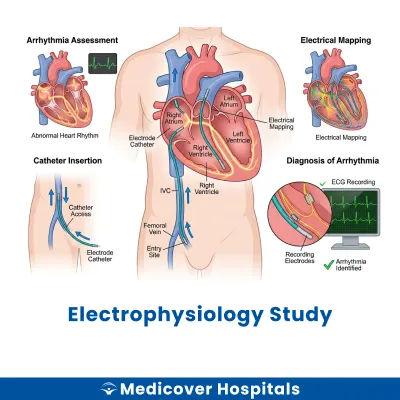
An Electrophysiology Study (EPS) is a medical test that examines the electrical activity of the heart. It helps identify abnormal heart rhythms, known as arrhythmias. During the procedure, electrodes are inserted into the heart through blood vessels. These electrodes measure the heart's electrical signals, providing detailed information about its rhythm and conduction pathways.
EPS is needed when a patient experiences unexplained fainting, palpitations, or rapid heartbeats. It helps diagnose conditions like atrial fibrillation or ventricular tachycardia. If left untreated, these conditions can lead to serious complications, including stroke or heart failure. Modern approaches for EPS include catheter-based techniques, which are minimally invasive and offer quicker recovery times.
Electrophysiology Study Doctors Near You
Discover skilled Cardiologists at Medicover Hospitals across India. Choose your city and book a consultation to address your urological concerns with expert care. Your health is our priority.
Why Choose Medicover Hospitals for Electrophysiology Study?
Get a second opinion from trusted experts and makeconfident, informed decisions.
 Get Second Opinion
Complete Guide To Electrophysiology Study
Everything you need to know about the procedure, preparation, and recovery
Electrophysiology Study Surgery Indications
Doctors recommend an Electrophysiology Study (EPS) when they need detailed information about the heart's electrical activity. This procedure helps diagnose and treat abnormal heart rhythms that may not be detected through standard tests.
Unexplained Syncope
Patients may experience sudden fainting spells without a clear cause. During examination, doctors may not find any structural heart issues. If initial tests like ECGs and Holter monitoring are inconclusive, EPS helps identify rhythm problems causing syncope.
Palpitations
Individuals often report feeling rapid or irregular heartbeats. These sensations may be accompanied by dizziness or shortness of breath. When routine tests fail to pinpoint the cause, EPS can detect arrhythmias responsible for palpitations.
Ventricular Tachycardia
Patients with episodes of fast heart rates originating from the ventricles may experience chest pain or fainting. Imaging and ECGs might show abnormal rhythms. If medications do not control the condition, EPS is used to assess and treat the arrhythmia.
Atrial Fibrillation
Symptoms include irregular heartbeats, fatigue, and breathlessness. Doctors may find irregular rhythms on ECGs. When lifestyle changes and medications are ineffective, EPS aids in mapping and managing the arrhythmia.
Pre-Surgical Evaluation
Before certain heart surgeries, patients may need an EPS to assess the risk of arrhythmias. This is especially true if previous tests show abnormal electrical activity. EPS provides detailed insights to guide surgical planning.
How to Prepare for Electrophysiology Study?
Proper preparation for an Electrophysiology Study is crucial to ensure accurate results and a smooth procedure. Following these steps helps minimise risks and complications.
- Medication Review: Stop NSAIDs, anticoagulants, and herbal supplements as advised by your doctor.
- Fasting: Do not eat or drink for at least 6-8 hours before the procedure to prepare for anaesthesia.
- Medication List: Bring a list of your current medications, including dosages, for the medical team.
- Clothing: Wear loose, comfortable clothing on the day of the procedure for ease of movement.
- Transportation: Arrange for someone to drive you home after the procedure, as you may feel drowsy.
- Pre-Procedure Instructions: Follow any specific instructions given by your healthcare provider, such as bowel preparation if required.
- Health Conditions: Inform your doctor about any existing health conditions or hypersensitivity issues.
- Contact Information: Keep emergency contact numbers handy in case of any queries or concerns.
Electrophysiology Study Surgery (Step-by-Step)
Overview: Performed by cardiologists, the procedure typically lasts 2-4 hours. It is usually done under local anaesthesia with sedation.
- Preparation: The patient is positioned on the examination table. Local anaesthesia is administered to numb the groin area.
- Catheter Insertion: A small incision (1-2 cm) is made in the groin. A sheath is inserted into a blood vessel. Catheters are then guided through the sheath to the heart using fluoroscopy.
- Electrode Placement: The catheters, equipped with electrodes, are positioned in different areas of the heart. These electrodes record electrical signals.
- Signal Recording: The cardiologist observes the heart's electrical activity. This helps identify abnormal rhythms or arrhythmias.
- Stimulation: The heart is stimulated with small electrical impulses. This helps provoke arrhythmias for accurate diagnosis.
- Data Analysis: The collected data is analysed to determine the source of the arrhythmia. This guides further treatment decisions.
- Catheter Removal: Once the study is complete, the catheters and sheath are carefully removed. Pressure is applied to the incision site to prevent bleeding.
Who Performs Electrophysiology Study Surgery?
Electrophysiology studies are performed by heart doctors who specialise in heart rhythm disorders. These specialists have expertise in diagnosing and treating arrhythmias using advanced techniques and equipment. They ensure the procedure is conducted safely and effectively.
Recovery After Electrophysiology Study Surgery
Recovery from an electrophysiology study is usually quick. Most patients can return to their normal routine within a few days. However, it's important to follow specific guidelines to ensure a smooth recovery.
Day 1:
- Rest is crucial. Avoid any strenuous activities.
- Keep the puncture site clean and dry.
- Consume light meals like curd rice or moong dal soup to avoid digestive discomfort.
Day 2-3:
- Gradually resume light activities. Avoid lifting heavy objects.
- Continue with a soft diet. Include khichdi or dal-rice for easy digestion.
- Monitor the puncture site for any signs of infection.
Day 4-7:
- You can start gentle exercises like walking.
- Return to work or school if you feel comfortable. Avoid high-stress activities.
- Maintain a balanced diet. Include soups and fresh fruits.
Phase 2 (Week 2 and beyond):
- Resume normal activities gradually. Listen to your body and rest when needed.
- Continue with a nutritious diet to support healing.
- Follow up with your doctor as advised.
When to Seek Urgent Help
- Severe pain or swelling at the puncture site.
- Uncontrolled bleeding or oozing from the site.
- Fever or chills indicating possible infection.
- Shortness of breath or chest pain.
Benefits of Electrophysiology Study Surgery
An Electrophysiology Study (EPS) helps diagnose and treat heart rhythm disorders. It provides valuable insights into the heart's electrical activity.
- Accurate Diagnosis: Identifies specific arrhythmias for targeted treatment.
- Guided Treatment: Helps in planning effective interventions like ablation.
- Risk Assessment: Evaluates the risk of future cardiac events.
- Personalized Care: Tailors treatment strategies based on individual heart conditions.
Risks and Complications of Electrophysiology Study Surgery
While EPS is generally safe, it carries certain risks. Understanding these helps in making informed decisions.
- Common: Bleeding or bruising at the catheter insertion site.
- Common: Temporary heart rhythm changes during the procedure.
- Rare: Damage to the heart or blood vessels.
- Rare: Infection at the catheter site.
- Rare: Blood clots leading to stroke or heart attack.
- Rare: Allergic reactions to contrast dye or medications.
Cost of Electrophysiology Study Surgery
The cost of an Electrophysiology Study Surgery at Medicover Hospitals varies depending on the ward category chosen. Prices range from ₹25,000 to ₹1,60,000. The cost structure is transparent, and we offer support for insurance and TPA, including CGHS, ESI, and major TPAs. A cashless facility is also available to ease the financial process for patients. Please contact the hospital for the latest insurance panel details as these may change periodically.
Frequently Asked Questions
1. How much does Electrophysiology Study surgery cost at Medicover Hospitals?
The cost for Electrophysiology Study surgery at Medicover Hospitals ranges from ₹25,000 and ₹1,60,000, depending on the facility and care level.
2. Is Electrophysiology Study surgery covered under health insurance at Medicover?
Electrophysiology Study surgery is often covered by CGHS, ESI, and major TPAs. Please contact the hospital for current panel details.
3. Will my heart rhythm improve immediately after?
Your heart rhythm may improve immediately after the procedure. However, some patients may require additional treatment for optimal results.
4. Can I exercise after Electrophysiology Study?
Light activities can usually be resumed after a week. Avoid strenuous exercise for at least four weeks post-procedure.
5. Will I need medication after the procedure?
You may need to continue or adjust heart medications post-procedure. Your doctor will provide specific guidance based on your condition.
6. Can I drive home after Electrophysiology Study?
Driving is not recommended immediately after the procedure. Arrange for someone to drive you home for safety.
7. What foods should I avoid post-procedure?
Avoid caffeine and high-sodium foods like chips. Opt for heart-friendly meals such as dal-rice and fruits.


