 Call
Call Patient Reports
Best Hospital for Decortication Surgery: Expert Ctvs Cardiothoracic And Vascular Surgery
Decortication at Medicover Hospitals is performed using an open surgical approach. Our team includes MS, DNB, and MCh qualified surgeons. This procedure helps in removing fibrous tissue from the pleural space. Patients often experience shorter hospital stays and improved breathing post-surgery.
Expert Surgeons
Yearly Surgeries
Patient Satisfaction
What is Decortication?
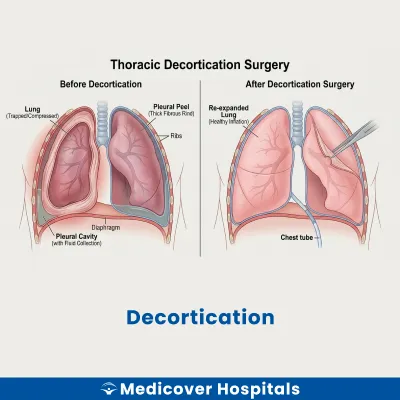
Decortication is a surgical procedure involving the removal of the fibrous layer (pleura) surrounding the lungs. This layer can become thickened and restrict lung expansion. The surgery aims to restore normal lung function by eliminating this restrictive tissue.
Decortication is often needed for conditions like empyema (pus accumulation in the pleural space) or chronic pleuritis (inflammation of the pleura). If left untreated, these conditions can lead to impaired breathing and lung function. Modern surgical approaches for decortication include video-assisted thoracoscopic surgery (VATS) and open thoracotomy. These techniques help in effectively removing the fibrous tissue and improving lung capacity.
Decortication Doctors Near You
Discover expert CTVS-cardiothoracic-and-vascular-surgery specialists at Medicover Hospitals across India. Choose your city and book a consultation to explore decortication treatment options near you.
Why Choose Medicover Hospitals for Decortication?
Get a second opinion from trusted experts and makeconfident, informed decisions.
 Get Second Opinion
Complete Guide To Decortication
Everything you need to know about the procedure, preparation, and recovery
Decortication Surgery Indications
Doctors recommend decortication surgery when the lung is encased by a thick fibrous layer, restricting its expansion. This procedure is often considered when conservative treatments fail to improve symptoms or lung function.
Empyema
Patients may experience chest pain, fever, and difficulty breathing. Imaging tests like CT scans reveal fluid collection and thickened pleura. Surgery is advised when antibiotics and drainage do not resolve the infection.
Fibrothorax
Symptoms include persistent breathlessness and reduced lung capacity. X-rays or CT scans show a thick fibrous layer around the lung. Surgery is needed when physical therapy and medications do not improve lung expansion.
Trapped Lung
Patients often report shortness of breath and chest discomfort. Diagnostic imaging shows lung compression due to pleural thickening. Decortication is recommended when the lung remains trapped despite medical management.
Chronic Pleural Effusion
Symptoms include persistent cough and breathing difficulty. Ultrasound or CT scans detect fluid buildup and pleural thickening. Surgery becomes necessary when repeated fluid drainage does not alleviate symptoms.
Haemothorax
Signs include chest pain and reduced breath sounds. Imaging reveals blood accumulation and pleural thickening. Decortication is considered when blood drainage fails to restore normal lung function.
How to Prepare for Decortication?
Preparation is crucial for decortication to ensure a smooth procedure and recovery. Proper preparation helps minimise risks and complications during and after the surgery.
- Medication Review: Stop NSAIDs, anticoagulants, and herbal supplements at least a week before surgery.
- Fasting: Do not eat or drink anything for at least 8 hours before the procedure to prepare for anaesthesia.
- Pre-Surgery Tests: Complete all required blood tests, chest X-rays, and ECGs as advised by your doctor.
- Personal Items: Wear loose, comfortable clothing on the day of surgery and bring a list of your medications with dosages.
- Transportation: Arrange for someone to drive you home after the procedure, as you will not be able to drive yourself.
- Smoking Cessation: Stop smoking several weeks before surgery to improve lung function and healing.
- Hygiene: Bathe with antibacterial soap the night before and the morning of the surgery to reduce infection risk.
- Hospital Stay: Pack a small bag with essentials if an overnight stay is required.
Decortication Surgery (Step-by-Step)
Performed by CTVS (Cardiothoracic and Vascular Surgery) specialists, decortication typically lasts 2-4 hours. It is done under general anaesthesia.
- Preparation: The patient is placed under general anaesthesia. This ensures they are asleep and pain-free during the procedure.
- Incision: A small incision, usually 1-2 cm, is made on the chest to access the pleural space.
- Accessing the Pleura: A trocar is inserted through the incision to allow the surgeon to reach the pleura. The patient remains unconscious and does not feel this step.
- Removing the Fibrous Layer: The surgeon uses instruments like a curette or harmonic scalpel to carefully remove the thickened pleura. This step is crucial for restoring lung function.
- Controlling Bleeding: Bipolar cautery may be used to control any bleeding during the procedure. The patient remains stable and monitored throughout.
- Closure: Once the decortication is complete, the incision is closed with sutures or staples. The patient is then moved to recovery.
- Recovery: The patient wakes up in the recovery room. They may feel some discomfort, which is managed with pain relief medication.
Who Performs Decortication Surgery?
Decortication is performed by cardiothoracic surgeons. These specialists are trained in surgeries involving the heart, lungs, and chest. They have the expertise to handle complex procedures like decortication.
Recovery After Decortication Surgery
Decortication surgery involves removing the fibrous layer over the lung, which can be taxing on the body. Recovery varies per individual, but understanding the general timeline can help set expectations.
Day 1-3:
- Expect to stay in the hospital for monitoring. Pain management and breathing exercises will be crucial.
- Gradually start with a liquid diet. Include clear soups and juices.
- Rest is essential, but gentle movements like sitting up are encouraged.
Day 4-7:
- Transition to a soft diet. Include foods like khichdi, moong dal, and curd.
- Continue breathing exercises to improve lung function.
- Walking short distances within your room is encouraged.
Week 2-4:
- Introduce regular foods like dal-rice and soft-cooked vegetables.
- Gradually increase activity levels but avoid strenuous activities.
- You may return to work or school if your job is not physically demanding.
Week 5-8:
- Resume normal diet, focusing on balanced nutrition.
- Engage in light exercises like walking or yoga, but avoid heavy lifting.
- Most individuals can return to full activities by the end of this phase.
When to Seek Urgent Help
Contact your healthcare provider if you experience any of the following:
- Sudden shortness of breath or difficulty breathing
- Severe chest pain not relieved by medication
- Fever above 101?F (38.3?C) or chills
- Persistent cough with blood or unusual discharge
Benefits of Decortication Surgery
Decortication surgery is performed to remove the fibrous layer covering the lung, which can improve lung function and relieve symptoms.
- Improved Breathing: Helps restore normal lung expansion and function.
- Pain Relief: Reduces chest pain associated with restricted lung movement.
- Enhanced Lung Capacity: Increases the lung's ability to take in air.
- Symptom Relief: Alleviates symptoms like cough and shortness of breath.
- Prevention of Complications: Reduces the risk of further lung infections.
Risks and Complications of Decortication Surgery
While decortication surgery can offer significant benefits, it also carries potential risks and complications. It is important to be aware of these before undergoing the procedure.
- Common: Bleeding during or after surgery.
- Common: Infection at the surgical site.
- Common: Pain and discomfort post-surgery.
- Rare: Air leaks from the lung.
- Rare: Respiratory complications.
- Rare: Reaction to anaesthesia.
- Rare: Blood clots.
Cost of Decortication Surgery
The cost of decortication surgery can vary Rs. 2,00,000to 3,00,000 based on factors such as the surgical approach, duration of hospital stay, room category, required diagnostics, and post-operative care.
At Medicover Hospitals, we ensure transparent pricing for all procedures. We offer support for insurance and TPA, including CGHS, ESI, and major TPAs, with a cashless facility available for your convenience. Please contact the hospital for the latest insurance panel details as these may change periodically.
Frequently Asked Questions
1. How much does Decortication surgery cost at Medicover Hospitals?
The cost of Decortication surgery varies Rs. 2,00,000 to 3,00,000 based on individual needs. Please contact Medicover Hospitals for detailed pricing information.
2. Is Decortication surgery covered under health insurance at Medicover?
Decortication surgery may be covered by CGHS, ESI, and major TPAs. Please contact the hospital for current panel details.
3. Will I have breathing issues after Decortication?
Breathing may improve after Decortication as it removes fibrous tissue. Consult your doctor if you experience any new breathing difficulties.
4. Can I exercise after Decortication surgery?
Light activities can usually resume after 4 weeks. Always consult your doctor before starting any exercise post-surgery.
5. What foods should I eat after Decortication?
Post-surgery, opt for soft foods like dal-rice, khichdi, and curd. These help in easy digestion and recovery.
6. Will I experience pain after Decortication?
Some discomfort is normal after Decortication surgery. Pain management will be discussed with your healthcare provider.
7. Can pleural effusion return after Decortication?
There's a possibility of pleural effusion recurrence post-Decortication. Regular follow-ups with your doctor are essential to monitor your condition.
8. What is surgical decortication?
Surgical decortication refers to the removal of a restrictive fibrous layer from an organ, most commonly the lungs. This helps restore normal function by allowing the affected organ to expand or work properly.
9. What is pleurectomy decortication?
Pleurectomy decortication is a surgery that removes part of the pleura (lung lining) along with fibrous tissue around the lungs. It is often used in treating conditions like pleural mesothelioma or severe pleural disease.
10. What is renal cyst decortication?
Renal cyst decortication is a procedure where the outer wall of a kidney cyst is removed to relieve symptoms and prevent recurrence. It is usually recommended for large or symptomatic renal cysts causing pain or discomfort.


