 Call
Call Patient Reports
Best Hospital for Decompressive Craniectomy with Advanced Neurosurgical Care
Decompressive Craniectomy at Medicover Hospitals is performed using an open surgical approach by a team of experienced neurosurgeons with qualifications such as MS, MCh, and DNB. This procedure helps alleviate intracranial pressure, leading to improved neurological outcomes and shorter hospital stays.
Expert Surgeons
Yearly Surgeries
Patient Satisfaction
What is Decompressive Craniectomy?
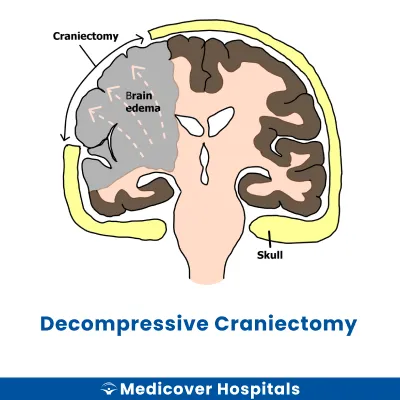
Decompressive Craniectomy is a surgical procedure involving the removal of a portion of the skull (cranium) to relieve pressure on the brain. This is done to allow the swollen brain to expand without being compressed by the skull. The removed section of the skull is typically stored and replaced once the swelling subsides.
This surgery is often needed in cases of traumatic brain injury, stroke, or conditions causing significant brain swelling. If left untreated, increased intracranial pressure can lead to severe brain damage or death. Modern surgical approaches for Decompressive Craniectomy include minimally invasive techniques and advanced imaging guidance to enhance precision. These methods aim to reduce complications and improve recovery outcomes.
Decompressive Craniectomy Doctors Near You
Discover skilled neurosurgeons for decompressive craniectomy at Medicover Hospitals across India. Choose your city and book a consultation to discuss your treatment options with our experts.
Why Choose Medicover Hospitals for Decompressive Craniectomy?
Get a second opinion from trusted experts and makeconfident, informed decisions.
 Get Second Opinion
Complete Guide To Decompressive Craniectomy
Everything you need to know about the procedure, preparation, and recovery
Decompressive Craniectomy Surgery Indications
Doctors recommend decompressive craniectomy when there is increased pressure inside the skull that cannot be managed with medication or other non-surgical treatments. It is often considered in life-threatening situations where immediate intervention is necessary to prevent brain damage.
Traumatic Brain Injury
Patients may experience severe headaches, confusion, or loss of consciousness after a head injury. Imaging tests like CT scans show swelling or bleeding in the brain. When medications and other treatments do not reduce intracranial pressure, surgery is considered.
Stroke
Symptoms include sudden weakness, speech difficulties, or vision problems. Doctors find significant brain swelling on imaging studies. If medical management fails to control the swelling, surgery may be needed to relieve pressure.
Subarachnoid Hemorrhage
Patients often report a sudden, severe headache, nausea, or neck stiffness. CT scans reveal bleeding in the space surrounding the brain. When conservative treatments do not alleviate pressure, surgery becomes necessary.
Brain Tumours
Symptoms can include persistent headaches, seizures, or changes in vision. Imaging shows a tumour causing increased pressure. When other treatments do not relieve symptoms, surgery may be required to reduce pressure.
Hydrocephalus
Patients may experience headaches, nausea, or balance issues. Imaging reveals excess cerebrospinal fluid causing pressure on the brain. When shunt procedures are not effective, decompressive craniectomy may be considered.
How to Prepare for Decompressive Craniectomy?
Proper preparation for decompressive craniectomy is crucial to ensure a smooth surgery and recovery. It helps in minimizing risks and complications.
- Medication Review: Stop NSAIDs, anticoagulants, and herbal supplements as advised by your doctor.
- Fasting Guidelines: Fast for at least 8 hours before the procedure to prepare for general anaesthesia.
- Pre-Surgery Tests: Complete all required blood tests, imaging, and other assessments as directed.
- Personal Items: Bring a list of current medications with dosages to the hospital.
- Clothing: Wear loose, comfortable clothing on the day of surgery for ease of movement.
- Transportation: Arrange for someone to drive you home post-surgery due to anaesthesia effects.
- Smoking and Alcohol: Avoid smoking and alcohol several days before the surgery as advised.
- Hospital Stay: Pack essentials for a potential hospital stay, including toiletries and personal items.
Decompressive Craniectomy Surgery (Step-by-Step)
Decompressive craniectomy is performed by neurosurgeons. The surgery typically lasts several hours and is done under general anaesthesia.
- Preparation: The patient is placed under general anaesthesia. The head is stabilised in a fixed position using a head clamp.
- Incision: A scalp incision, usually 1-2 cm wide, is made to expose the skull. The incision size may vary based on the area being accessed.
- Bone Flap Removal: A section of the skull is removed using a craniotome. This creates space to relieve pressure on the brain.
- Dura Opening: The dura mater, the outer membrane covering the brain, is carefully opened using surgical scissors to allow the brain to expand.
- Brain Tissue Management: Swollen brain tissue is managed. Instruments like bipolar cautery may be used to control bleeding.
- Closure: The dura is left open or covered with a synthetic material. The bone flap is not replaced immediately. The scalp is sutured back in place.
- Post-Operative Care: The patient is moved to the ICU for monitoring. Recovery involves managing swelling and preventing infection.
Who Performs Decompressive Craniectomy Surgery?
Decompressive craniectomy is performed by neurosurgeons. These specialists are trained to handle complex brain surgeries. They use precise techniques to manage brain swelling and ensure patient safety.
Recovery After Decompressive Craniectomy Surgery
Recovery from decompressive craniectomy surgery requires time and patience. It involves gradual healing and rehabilitation. The process varies for each individual, but understanding the general timeline can help set expectations.
Day 1-3:
- Initial recovery in the ICU for close monitoring.
- Pain management and prevention of infections are priorities.
- Limited movement; assistance required for basic activities.
Day 4-7:
- Transfer to a regular ward if stable.
- Begin gentle physiotherapy to prevent stiffness.
- Soft diet recommended; include curd, dal-rice, and moong dal.
Day 8-14:
- Gradual increase in physical activity as tolerated.
- Continue with a nutritious diet; khichdi and soups are beneficial.
- Monitoring for any signs of complications.
Phase 2: Weeks 3-6:
- Focus on regaining strength and mobility.
- Resume light activities; avoid strenuous tasks.
- Consultation with a dietitian for a balanced diet plan.
Phase 3: Weeks 7-12:
- Possible return to work or school, depending on recovery.
- Engage in regular, light exercises as advised by a therapist.
- Continue to follow dietary recommendations for optimal recovery.
When to Seek Urgent Help
- Severe headache or sudden confusion.
- Persistent vomiting or seizures.
- Signs of infection like fever or redness at the incision site.
Contact us if you experience any of these symptoms.
Benefits of Decompressive Craniectomy Surgery
Decompressive craniectomy is a surgical procedure aimed at relieving intracranial pressure. It can be crucial in certain emergency situations.
- Pressure Relief: Helps reduce life-threatening brain swelling.
- Improved Blood Flow: Enhances cerebral circulation by reducing pressure.
- Prevention of Brain Damage: Minimises the risk of further brain injury.
- Potential for Recovery: Increases chances of neurological recovery in severe cases.
Risks and Complications of Decompressive Craniectomy Surgery
While decompressive craniectomy can be life-saving, it carries certain risks and complications. Patients should be aware of these possibilities.
- Infection: Risk of infection at the surgical site.
- Bleeding: Possibility of bleeding during or after the procedure.
- Seizures: Increased risk of seizures post-surgery.
- Brain Herniation: Potential for brain tissue to shift abnormally.
- Hydrocephalus: Accumulation of fluid in the brain.
- Neurological Deficits: Possible long-term neurological impairments.
What is the Cost of Decompressive Craniectomy Surgery?
The cost of Decompressive Craniectomy Surgery at Medicover Hospitals ranges from Rs. 75,000 to Rs. 2,19,000, based on factors such as the surgical approach, duration of hospital stay, room category, required diagnostics, and post-operative care.
At Medicover Hospitals, we ensure transparent pricing for all procedures. We offer insurance and TPA support, accepting CGHS, ESI, and major TPAs, with a cashless facility available for eligible patients. Please contact the hospital for the latest insurance panel details as these may change periodically.
Frequently Asked Questions
1. How much does Decompressive Craniectomy surgery cost at Medicover Hospitals?
The cost of Decompressive Craniectomy surgery ranges from Rs. 75,000 to Rs. 2,19,
2. Please contact Medicover Hospitals for detailed pricing information. 2. Is Decompressive Craniectomy surgery covered under health insurance at Medicover?
Decompressive Craniectomy may be covered by CGHS, ESI, and major TPAs. Please contact the hospital for current panel details.
3. Will I experience seizures after Decompressive Craniectomy?
Seizures can occur after Decompressive Craniectomy due to brain swelling. Your doctor may prescribe medication to help manage this risk.
4. How long before I can resume normal activities?
Recovery from Decompressive Craniectomy can take weeks to months. Consult your doctor before resuming activities like driving or heavy lifting.
5. Will I need a helmet after Decompressive Craniectomy?
Patients may need to wear a protective helmet after surgery. This is to protect the brain until the skull is reconstructed.
6. Can I experience speech difficulties post-surgery?
Speech difficulties may occur after Decompressive Craniectomy due to brain trauma. Speech therapy can help improve communication skills over time.
7. What foods should I avoid after Decompressive Craniectomy?
Avoid foods that are hard to chew or swallow. Soft foods like khichdi, dal-rice, and curd are recommended during recovery.


