 Call
Call Patient Reports
Cytoreductive Surgery with HIPEC Surgery Hospital With Advanced Care
At Medicover Hospitals, Cytoreductive Surgery with HIPEC is performed using an open surgical approach. Our skilled oncologists with qualifications like MS, DNB, MCh, and DM specialise in complex cancer treatments. This method often results in reduced blood loss, enhancing patient recovery.
Expert Surgeons
Yearly Surgeries
Patient Satisfaction
What is Cytoreductive Surgery With Hipec?
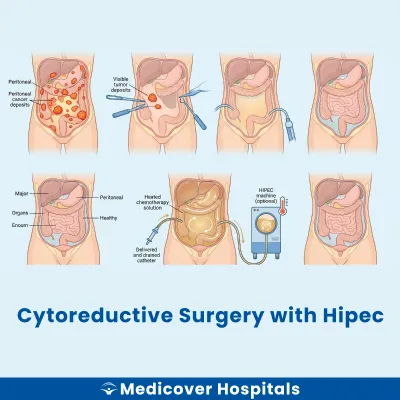
Cytoreductive Surgery with HIPEC (Hyperthermic Intraperitoneal Chemotherapy) is a procedure targeting the abdominal cavity. It involves surgically removing visible tumours (cytoreduction) and then applying heated chemotherapy directly into the abdomen. This combination aims to eliminate microscopic cancer cells that remain after surgery, enhancing treatment effectiveness.
This surgery is often needed for cancers that have spread within the abdominal cavity, such as ovarian or colorectal cancer. If left untreated, these cancers can progress, leading to severe complications. Modern surgical approaches, including minimally invasive techniques, are available for Cytoreductive Surgery with HIPEC. These methods aim to reduce recovery time and improve outcomes for patients.
Cytoreductive Surgery With Hipec Doctors Near You
Discover experienced oncologists for cytoreductive surgery with HIPEC at Medicover Hospitals across India. Choose your city and book a consultation to explore your treatment options today.
Why Choose Medicover Hospitals for Cytoreductive Surgery With Hipec?
Get a second opinion from trusted experts and makeconfident, informed decisions.
 Get Second Opinion
Complete Guide To Cytoreductive Surgery With Hipec
Everything you need to know about the procedure, preparation, and recovery
Cytoreductive Surgery with HIPEC Surgery Indications
Cytoreductive Surgery with HIPEC is often recommended for patients with certain advanced abdominal cancers. This procedure is considered when the cancer has spread within the abdominal cavity, and other treatments have not been effective.
Peritoneal Carcinomatosis
Patients may experience abdominal pain, bloating, or changes in bowel habits. Imaging tests often show widespread cancer deposits in the peritoneum. When chemotherapy alone does not control the disease, surgery with HIPEC is considered.
Ovarian Cancer
Symptoms include pelvic pain, bloating, and frequent urination. Doctors may find elevated CA-125 levels and visible tumours on scans. Surgery is recommended when standard chemotherapy fails to reduce tumour size.
Colorectal Cancer with Peritoneal Spread
Patients might have abdominal pain, weight loss, or bowel obstruction. CT scans reveal cancer spread to the peritoneum. When systemic chemotherapy does not halt progression, this surgery becomes an option.
Pseudomyxoma Peritonei
Symptoms include increasing abdominal girth and discomfort. Imaging shows mucinous tumours filling the abdomen. Surgery is indicated when the condition progresses despite other treatments.
Gastric Cancer with Peritoneal Metastasis
Patients may experience nausea, vomiting, and early satiety. Diagnostic tests reveal cancer spread within the abdominal lining. When chemotherapy is ineffective, surgery with HIPEC is considered.
How to Prepare for Cytoreductive Surgery with HIPEC?
Proper preparation is crucial for Cytoreductive Surgery with HIPEC to enhance recovery and reduce complications. Following these steps can help ensure a smoother surgical experience.
- Medication Review: Stop NSAIDs, anticoagulants, and herbal supplements as advised by your doctor.
- Fasting: Do not eat or drink anything for at least 8 hours before the surgery to ensure safety during anaesthesia.
- Bowel Preparation: Follow the prescribed bowel prep instructions to clear the intestines before surgery.
- Comfortable Clothing: Wear loose, comfortable clothing on the day of the surgery for ease of movement post-operation.
- Transportation: Arrange for someone to drive you home after the procedure as you may feel drowsy from anaesthesia.
- Medication List: Bring a list of your current medications with dosages to the hospital for reference.
- Pre-Surgery Tests: Complete any required blood tests or imaging studies as scheduled by your healthcare team.
- Hydration: Stay well-hydrated in the days leading up to the surgery, unless advised otherwise.
Cytoreductive Surgery with HIPEC Surgery (Step-by-Step)
This procedure is performed by oncologists and typically lasts 8-14 hours. It is done under general anaesthesia.
- Preparation: The patient is placed under general anaesthesia. Monitoring devices are attached to track vital signs.
- Incision and Exploration: A midline incision of about 20-30 cm is made on the abdomen. Surgical instruments like a laparoscope and curette are used to explore the abdominal cavity.
- Tumour Removal: Visible tumours are removed using tools such as the harmonic scalpel and bipolar cautery. The goal is to remove as much tumour tissue as possible.
- HIPEC Administration: After tumour removal, heated chemotherapy drugs are circulated in the abdominal cavity. This process lasts about 60-90 minutes to target remaining cancer cells.
- Fluid Drainage: The chemotherapy solution is drained from the abdomen. The area is rinsed with saline to remove any residual drugs.
- Closure: The incision is closed with sutures or staples. A drainage tube may be placed to remove excess fluid post-surgery.
- Recovery: The patient is moved to a recovery room. Vital signs are monitored as the patient wakes from anaesthesia.
Who Performs Cytoreductive Surgery with HIPEC Surgery?
This surgery is performed by surgical oncologists. They specialise in removing cancerous tissues and administering intra-abdominal chemotherapy. Their expertise ensures the procedure is conducted with precision.
Recovery After Cytoreductive Surgery with HIPEC Surgery
Recovery from Cytoreductive Surgery with HIPEC can be challenging but manageable with proper care. Patients may experience fatigue and need support during this period. Follow your doctor's advice closely for a smoother recovery.
Day 1-3:
- Hospital stay is common. Monitoring and pain management are priorities.
- Start with clear liquids and gradually introduce soft foods.
Day 4-7:
- Begin with light activities like sitting up and short walks.
- Diet can include soft, easily digestible foods like curd, dal-rice, and soups.
Day 8-14:
- Increase activity levels gradually. Avoid heavy lifting or strenuous activities.
- Continue with a balanced diet including khichdi and moong dal for better digestion.
Phase 3 (Week 3-6):
- Most patients can resume work or school within 4-6 weeks, depending on recovery progress.
- Incorporate more variety in diet while avoiding spicy or oily foods.
When to Seek Urgent Help:
- High fever or chills.
- Severe abdominal pain or bloating.
- Persistent vomiting or inability to keep food down.
- Signs of infection at the incision site, such as redness or discharge.
Benefits of Cytoreductive Surgery with HIPEC Surgery
Cytoreductive surgery combined with Hyperthermic Intraperitoneal Chemotherapy (HIPEC) is a treatment option for certain abdominal cancers. It offers several potential benefits.
- Targeted Treatment: HIPEC delivers heated chemotherapy directly to the abdomen, targeting cancer cells more effectively.
- Reduced Systemic Toxicity: As chemotherapy is confined to the abdominal cavity, there is less impact on the rest of the body.
- Improved Survival Rates: This procedure may extend survival for patients with specific types of cancer.
- Comprehensive Cancer Removal: Cytoreductive surgery aims to remove visible tumours, enhancing the effectiveness of HIPEC.
Risks and Complications of Cytoreductive Surgery with HIPEC Surgery
While this procedure can be beneficial, it carries certain risks and complications. Patients should be aware of these before proceeding.
- Common: Infection risk due to the extensive nature of the surgery.
- Common: Postoperative bleeding which may require additional intervention.
- Rare: Kidney dysfunction due to the effects of chemotherapy.
- Rare: Bowel obstruction resulting from surgical adhesions.
- Rare: Chemotherapy-related toxicity affecting other organs.
Cost of Cytoreductive Surgery with HIPEC Surgery
The cost of Cytoreductive Surgery with HIPEC Surgery at Medicover Hospitals ranges from Rs. 401,000 to Rs. 540,000. The price varies depending on the ward category chosen, such as day care, general, or private rooms. We offer transparent pricing and support for insurance and TPA, including CGHS, ESI, and major TPAs. Cashless facilities are also available. Please contact the hospital for the latest insurance panel details as these may change periodically.
Frequently Asked Questions
1. How much does Cytoreductive Surgery with HIPEC surgery cost at Medicover Hospitals?
The cost of Cytoreductive Surgery with HIPEC at Medicover Hospitals ranges from Rs. 401,000 to Rs. 540,000, depending on the room type and other factors.
2. Is Cytoreductive Surgery with HIPEC surgery covered under health insurance at Medicover?
Cytoreductive Surgery with HIPEC is often covered by CGHS, ESI, and major TPAs, with cashless options available. Please contact the hospital for current panel details.
3. Will I experience digestive issues after HIPEC?
Digestive issues like nausea and diarrhoea are common after HIPEC. These usually improve within a few weeks with proper diet and care.
4. Can I eat spicy food after HIPEC surgery?
It's best to avoid spicy foods like chilli and masala for a few weeks post-surgery. Opt for bland foods like dal-rice and khichdi instead.
5. How long before I can return to work post-HIPEC?
Returning to work typically takes 6-8 weeks after HIPEC surgery. Recovery time may vary based on individual health and job demands.
6. Will I need chemotherapy after HIPEC surgery?
Additional chemotherapy may be required depending on your cancer type and stage. Your oncologist will provide a tailored treatment plan post-surgery.
7. Can HIPEC cause kidney complications?
HIPEC can sometimes affect kidney function, requiring close monitoring. Your medical team will conduct regular tests to ensure kidney health.


