 Call
Call Patient Reports
Best Hospital for Cross Finger Flap Surgery with Advanced Surgical Care
At Medicover Hospitals, our orthopedic surgeons, with qualifications like MS, DNB, and FMAS, perform the Cross finger Flap procedure using the open surgical approach. This technique is essential for reconstructive hand surgeries. Patients often experience shorter hospital stays and improved recovery times post-surgery.
Expert Surgeons
Yearly Surgeries
Patient Satisfaction
What is Cross Finger Flap?
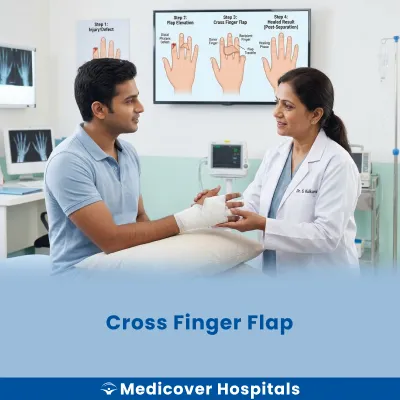
The Cross finger Flap is a surgical technique used to repair soft tissue defects in the fingers. It involves transferring a flap of skin and subcutaneous tissue from an adjacent finger to cover the injured area. This procedure is often used when the skin loss is too extensive for direct closure or skin grafting. It ensures that the affected finger regains its function and appearance.
This surgery is needed for injuries like deep lacerations, crush injuries, or after tumour excision in the fingers. If left untreated, these conditions can lead to impaired hand function and chronic pain. Modern surgical approaches for Cross finger Flap include microsurgical techniques and advanced wound care. These methods help in achieving better outcomes and faster recovery.
Cross Finger Flap Doctors Near You
Discover skilled orthopedic surgeons for cross finger flap procedures at Medicover Hospitals across India. Choose your city and book a consultation to explore treatment options tailored to your needs.
Why Choose Medicover Hospitals for Cross Finger Flap Surgery?
Get a second opinion from trusted experts and makeconfident, informed decisions.
 Get Second Opinion
Complete Guide To Cross Finger Flap
Everything you need to know about the procedure, preparation, and recovery
Cross Finger Flap Surgery Indications
Doctors recommend cross finger flap surgery for patients with complex injuries to the fingers. It is often considered when other treatments do not provide adequate healing or function.
Soft Tissue Defects
Patients may experience exposed tendons or bones due to trauma. Examination reveals insufficient soft tissue coverage. When wound healing stalls despite conservative care, surgery is needed.
Fingertip Amputations
Severe pain and bleeding occur with fingertip loss. Doctors find that the remaining tissue is inadequate for natural healing. Surgery is advised when conservative methods fail to restore function.
Crush Injuries
Patients report intense pain and swelling from crushed fingers. Imaging shows significant tissue damage. When swelling and tissue loss prevent recovery, surgical intervention is necessary.
Complex Lacerations
Deep cuts lead to pain and limited finger movement. Examination reveals deep tissue involvement. Surgery becomes essential when stitches alone cannot ensure proper healing.
Burn Injuries
Burns cause severe pain and skin loss on fingers. Doctors note exposed structures and poor healing. When skin grafts are insufficient, cross finger flap surgery is recommended.
How to Prepare for Cross Finger Flap?
Proper preparation is crucial for a successful Cross finger Flap surgery. It ensures safety and enhances recovery. Follow these steps to get ready for your procedure.
- Medication Management: Stop NSAIDs, anticoagulants, and herbal supplements 7 days before surgery.
- Fasting Guidelines: Fast for at least 8 hours before the procedure if general anaesthesia is used.
- Skin Preparation: Clean the surgical area as instructed by your healthcare provider to reduce infection risk.
- Clothing Choice: Wear loose, comfortable clothing on the day of surgery for easy dressing post-procedure.
- Transportation: Arrange for someone to drive you home after the surgery as you may feel drowsy.
- Medication List: Bring a list of all medications with dosages to inform the medical team.
- Pre-Surgery Consultation: Attend all pre-operative appointments to discuss any concerns with your surgeon.
- Hydration: Stay well-hydrated before fasting begins, unless advised otherwise.
Cross Finger Flap Surgery (Step-by-Step)
Cross finger flap surgery is performed by plastic surgeons. The procedure typically lasts 1-2 hours and is usually done under regional anaesthesia.
- Preparation: The patient is positioned comfortably. The surgical area is cleaned and sterilised. Regional anaesthesia is administered to numb the hand.
- Incision: A 1-2 cm incision is made on the donor finger using a scalpel. This incision is carefully planned to ensure adequate blood supply.
- Flap Elevation: The surgeon uses fine scissors and forceps to elevate the skin flap from the donor finger. Care is taken to preserve the blood vessels.
- Transfer: The elevated flap is rotated and positioned over the injured area of the recipient finger. The flap is secured with sutures.
- Donor Site Closure: The donor site is closed with stitches. A dressing is applied to protect the area and promote healing.
- Immobilisation: The fingers are immobilised using a splint or bandage to ensure proper healing and to prevent movement.
- Post-Operative Care: The patient is monitored for any signs of infection or complications. Pain management and follow-up appointments are scheduled.
Who Performs Cross finger Flap Surgery?
Cross finger flap surgery is performed by orthopedic surgeons. These specialists are trained in reconstructive techniques to restore function and appearance to injured fingers. They use precise surgical instruments to ensure successful outcomes.
Recovery After Cross Finger Flap Surgery
Recovery from Cross finger Flap Surgery involves careful monitoring and following specific guidelines to ensure proper healing. Patients can expect some swelling and discomfort initially, which will gradually improve.
Day 1-3:
- Rest is crucial. Keep the hand elevated to reduce swelling.
- Avoid using the affected hand for any tasks.
- Follow the prescribed pain management plan.
- Consume soft, easy-to-digest foods like curd, dal-rice, and soups to maintain energy levels.
Day 4-7:
- Continue to keep the hand elevated when possible.
- Begin gentle finger movements as advised by your doctor.
- Stick to a balanced diet including khichdi and moong dal for protein and nutrients.
- Avoid any strenuous activities or lifting.
Day 8-14:
- Swelling should start to decrease noticeably.
- Gradually increase finger movements under guidance.
- Maintain a nutritious diet to support healing.
- Most patients can resume light activities or return to work/school, depending on their comfort and doctor's advice.
Phase 3 (Week 3-6):
- Continue with physiotherapy exercises to regain strength and flexibility.
- Normal diet can be resumed, focusing on balanced meals.
- Full return to daily activities is usually possible, but avoid heavy lifting until cleared by your doctor.
When to Seek Urgent Help:
- Increased pain or swelling that does not improve.
- Signs of infection such as redness, warmth, or discharge from the surgical site.
- Numbness or tingling in the fingers.
- Fever or chills.
Benefits of Cross Finger Flap Surgery
Cross finger flap surgery is a reconstructive procedure used to repair finger injuries. It offers several benefits for patients.
- Improved Functionality: Helps restore movement and function to the injured finger.
- Enhanced Healing: Promotes better healing by providing a robust blood supply to the injured area.
- Natural Appearance: Aims to achieve a more natural look by using the patient's own skin.
- Reduced Scarring: Minimises visible scarring compared to other grafting techniques.
Risks and Complications of Cross finger Flap Surgery
While cross finger flap surgery is generally safe, it carries certain risks and potential complications.
- Infection at the surgical site, which may require antibiotics.
- Swelling and bruising, which typically subside over time.
- Flap failure due to inadequate blood supply, necessitating further intervention.
- Nerve damage leading to temporary or permanent numbness.
- Stiffness in the fingers, which may require physical therapy.
What is the Cost of Cross Finger Flap Surgery?
The cost of Cross finger Flap Surgery at Medicover Hospitals ranges from Rs. 9,700 to Rs. 21,000. The price varies based on the ward category chosen, such as day care, general, private, or deluxe suites. Medicover Hospitals offers transparent pricing and supports insurance and TPA services, including CGHS, ESI, and major TPAs. A cashless facility is also available for convenience. Please contact the hospital for the latest insurance panel details as these may change periodically.
Frequently Asked Questions
1. How much does Cross Finger Flap Surgery Cost?
The cost of Cross finger Flap surgery at Medicover Hospitals ranges from Rs. 9,700 to Rs. 21,000, depending on the type of care and room chosen.
2. Is Cross finger Flap surgery covered by insurance?
Cross finger Flap surgery may be covered by CGHS, ESI, and major TPAs. Please contact the hospital for current panel details.
3. Will I regain full finger function post-surgery?
Full finger function recovery varies per individual. Regular physiotherapy and exercises are crucial for optimal recovery.
4. Can I drive after Cross finger Flap surgery?
Driving is not recommended immediately after surgery. Consult your doctor about when it's safe to resume driving.
5. What complications can arise after this surgery?
Possible complications include infection, flap failure, and reduced finger mobility. Regular follow-ups help in early detection and management.
6. How soon can I use my hand normally?
Hand usage may be limited for several weeks. Follow your surgeon's advice on when to resume regular activities.
7. What foods aid recovery after finger surgery?
Include protein-rich foods like dal-rice and curd in your diet. These help in tissue repair and recovery.


