 Call
Call Patient Reports
CRIF with Proximal Femoral Nail Antirotation Surgery by Expert Orthopedics
CRIF with Proximal Femoral Nail Antirotation is an open surgical procedure performed by skilled orthopaedic surgeons with qualifications like MS and DNB. This approach stabilises femoral fractures effectively. Patients often experience reduced blood loss and shorter hospital stays at Medicover Hospitals.
Expert Surgeons
Yearly Surgeries
Patient Satisfaction
What is Crif With Proximal Femoral Nail Antirotation?
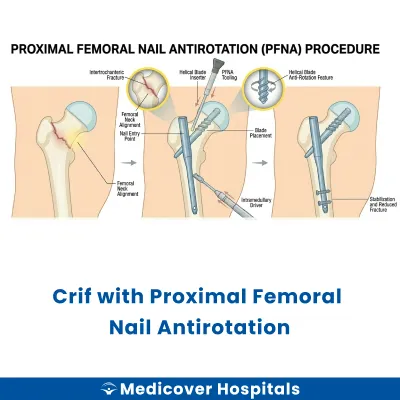
CRIF with Proximal Femoral Nail Antirotation is a surgical procedure used to treat fractures in the femur (thigh bone). CRIF stands for Closed Reduction and Internal Fixation. This means the bone is realigned without an open incision. The Proximal Femoral Nail Antirotation is a metal rod inserted into the femur to stabilize and hold the bone in place during healing.
This surgery is needed for fractures in the upper part of the femur. Such fractures can occur due to trauma, falls, or osteoporosis. If left untreated, these fractures can lead to severe pain and mobility issues. Modern surgical approaches for this procedure include minimally invasive techniques. These techniques aim to reduce recovery time and improve outcomes.
Crif With Proximal Femoral Nail Antirotation Doctors Near You
Discover expert orthopedics for CRIF with Proximal Femoral Nail Antirotation at Medicover Hospitals across India. Choose your city and book a consultation to discuss your treatment options today.
Why Choose Medicover Hospitals for Crif With Proximal Femoral Nail Antirotation?
Get a second opinion from trusted experts and makeconfident, informed decisions.
 Get Second Opinion
Complete Guide To Crif With Proximal Femoral Nail Antirotation
Everything you need to know about the procedure, preparation, and recovery
CRIF with Proximal Femoral Nail Antirotation Surgery Indications
Doctors recommend CRIF with Proximal Femoral Nail Antirotation surgery for specific hip fractures. This procedure helps stabilize the bone and promote healing when conservative treatments are insufficient.
Intertrochanteric Femur Fracture
Patients often experience severe hip pain and inability to bear weight on the affected leg. X-rays reveal a fracture between the greater and lesser trochanters. When pain persists and mobility is compromised, surgery is advised.
Subtrochanteric Femur Fracture
Patients report pain and swelling in the upper thigh. Imaging shows a fracture just below the lesser trochanter. If non-surgical methods like bracing fail to improve stability, surgical intervention is necessary.
Failed Conservative Treatment
Patients with persistent pain and limited mobility despite rest and medication may require surgery. Imaging shows no improvement in fracture alignment. Surgery is considered when healing stalls.
Pathological Fracture
Patients may have sudden hip pain without trauma. Scans reveal bone weakening due to conditions like osteoporosis. Surgery is needed when fractures occur spontaneously and conservative care is ineffective.
High-energy Trauma
Patients involved in accidents often suffer severe hip pain and swelling. X-rays show complex fractures. When immediate stabilization is crucial, surgery is the preferred option.
How to Prepare for CRIF with Proximal Femoral Nail Antirotation?
Proper preparation is crucial for a smooth CRIF with Proximal Femoral Nail Antirotation. It helps minimise complications and ensures a quicker recovery.
- Medication Review: Stop NSAIDs, anticoagulants, and herbal supplements at least a week before surgery. Consult your doctor for specific guidance.
- Fasting Instructions: Do not eat or drink anything for at least 8 hours before the procedure, as general anaesthesia is typically used.
- Pre-Surgery Hygiene: Take a shower with antiseptic soap the night before and the morning of the surgery to reduce infection risk.
- Comfortable Clothing: Wear loose-fitting clothes on the day of surgery for comfort and ease of movement post-procedure.
- Transportation Arrangements: Arrange for someone to drive you home after the surgery, as you will not be able to drive yourself.
- Medication List: Bring a list of all medications you are currently taking, including dosages, to share with the medical team.
- Home Preparation: Set up a comfortable recovery area at home with easy access to essentials and support for mobility.
CRIF with Proximal Femoral Nail Antirotation Surgery (Step-by-Step)
Overview: This procedure is performed by orthopaedic surgeons. It typically lasts 1-2 hours and is done under regional or general anaesthesia.
- Preparation: The patient is positioned on the operating table. Anaesthesia is administered to ensure comfort.
- Incision: A small incision of about 1-2 cm is made near the hip area. This allows access to the femur.
- Guide Wire Insertion: A guide wire is inserted into the femur to ensure correct alignment. This is crucial for the placement of the nail.
- Reaming: A reamer is used to prepare the femoral canal. This step ensures the canal is ready for the nail insertion.
- Nail Insertion: The Proximal Femoral Nail Antirotation is inserted over the guide wire. It stabilizes the fracture and prevents rotation.
- Locking Screws Placement: Locking screws are inserted through small incisions. They secure the nail in place, ensuring stability.
- Closure: The incisions are closed with sutures or staples. A dressing is applied to protect the area.
Who Performs CRIF with Proximal Femoral Nail Antirotation Surgery?
This surgery is performed by orthopaedic surgeons. They specialise in treating bone and joint conditions. Their expertise ensures the procedure is done accurately and safely.
Recovery After CRIF with Proximal Femoral Nail Antirotation Surgery
Recovery from CRIF with Proximal Femoral Nail Antirotation surgery involves gradual healing and rehabilitation. Patients can expect a structured recovery process, focusing on regaining mobility and strength.
Day 1-3:
- Hospital stay for monitoring and pain management.
- Begin gentle leg movements as advised by the physiotherapist.
- Start with a soft diet including curd, dal-rice, and soups.
Day 4-7:
- Gradual increase in mobility with assisted walking.
- Continue physiotherapy exercises to improve joint flexibility.
- Include protein-rich foods like moong dal and khichdi in meals.
Week 2-4:
- Transition to partial weight-bearing on the affected leg.
- Regular physiotherapy sessions to strengthen muscles.
- Maintain a balanced diet with plenty of fluids and fibre.
Phase 1 (Month 1-2):
- Increase weight-bearing activities as tolerated.
- Resume light daily activities; avoid strenuous tasks.
- Return to work or school may be possible with limitations.
Phase 2 (Month 3-6):
- Gradual return to normal activities and exercise routines.
- Continue physiotherapy to enhance recovery.
- Focus on a nutritious diet for bone health.
When to Seek Urgent Help
- Severe pain or swelling in the operated leg.
- Signs of infection like fever or redness around the incision.
- Sudden inability to move the leg or bear weight.
If you experience any of these symptoms, contact your healthcare provider immediately.
Benefits of CRIF with Proximal Femoral Nail Antirotation Surgery
CRIF with Proximal Femoral Nail Antirotation is a procedure designed to treat fractures of the femur effectively.
- Stability: Provides strong internal support for fractured bones.
- Reduced Healing Time: Promotes quicker recovery compared to traditional methods.
- Minimally Invasive: Involves smaller incisions, leading to less scarring.
- Early Mobilisation: Allows patients to start moving sooner post-surgery.
- Decreased Pain: Minimises post-operative discomfort.
Risks and Complications of CRIF with Proximal Femoral Nail Antirotation Surgery
While generally safe, this surgery carries certain risks and potential complications.
Common Risks
- Infection at the surgical site.
- Blood clots forming in the legs.
Rare Risks
- Malalignment of the bone during healing.
- Nerve or blood vessel damage.
- Implant failure or breakage.
- Delayed union or non-union of the fracture.
- Allergic reaction to the implant material.
Cost of CRIF with Proximal Femoral Nail Antirotation Surgery
The cost of CRIF with Proximal Femoral Nail Antirotation Surgery at Medicover Hospitals varies depending on the ward category. Prices range from ₹45,000 to ₹1,80,000, across different ward types. This ensures that patients can choose a plan that suits their budget and needs.
We offer transparent pricing and support for insurance and TPA services, including CGHS, ESI, and major TPAs. A cashless facility is also available for added convenience. Please contact the hospital for the latest insurance panel details as these may change periodically.
Frequently Asked Questions
1. How much does CRIF with Proximal Femoral Nail Antirotation surgery cost at Medicover Hospitals?
The cost for CRIF with Proximal Femoral Nail Antirotation surgery at Medicover Hospitals ranges from ₹45,000 to ₹1,80,000, depending on the room type.
2. Is CRIF with Proximal Femoral Nail Antirotation surgery covered under health insurance at Medicover?
CRIF with Proximal Femoral Nail Antirotation surgery is often covered by CGHS, ESI, and major TPAs, with cashless options. Please contact the hospital for current panel details.
3. Will I need crutches after this surgery?
Yes, crutches are usually required for a few weeks after CRIF with Proximal Femoral Nail Antirotation to aid mobility and support healing.
4. Can I drive after CRIF with Proximal Femoral Nail Antirotation?
Driving is generally not recommended until your doctor confirms full recovery and mobility, usually a few weeks post-surgery.
5. What foods help bone healing after this surgery?
Consuming calcium-rich foods like curd and leafy greens, along with protein sources such as dal-rice, can aid bone healing after CRIF with Proximal Femoral Nail Antirotation.
6. Will I have a limp after CRIF with Proximal Femoral Nail Antirotation?
A temporary limp may occur due to muscle weakness after surgery, but physiotherapy can help restore normal walking patterns.
7. Can I return to sports after this surgery?
Returning to sports is possible after full recovery, typically several months post-surgery, following your doctor's advice and a tailored rehabilitation plan.


