 Call
Call Patient Reports
Best Hospital for Craniotomy for Pituitary Tumor Excision with Advanced Neurosurgical Care
At Medicover Hospitals, our neurosurgeons, with qualifications like MS, MCh, and DNB, perform open craniotomy for pituitary tumor excision. This procedure allows precise removal of tumors, often resulting in shorter hospital stays and reduced recovery times for patients across India.
Expert Surgeons
Yearly Surgeries
Patient Satisfaction
What is Craniotomy for Pituitary Tumor Excision?
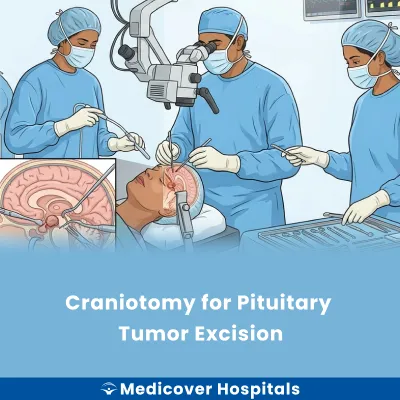
Craniotomy for Pituitary Tumor Excision is a surgical procedure to remove a tumor from the pituitary gland. The pituitary gland is a small, pea-sized organ located at the base of the brain. It plays a crucial role in regulating hormones. During the procedure, a section of the skull (cranium) is temporarily removed to access the tumor.
This surgery is needed when a pituitary tumor causes hormonal imbalances or pressure on surrounding brain structures. Conditions like acromegaly, Cushing's disease, or vision problems may arise. If untreated, these can lead to serious health issues. Modern surgical approaches include the transsphenoidal method, where the tumor is accessed through the nasal cavity, and the traditional craniotomy, depending on the tumor's size and location.
Craniotomy for Pituitary Tumor Excision Doctors Near You
Discover expert neurosurgeons for craniotomy and pituitary tumor excision at Medicover Hospitals across India. Choose your city and book a consultation to discuss your treatment options.
Why Choose Medicover Hospitals for Craniotomy for Pituitary Tumor Excision?
Get a second opinion from trusted experts and makeconfident, informed decisions.
 Get Second Opinion
Complete Guide To Craniotomy For Pituitary Tumor Excision
Everything you need to know about the procedure, preparation, and recovery
Craniotomy for Pituitary Tumor Excision Surgery Indications
Doctors recommend craniotomy for pituitary tumor excision when non-surgical treatments are ineffective. This procedure is crucial for addressing symptoms caused by the tumor's pressure on surrounding structures.
Vision Problems
Patients may experience blurred vision or loss of peripheral vision. These symptoms arise when the tumor presses on the optic nerves. If vision issues persist despite medication, surgery may be necessary.
Hormonal Imbalances
Hormonal changes, such as unexplained weight gain or fatigue, can occur. Blood tests may reveal abnormal hormone levels. When medication fails to regulate these levels, surgical intervention is considered.
Headaches
Persistent headaches are a common symptom. They result from increased pressure within the skull. If headaches do not improve with medication, surgery may be advised.
Acromegaly Symptoms
Signs include enlarged hands and feet or facial changes. These occur due to excess growth hormone. Surgery is recommended when medication does not control hormone production.
Cushing's Disease Symptoms
Patients may experience weight gain, high blood pressure, or skin changes. These symptoms are linked to excess cortisol. When medical therapy is ineffective, surgery may be the next step.
Uncontrolled Tumor Growth
Imaging tests may show a growing tumor despite treatment. This growth can lead to worsening symptoms. Surgery is considered when tumor size increases despite other interventions.
How to Prepare for Craniotomy for Pituitary Tumor Excision?
Preparation is crucial for a successful craniotomy for pituitary tumor excision. It ensures your safety and helps in a smoother recovery. Follow these steps to get ready for your surgery.
- Medication Review: Stop NSAIDs, anticoagulants, and herbal supplements 7-10 days before surgery.
- Fasting Guidelines: Do not eat or drink anything for at least 8 hours before the procedure.
- Nasal Preparation: Use prescribed nasal sprays to reduce swelling and improve access to the tumor.
- Clothing: Wear loose, comfortable clothing on the day of the surgery for easy changing.
- Transportation: Arrange for someone to drive you home post-surgery as you will not be able to drive yourself.
- Medication List: Bring a list of all medications you are taking, including dosages, to the hospital.
- Pre-Surgical Tests: Complete all recommended blood tests and imaging studies as advised by your doctor.
- Rest and Relaxation: Ensure you get adequate rest the night before to help your body prepare for surgery.
Craniotomy for Pituitary Tumor Excision Surgery (Step-by-Step)
This surgery is performed by neurosurgeons. It typically lasts 3-5 hours and is done under general anaesthesia.
- Preparation: The patient is given general anaesthesia to ensure they are asleep and pain-free. The head is positioned to provide the surgeon with optimal access.
- Incision: A 1-2 cm incision is made in the scalp. The surgeon carefully removes a small piece of the skull to access the brain.
- Accessing the Tumor: Using a surgical microscope, the surgeon identifies the pituitary gland. Instruments like a curette or bipolar cautery may be used to reach the tumor.
- Tumor Excision: The surgeon removes the pituitary tumor with precision. A harmonic scalpel or coblation wand might be used to minimize bleeding.
- Closure: Once the tumor is removed, the skull piece is replaced and secured. The scalp incision is closed with sutures or staples.
- Recovery: The patient is moved to a recovery room. They are monitored as they wake up from anaesthesia.
- Post-Operative Care: The patient may experience some discomfort. Pain management and monitoring for any complications are part of the care.
Who Performs Craniotomy for Pituitary Tumor Excision Surgery?
This surgery is performed by neurosurgeons. They specialise in surgeries involving the brain and nervous system. Their expertise ensures the procedure is conducted with precision and care.
Recovery After Craniotomy for Pituitary Tumor Excision Surgery
Recovery from a craniotomy for pituitary tumor excision involves several stages. Patients may experience fatigue, headaches, and mild discomfort initially. It's important to follow medical advice for a smooth recovery.
Day 1-3:
- Hospital stay is common. Monitoring for any complications.
- Pain management and rest are crucial.
- Start with a liquid diet, gradually moving to soft foods like soups and khichdi.
Day 4-7:
- Discharge from hospital is possible if recovery is smooth.
- Continue with soft, easy-to-digest foods such as dal-rice and moong dal.
- Avoid strenuous activities. Short walks are encouraged.
Week 2-4:
- Gradual increase in physical activity. Avoid heavy lifting.
- Return to work or school may be possible, depending on individual recovery.
- Maintain a balanced diet with curd and fresh fruits.
Phase 1-3 Months:
- Full recovery may take several months. Follow-up appointments are essential.
- Resume normal activities gradually. Listen to your body.
- Continue with a nutritious diet to support healing.
When to Seek Urgent Help:
- Sudden severe headache or vision changes.
- Persistent nausea or vomiting.
- Signs of infection like fever or redness at the incision site.
- Confusion or difficulty speaking.
Benefits of Craniotomy for Pituitary Tumor Excision Surgery
The craniotomy procedure for pituitary tumor excision can offer significant health benefits for patients.
- Symptom Relief: Alleviates symptoms like headaches and vision problems caused by the tumor.
- Improved Hormonal Balance: Helps restore normal hormonal function by removing the tumor.
- Reduced Tumor Pressure: Decreases pressure on surrounding brain structures, improving overall brain function.
- Potential for Complete Removal: Offers a chance for complete tumor excision, reducing the risk of recurrence.
Risks and Complications of Craniotomy for Pituitary Tumor Excision Surgery
While generally safe, craniotomy for pituitary tumor excision carries certain risks and complications.
- Infection at the surgical site.
- Bleeding or blood clots during or after surgery.
- Cerebrospinal fluid leaks may occur post-surgery.
- Damage to surrounding brain tissue, affecting functions.
- Hormonal imbalances due to pituitary gland damage.
- Seizures as a result of surgical intervention.
What is the Cost of Craniotomy for Pituitary Tumor Excision Surgery?
The cost of Craniotomy for Pituitary Tumor Excision Surgery at Medicover Hospitals ranges from Rs. 2,25,000 to Rs. 6,06,000, based on factors such as the surgical approach, duration of hospital stay, room category, diagnostic tests, and post-operative care.
At Medicover Hospitals, we offer transparent pricing to ensure clarity. We support insurance and TPA services, including CGHS, ESI, and major TPAs, with a cashless facility available. Please contact the hospital for the latest insurance panel details as these may change periodically.
Frequently Asked Questions
1. How much does Craniotomy for Pituitary Tumor Excision surgery cost at Medicover Hospitals?
The cost of Craniotomy for Pituitary Tumor Excision surgery ranges from Rs. 2,25,000 to Rs. 6,06,
2. Please contact Medicover Hospitals for detailed pricing information. 2. Is Craniotomy for Pituitary Tumor Excision surgery covered under health insurance at Medicover?
This surgery is often covered by CGHS, ESI, and major TPAs. Please contact the hospital for current panel details.
3. Will I experience hormonal changes after surgery?
Yes, hormonal changes are possible after pituitary tumor excision. Regular follow-ups will help manage and monitor these changes effectively.
4. Can vision be affected by pituitary tumor surgery?
Vision changes can occur due to the proximity of the pituitary gland to optic nerves. Any changes should be reported to your doctor promptly.
5. What dietary changes are needed post-surgery?
Post-surgery, a balanced diet including curd, dal-rice, and khichdi is recommended. Avoid heavy or spicy foods for the initial weeks.
6. How long before I can return to work?
Most patients can return to work within 6-8 weeks. However, this depends on individual recovery and should be discussed with your doctor.
7. Is there a risk of diabetes insipidus post-surgery?
Yes, diabetes insipidus is a potential complication after pituitary surgery. Symptoms like excessive thirst and urination should be reported immediately.


