 Call
Call Patient Reports
Best Hospital for Cranioplasty with Implants Surgery with Safe Treatment
Cranioplasty with implants at Medicover Hospitals is performed using an open surgical approach by experienced neurosurgeons with qualifications such as MS, MCh, and DNB. This procedure helps restore skull integrity and aesthetics. Patients often experience shorter hospital stays and improved recovery times.
Expert Surgeons
Yearly Surgeries
Patient Satisfaction
What is Cranioplasty With Implants?
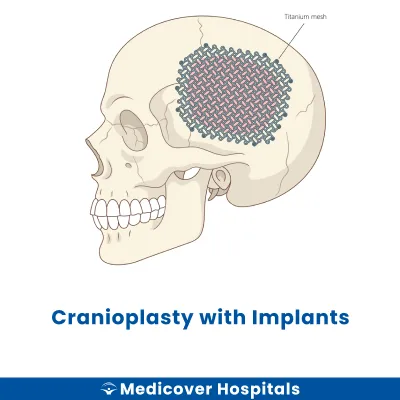
Cranioplasty with implants is a surgical procedure involving the repair of a defect or deformity in the skull (cranium). This is achieved by using custom-made implants to restore the skull's shape and function. The implants are designed to fit the specific needs of the patient, ensuring proper coverage and protection of the brain.
This surgery is often needed after a traumatic brain injury, surgery for brain tumours, or congenital skull defects. If left untreated, these conditions can lead to complications like brain injury or cosmetic deformities. Modern surgical approaches for Cranioplasty with implants include 3D printing technology and computer-aided design, which enhance precision and outcomes. These techniques help in achieving a better fit and aesthetic result.
Cranioplasty With Implants Doctors Near You
Find experienced neurosurgeons for cranioplasty with implants at Medicover Hospitals across India. Choose your city and book a consultation to discuss your treatment options today.
Why Choose Medicover Hospitals for Cranioplasty With Implants?
Get a second opinion from trusted experts and makeconfident, informed decisions.
 Get Second Opinion
Complete Guide To Cranioplasty With Implants
Everything you need to know about the procedure, preparation, and recovery
Cranioplasty with Implants Surgery Indications
Cranioplasty with implants is recommended when there is a need to repair or reconstruct the skull. This procedure is often considered when there are defects or deformities that affect the patient's health or quality of life.
Skull Defects Post-Surgery
Patients may experience visible deformities or irregularities after previous brain surgeries. Imaging may show significant skull defects. When these defects cause discomfort or risk of injury, cranioplasty with implants is advised.
Traumatic Skull Injuries
Severe head trauma can lead to fractures or loss of skull bone. Patients might experience pain, swelling, or neurological symptoms. If conservative management fails to protect the brain or restore skull integrity, surgery is necessary.
Congenital Skull Deformities
Some individuals are born with skull abnormalities. These can lead to aesthetic concerns or functional issues. When non-surgical methods do not correct the deformity, cranioplasty with implants is considered.
Infection-Induced Bone Loss
Infections can cause bone deterioration, leading to skull defects. Patients may have persistent pain or drainage. If antibiotics and other treatments do not resolve the issue, surgical intervention is required.
Post-Tumour Resection Defects
After tumour removal, patients may have skull defects. This can result in cosmetic issues or vulnerability to injury. When reconstruction is needed to restore form and function, cranioplasty with implants is performed.
How to Prepare for Cranioplasty with Implants?
Proper preparation is crucial for a successful cranioplasty with implants. It helps minimise risks and ensures a smoother recovery.
- Medication Review: Stop NSAIDs, anticoagulants, and herbal supplements at least a week before surgery.
- Fasting Guidelines: Fast for at least 8 hours before the surgery if general anaesthesia is used.
- Pre-Surgery Tests: Complete all recommended blood tests and imaging studies as advised by your doctor.
- Personal Items: Wear loose, comfortable clothing on the day of surgery. Avoid jewellery and makeup.
- Transportation: Arrange for someone to drive you home after the procedure, as you will not be able to drive yourself.
- Medication List: Bring a list of all medications you are currently taking, including dosages, to the hospital.
- Smoking and Alcohol: Avoid smoking and alcohol for at least 24 hours before the surgery.
- Pre-Surgical Hygiene: Follow any specific instructions given by your surgeon regarding bathing or skin preparation.
Cranioplasty with implants Surgery (Step-by-Step)
Cranioplasty with implants is performed by neuro specialists. The surgery typically lasts 2-4 hours and is done under general anaesthesia.
- Preparation: The patient is positioned and the surgical area is cleaned. General anaesthesia is administered to ensure the patient is asleep and pain-free.
- Incision: A precise incision, usually 1-2 cm, is made over the area of the skull defect. The surgeon carefully exposes the area using a retractor.
- Defect Assessment: The surgeon assesses the skull defect. A curette may be used to clean the edges and prepare the site for the implant.
- Implant Placement: A custom implant, often made of materials like titanium or acrylic, is fitted into the defect. The surgeon ensures it aligns perfectly with the surrounding bone.
- Fixation: The implant is secured using screws or plates. A harmonic scalpel may be used to ensure precise cutting and minimal bleeding.
- Closure: The incision is closed with sutures or staples. The area is cleaned, and a sterile dressing is applied to protect the site.
- Recovery: The patient is moved to the recovery room. They gradually wake up from anaesthesia and are monitored for any immediate complications.
Who Performs Cranioplasty with implants Surgery?
Cranioplasty with implants is performed by neurosurgeons. These specialists have extensive training in brain and skull surgeries. They use their expertise to restore the skull's shape and function.
Recovery After Cranioplasty with Implants Surgery
Recovery after cranioplasty with implants involves careful monitoring and gradual resumption of daily activities. Patients can expect to stay in the hospital for a few days post-surgery for observation. It's important to follow the doctor's instructions for a smooth recovery.
Day 1-3:
- Rest is crucial. You may experience some swelling and discomfort.
- Stick to a soft diet. Include foods like curd, dal-rice, and soups.
- Keep the head elevated to reduce swelling.
Day 4-7:
- Gradually increase mobility, but avoid strenuous activities.
- Continue with a nutritious diet. Moong dal and khichdi are good options.
- Attend follow-up appointments for wound assessment.
Week 2-4:
- Stitches or staples may be removed during this period.
- Resume light activities but avoid heavy lifting or bending.
- Return to work or school may be possible, depending on recovery.
Month 1-3:
- Gradual return to normal activities. Consult your doctor before resuming sports.
- Maintain a balanced diet to support healing.
- Continue attending follow-up appointments to monitor progress.
When to Seek Urgent Help:
- Severe headache or persistent vomiting.
- Sudden vision changes or seizures.
- Redness, swelling, or discharge from the surgical site.
Benefits of Cranioplasty with implants Surgery
Cranioplasty with implants is a surgical procedure aimed at repairing skull defects. It offers several benefits for patients.
- Restoration of Skull Shape: Helps in restoring the natural contour of the skull.
- Protection of Brain Tissue: Provides a protective barrier for the underlying brain tissue.
- Improved Aesthetics: Enhances appearance, boosting self-esteem and confidence.
- Potential Neurological Improvement: May improve neurological function in some cases.
Risks and Complications of Cranioplasty with implants Surgery
While cranioplasty with implants can be beneficial, it carries certain risks and complications. It is important to be aware of these before undergoing the procedure.
- Infection : Risk of infection at the surgical site.
- Implant Rejection : The body may reject the implant material.
- Bleeding : Possibility of bleeding during or after surgery.
- Seizures : Some patients may experience seizures post-surgery.
- Swelling : Swelling around the surgical area is possible.
- Implant Displacement : The implant may shift from its original position.
Cost of Cranioplasty with Implants Surgery
The cost of cranioplasty with implants surgery typically ranges from Rs. 54,000 to Rs. 84,500, depending on several factors. These include the surgical approach, duration of hospital stay, room category, required diagnostics, and post-operative care.
At Medicover Hospitals, we ensure transparent pricing for all procedures. We provide support for insurance and TPA, including CGHS, ESI, and major TPAs. A cashless facility is also available for your convenience. Please contact the hospital for the latest insurance panel details as these may change periodically.
Frequently Asked Questions
1. How much does Cranioplasty with implants surgery cost at Medicover Hospitals?
The cost of Cranioplasty with implants surgery ranges from Rs. 54,000 to Rs. 84,
2. Please contact Medicover Hospitals for detailed pricing information. 2. Is Cranioplasty with implants surgery covered under health insurance at Medicover?
Cranioplasty with implants surgery may be covered by CGHS, ESI, and major TPAs. Please contact the hospital for current panel details.
3. Will my brain function change after Cranioplasty?
Cranioplasty aims to restore skull integrity without affecting brain function. Any changes should be discussed with your doctor.
4. Can I resume sports after Cranioplasty with implants?
Resuming sports is generally advised after full recovery, which may take several months. Consult your doctor for specific guidance.
5. Will I need to wear a helmet after Cranioplasty?
Wearing a helmet may be recommended during recovery to protect the skull. Follow your doctor's advice for safety measures.
6. What foods should I avoid after Cranioplasty?
Avoid hard and crunchy foods like nuts and chips initially. Soft foods like dal-rice and khichdi are recommended.
7. Can implants cause infection after Cranioplasty?
Infection is a potential complication of Cranioplasty with implants. Regular follow-ups and proper care can help prevent this issue.


