 Call
Call Patient Reports
Best Cranioplasty Hospital with Autologous Bone Graft & Advanced Care
Cranioplasty with Autologous Bone Graft at Medicover Hospitals involves an open surgical approach performed by experienced neurosurgeons with qualifications like MS and MCh. This procedure helps restore skull integrity and reduces the risk of complications, leading to a shorter hospital stay for patients.
Expert Surgeons
Yearly Surgeries
Patient Satisfaction
What is Cranioplasty With Autologus Bone Graft?
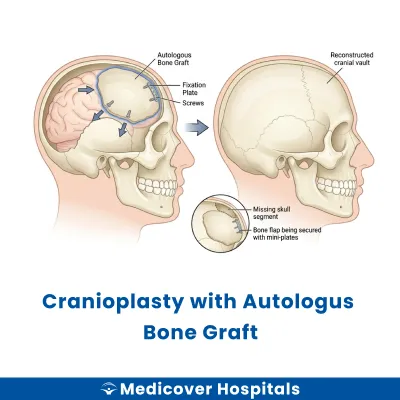
Cranioplasty with Autologous Bone Graft is a surgical procedure to repair defects in the skull (cranium). It involves using the patient's own bone (autologous) to reconstruct the skull. This method helps restore the natural shape and function of the skull, providing protection to the brain.
This surgery is necessary for patients with skull defects due to trauma, surgery, or congenital conditions. If left untreated, these defects can lead to complications like brain injury or infection. Modern surgical approaches for Cranioplasty include minimally invasive techniques and advanced imaging for precise reconstruction. These methods aim to improve outcomes and reduce recovery time.
Cranioplasty With Autologus Bone Graft Doctors Near You
Discover skilled neurosurgeons for cranioplasty with autologous bone graft at Medicover Hospitals across India. Choose your city and book a consultation to explore your treatment options today.
Why Choose Medicover Hospitals for Cranioplasty With Autologus Bone Graft?
Get a second opinion from trusted experts and makeconfident, informed decisions.
 Get Second Opinion
Complete Guide To Cranioplasty With Autologus Bone Graft
Everything you need to know about the procedure, preparation, and recovery
Cranioplasty with Autologus Bone Graft Surgery Indications
Doctors recommend cranioplasty with autologous bone graft when there is a need to repair or reconstruct a defect in the skull. This procedure is often considered after traumatic injuries or surgeries that leave the skull compromised.
Post-Traumatic Skull Defect
Patients may experience headaches, neurological deficits, or cosmetic concerns after a head injury. Imaging often reveals a missing or damaged portion of the skull. When conservative treatments do not alleviate symptoms or protect the brain, surgery is advised.
Post-Surgical Skull Defect
Following brain surgery, patients might have a skull defect that causes discomfort or vulnerability. CT scans or MRIs show the extent of the defect. If the defect leads to complications or aesthetic issues, cranioplasty is considered.
Congenital Skull Defects
Some individuals are born with skull anomalies that cause neurological symptoms or cosmetic issues. These defects are visible on imaging studies. When these issues impact quality of life or brain protection, surgery becomes necessary.
Infection-Related Skull Defect
Infections can lead to bone loss, causing pain or neurological symptoms. Imaging shows areas of bone destruction. When antibiotics and other treatments fail, cranioplasty is required to restore skull integrity.
Skull Tumour Resection
After tumour removal, patients may have a skull defect that results in discomfort or functional issues. Post-operative scans reveal the defect. If the defect affects brain protection or appearance, surgical intervention is recommended.
How to Prepare for Cranioplasty with Autologus Bone Graft?
Proper preparation for cranioplasty with autologous bone graft is crucial for a smooth procedure and recovery. It helps minimise risks and ensures the best possible outcome.
- Medication Review: Stop NSAIDs, anticoagulants, and herbal supplements at least 7 days prior. Consult your doctor for guidance.
- Fasting: Fast for at least 8 hours before the surgery. This is essential for general anaesthesia.
- Pre-Surgery Tests: Complete all required blood tests and imaging studies as advised by your surgeon.
- Personal Items: Wear loose, comfortable clothing on the day of surgery. It helps in easy dressing post-surgery.
- Transportation: Arrange for someone to drive you home after the procedure. Anaesthesia effects may linger.
- Medication List: Bring a list of all medications you take, including dosages. This helps in managing your care.
- Smoking and Alcohol: Avoid smoking and alcohol for at least 48 hours before surgery. It aids in better healing.
- Hygiene: Take a shower and wash your hair with antiseptic soap the night before. It reduces infection risk.
Cranioplasty with Autologus Bone Graft Surgery (Step-by-Step)
This procedure is performed by specialists in neurological surgery. It typically lasts 2-4 hours and is done under general anaesthesia.
- Preparation: The patient is positioned on the operating table. General anaesthesia is administered to ensure the patient is asleep and pain-free.
- Incision: A scalp incision is made, usually 1-2 cm beyond the defect area. Surgical instruments like scalpels and retractors are used to expose the skull.
- Bone Flap Removal: The original bone flap, preserved from a previous surgery, is carefully prepared. Instruments like a curette may be used to clean and shape the bone.
- Bone Graft Placement: The autologous bone graft is positioned over the cranial defect. It is secured using plates and screws to ensure stability.
- Closure: The scalp is repositioned over the bone graft. Sutures or staples are used to close the incision, ensuring proper healing.
- Recovery: The patient is moved to a recovery room. They are monitored as they wake from anaesthesia, experiencing some drowsiness and discomfort.
- Post-Operative Care: Pain management and antibiotics may be administered. The patient is advised on wound care and activity restrictions.
Who Performs Cranioplasty with Autologus Bone Graft Surgery?
This surgery is performed by neurosurgeons. They are specialists in brain and skull procedures, trained to handle complex cranial surgeries with precision.
Recovery After Cranioplasty with Autologus Bone Graft Surgery
Recovery from cranioplasty with an autologous bone graft involves careful monitoring and gradual return to daily activities. Patients can expect a structured recovery process, with specific guidelines to ensure optimal healing.
Day 1-3:
- Rest is crucial. Avoid any strenuous activities.
- Hospital stay for monitoring vital signs and managing pain.
- Start with a liquid diet, including soups and juices.
Day 4-7:
- Gradual introduction of soft foods like curd, dal-rice, and khichdi.
- Continue to avoid heavy lifting and bending.
- Follow-up appointment for wound check and dressing change.
Day 8-14:
- Increase physical activity slowly, but avoid strenuous exercise.
- Incorporate more solid foods, such as moong dal and soft vegetables.
- Monitor for any signs of infection or complications.
Phase 3 (Week 3-6):
- Resume light work or school activities if approved by the doctor.
- Continue to avoid contact sports or activities that risk head injury.
- Regular follow-up visits to assess recovery progress.
When to Seek Urgent Help:
- Severe headache or increasing pain.
- Fever or signs of infection at the surgical site.
- Sudden changes in vision or consciousness.
- Persistent nausea or vomiting.
Always follow the surgeon's advice and contact the hospital if you have any concerns. Recovery times can vary, and adherence to guidelines is essential for a smooth recovery.
Benefits of Cranioplasty with Autologus Bone Graft Surgery
Cranioplasty with autologous bone graft involves using the patient's own bone to repair skull defects. This procedure offers several benefits.
- Biocompatibility: Using the patient's own bone reduces the risk of rejection.
- Natural Healing: The graft integrates well with existing bone, promoting natural healing.
- Reduced Infection Risk: Autologous grafts have a lower chance of infection compared to synthetic materials.
- Improved Aesthetics: Restores the natural contour of the skull, enhancing appearance.
Risks and Complications of Cranioplasty with Autologus Bone Graft Surgery
While cranioplasty with autologous bone graft is generally safe, it carries some risks and complications.
- Infection at the surgical site can occur, requiring further treatment.
- Hematoma or fluid accumulation may develop, needing drainage.
- Bone resorption, where the grafted bone is absorbed by the body, may happen.
- Seizures can occur post-surgery, though they are uncommon.
- Neurological deficits might arise, affecting movement or sensation.
Cost of Cranioplasty with Autologous Bone Graft Surgery
The cost of Cranioplasty with Autologous Bone Graft Surgery typically ranges from Rs. 1,50,000 to Rs. 3,50,000, depending on the surgical approach, duration of hospital stay, room category, required diagnostics, and post-operative care.
At Medicover Hospitals, we offer transparent pricing with support for insurance and TPA, including CGHS, ESI, and major TPAs. A cashless facility is available to ease the financial process. Please contact the hospital for the latest insurance panel details as these may change periodically.
Frequently Asked Questions
1. How much does Cranioplasty with Autologus Bone Graft surgery cost at Medicover Hospitals?
The cost of Cranioplasty with Autologous Bone Graft surgery typically ranges from Rs. 1,50,000 to Rs. 3,50,
2. Please contact Medicover Hospitals for detailed pricing information. 2. Is Cranioplasty with Autologus Bone Graft surgery covered under health insurance at Medicover?
Cranioplasty with Autologus Bone Graft surgery may be covered by CGHS, ESI, and major TPAs. Please contact the hospital for current panel details.
3. Will I have headaches after cranioplasty?
Some patients may experience headaches after cranioplasty. These usually subside over time with proper medication and rest.
4. Can I wear a helmet after cranioplasty?
Wearing a helmet is advised for protection after cranioplasty. Consult your doctor on when it is safe to start using one.
5. Is there a risk of infection with autologous bone graft?
There is a small risk of infection with autologous bone grafts. Proper surgical technique and post-operative care minimize this risk.
6. Will I need physiotherapy after cranioplasty?
Physiotherapy may be recommended to aid recovery after cranioplasty. It helps improve mobility and strength over time.
7. Can I resume normal activities after cranioplasty?
You can gradually return to normal activities after cranioplasty. Full recovery and resumption of activities typically occur within a few months.


