 Call
Call Patient Reports
Coronary Angiography and Coronary Artery Bypass Graft Procedure at Medicover Hospitals
At Medicover Hospitals, our cardiologists, with qualifications like DM and DNB, perform Coronary Angiography using endoscopic techniques and Coronary Artery Bypass Graft through open surgery. These approaches often result in shorter hospital stays and reduced blood loss, enhancing patient recovery across India.
Expert Surgeons
Yearly Surgeries
Patient Satisfaction
What is Coronary Angiography and Coronary Artery Bypass Graft?
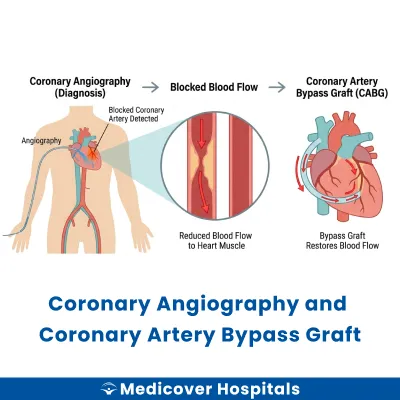
Coronary Angiography is a diagnostic procedure that uses X-ray imaging to see the heart's blood vessels (coronary arteries). It helps identify blockages or narrowing. Coronary Artery Bypass Graft (CABG) is a surgical procedure that improves blood flow to the heart. It involves using a blood vessel from another part of the body to bypass a blocked artery.
These procedures are needed for coronary artery disease, where arteries become narrowed or blocked. If untreated, it can lead to heart attacks or heart failure. Modern approaches include minimally invasive techniques and off-pump CABG. These methods aim to reduce recovery time and improve outcomes. Early intervention is crucial to prevent severe complications.
Coronary Angiography and Coronary Artery Bypass Graft Doctors Near You
Find experienced cardiologists for coronary angiography and bypass graft procedures at Medicover Hospitals across India. Choose your city and book a consultation today for expert cardiac care.
Why Choose Medicover Hospitals for Coronary Angiography and Coronary Artery Bypass Graft?
Get a second opinion from trusted experts and makeconfident, informed decisions.
 Get Second Opinion
Complete Guide To Coronary Angiography And Coronary Artery Bypass Graft
Everything you need to know about the procedure, preparation, and recovery
Coronary Angiography and Coronary Artery Bypass Graft Procedure Indications
Doctors recommend coronary angiography and coronary artery bypass graft (CABG) when there are signs of significant coronary artery disease. These procedures help diagnose and treat blockages in the heart's blood vessels.
Severe Chest Pain (Angina)
Patients may experience intense chest pain, often spreading to the arms or neck. This occurs when the heart muscle doesn't get enough blood. If medications and lifestyle changes don't relieve the pain, doctors may suggest these procedures.
Shortness of Breath
Some patients feel breathless during physical activity or even at rest. This can indicate reduced blood flow to the heart. If tests show significant blockages, angiography or CABG may be necessary.
Abnormal Stress Test Results
During a stress test, patients may show signs of reduced blood flow to the heart. This is often seen as changes in the ECG or imaging. When these results are concerning, further investigation or treatment is needed.
Heart Attack
After a heart attack, patients may have damaged heart tissue or blocked arteries. Angiography helps assess the damage, while CABG can restore blood flow if blockages are severe.
Failed Angioplasty or Stent Placement
Sometimes, previous procedures like angioplasty or stent placement don't relieve symptoms. If blockages persist or recur, CABG might be the next step.
Multiple Blocked Arteries
Patients with several blocked arteries often experience severe symptoms. Imaging tests confirm these blockages. When multiple arteries are affected, CABG is often recommended.
How to Prepare for Coronary Angiography and Coronary Artery Bypass Graft?
Proper preparation is crucial for a smooth procedure and recovery. It helps reduce risks and ensures the best outcomes for coronary angiography and coronary artery bypass graft.
- Medication Review: Stop NSAIDs, anticoagulants, and herbal supplements as advised by your doctor.
- Fasting: Do not eat or drink for at least 6-8 hours before the procedure to prepare for anaesthesia.
- Health Assessment: Complete any pre-surgery tests like blood tests or ECG as instructed.
- Personal Items: Wear loose, comfortable clothing and remove any jewellery before the procedure.
- Transportation: Arrange for someone to drive you home post-procedure as you may feel drowsy.
- Medication List: Bring a list of current medications with dosages for hospital records.
- Pre-procedure Hygiene: Follow any specific instructions for skin preparation given by your healthcare provider.
- Rest and Relaxation: Ensure you get a good night's sleep before the procedure to help your body prepare.
Coronary Angiography and Coronary Artery Bypass Graft procedure (Step-by-Step)
Overview: Coronary Angiography is performed by cardiologists and typically lasts about 30 minutes to 1 hour. It uses local anaesthesia. Coronary Artery Bypass Graft (CABG) is performed by cardiothoracic surgeons and can take 3 to 6 hours under general anaesthesia.
- Preparation: The patient is positioned on the table. An intravenous line is inserted for medication. For angiography, the wrist or groin area is cleaned and numbed.
- Catheter Insertion (Angiography): A small incision (1-2 mm) is made. A catheter is inserted into the artery using a guidewire. The catheter is guided to the coronary arteries.
- Contrast Injection (Angiography): A contrast dye is injected through the catheter. X-ray images are taken to view blood flow and detect blockages.
- Incision and Harvesting (CABG): A 6-8 inch incision is made in the chest. The surgeon may use a harmonic scalpel. A healthy blood vessel is harvested from the leg or arm.
- Grafting (CABG): The harvested vessel is grafted onto the coronary artery, bypassing the blocked section. The heart may be stopped temporarily, using a heart-lung machine.
- Closure (CABG): The chest incision is closed with sutures or staples. A drainage tube may be placed to remove excess fluid.
- Recovery: The patient is moved to the recovery room. Monitoring continues as anaesthesia wears off. Pain management is provided.
Who Performs Coronary Angiography and Coronary Artery Bypass Graft procedure?
Coronary Angiography is performed by interventional cardiologists. They specialise in diagnosing heart conditions using imaging techniques. Coronary Artery Bypass Graft is performed by cardiothoracic surgeons. They are experts in surgical procedures involving the heart and chest.
Recovery After Coronary Angiography and Coronary Artery Bypass Graft procedure
Recovery from coronary angiography is generally quick, while coronary artery bypass graft (CABG) requires a more extended recovery period. Patients can expect to gradually return to normal activities, with specific guidelines to ensure a smooth recovery.
Day 1-2 (Post-Coronary Angiography):
- Rest is advised. Avoid strenuous activities.
- Keep the puncture site clean and dry.
- Resume light activities as advised by your doctor.
Phase 1 (Week 1-2 Post-CABG):
- Focus on rest and gentle movements.
- Follow a heart-healthy diet. Include foods like curd, dal-rice, and moong dal.
- Short walks around the house are encouraged.
- Avoid lifting heavy objects.
Phase 2 (Week 3-6 Post-CABG):
- Gradually increase physical activity as tolerated.
- Continue with a balanced diet. Incorporate soups and khichdi.
- Driving and light work may be resumed after consulting your doctor.
Phase 3 (Week 7-12 Post-CABG):
- Engage in regular, moderate exercise.
- Return to work or school, depending on recovery progress.
- Maintain a heart-healthy diet and lifestyle.
When to Seek Urgent Help:
- Severe chest pain or shortness of breath.
- Signs of infection at the incision site (redness, swelling, or discharge).
- Unusual fatigue or palpitations.
Please contact the hospital for current details as insurance panels may change.
Benefits of Coronary Angiography and Coronary Artery Bypass Graft procedure
Coronary Angiography and Coronary Artery Bypass Graft (CABG) are procedures that help diagnose and treat heart conditions.
- Accurate Diagnosis: Coronary Angiography provides a clear view of the coronary arteries to identify blockages.
- Improved Blood Flow: CABG helps restore blood flow to the heart by bypassing blocked arteries.
- Symptom Relief: Both procedures can reduce symptoms like chest pain and shortness of breath.
- Reduced Risk of Heart Attack: CABG can lower the risk of future heart attacks by improving heart function.
Risks and Complications of Coronary Angiography and Coronary Artery Bypass Graft procedure
While these procedures are generally safe, they do carry some risks and potential complications.
- Common: Bleeding or bruising at the catheter insertion site.
- Common: Infection at the incision or catheter site.
- Rare: Allergic reaction to the contrast dye used in angiography.
- Rare: Heart attack or stroke during or after the procedure.
- Rare: Kidney damage from the contrast dye.
- Rare: Irregular heart rhythms post-surgery.
Cost of Coronary Angiography and Coronary Artery Bypass Graft procedure
The cost for Coronary Angiography and Coronary Artery Bypass Graft procedures at Medicover Hospitals ranges from Rs.32,000 to Rs.299,000. Prices vary based on the ward category chosen. We offer transparent pricing and support for insurance and TPA, including CGHS, ESI, and major TPAs. A cashless facility is also available for your convenience. Please contact the hospital for the latest insurance panel details as these may change periodically.
Frequently Asked Questions
1. How much does Coronary Angiography and Coronary Artery Bypass Graft procedure cost at Medicover Hospitals?
The cost ranges from Rs. 32,000 to Rs. 299,000 across Medicover Hospitals. Prices vary based on room type and additional procedures.
2. Is Coronary Angiography and Coronary Artery Bypass Graft procedure covered under health insurance at Medicover?
This procedure is often covered by CGHS, ESI, and major TPAs. Please contact the hospital for current panel details.
3. Will I need blood thinners after coronary bypass?
Yes, blood thinners are usually prescribed to prevent clot formation. Your doctor will guide you on the duration and dosage.
4. Can I drive after a coronary bypass?
Driving is generally advised against for at least 6 weeks post-surgery. Always consult your doctor before resuming driving.
5. What foods should I avoid after bypass surgery?
Avoid high-fat and high-sodium foods. Opt for a heart-healthy diet with items like curd, dal-rice, and khichdi.
6. Is chest pain normal after bypass surgery?
Mild chest discomfort is common but should gradually decrease. Persistent or severe pain requires immediate medical attention.
7. Will I have scars after coronary bypass?
Yes, you will have scars from the incision sites. These typically fade over time but may remain visible.


