 Call
Call Patient Reports
Coronary Angiogram and Renal Angiogram Procedure by Expert Neurosurgeons
At Medicover Hospitals, our skilled cardiologists, with qualifications like MS, MCh, and DNB, utilise advanced endoscopic techniques for Coronary Angiogram and Renal Angiogram procedures. These minimally invasive approaches result in smaller incisions and reduced blood loss, enhancing patient recovery and comfort across India.
Expert Experts
Yearly Procedures
Patient Satisfaction
What is Coronary Angiogram and Renal Angiogram?
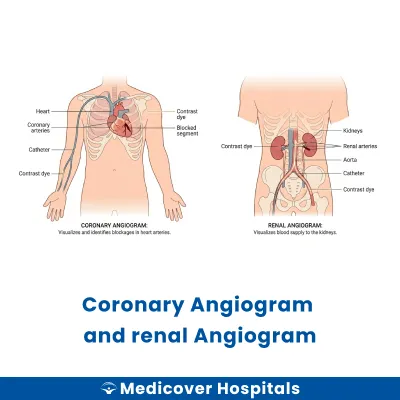
A coronary angiogram is a diagnostic test that uses X-ray imaging to see the heart's blood vessels (coronary arteries). It helps identify blockages or narrowing. A renal angiogram is a similar test for the kidneys. It examines the blood vessels (renal arteries) supplying the kidneys. Both procedures involve injecting a contrast dye to highlight the vessels.
These tests are crucial for diagnosing conditions like coronary artery disease and renal artery stenosis. If left untreated, these conditions can lead to heart attacks, kidney damage, or hypertension. Modern approaches include minimally invasive techniques like catheter-based angiography. These methods offer quicker recovery and less discomfort compared to traditional surgery.
Coronary Angiogram and Renal Angiogram Doctors Near You
Discover experienced cardiologists at Medicover Hospitals across India. Choose your city and book a consultation to discuss your coronary and renal angiogram needs with our specialists.
Why Choose Medicover Hospitals for Coronary Angiogram and Renal Angiogram?
Get a second opinion from trusted experts and makeconfident, informed decisions.
 Get Second Opinion
Complete Guide To Coronary Angiogram And Renal Angiogram
Everything you need to know about the procedure, preparation, and recovery
Coronary Angiogram and Renal Angiogram Procedure Indications
Doctors recommend coronary and renal angiograms to diagnose and evaluate blood vessel conditions. These procedures help in assessing blockages or abnormalities when symptoms or test results suggest vascular issues.
Chest Pain or Angina
Patients experiencing persistent chest pain or discomfort, especially during physical activity, may need a coronary angiogram. If initial tests like ECG or stress tests indicate possible coronary artery disease, this procedure helps in confirming blockages.
Unexplained Kidney Dysfunction
When patients show signs of reduced kidney function, such as swelling or changes in urine output, and imaging tests suggest renal artery stenosis, a renal angiogram can provide detailed insights. It is considered when conservative treatments do not improve kidney function.
Shortness of Breath
Patients with unexplained shortness of breath, especially if accompanied by fatigue or dizziness, might need a coronary angiogram. If non-invasive tests show potential heart issues, this procedure helps in identifying the cause.
High Blood Pressure
Severe or uncontrolled high blood pressure, despite medication, may lead doctors to suspect renal artery issues. A renal angiogram can confirm if narrowed arteries are contributing to the condition.
Abnormal Stress Test Results
If a stress test reveals abnormal heart function, a coronary angiogram is often recommended. This helps in pinpointing the exact location and severity of any blockages.
How to Prepare for Coronary Angiogram and Renal Angiogram?
Proper preparation ensures a smooth procedure and reduces risks. Follow these steps to get ready for your angiogram.
- Medication Review: Stop NSAIDs, anticoagulants, and herbal supplements as advised by your doctor.
- Fasting: Do not eat or drink for 6-8 hours before the procedure to prepare for anaesthesia.
- Hydration: Drink plenty of water the day before, unless advised otherwise.
- Clothing: Wear loose, comfortable clothing on the day of the procedure.
- Transportation: Arrange for someone to drive you home post-procedure.
- Medication List: Bring a list of your medications with dosages for reference.
- Allergy Check: Inform your doctor of any allergies, especially to contrast dye or iodine.
- Health Conditions: Discuss any existing health conditions with your healthcare provider.
Coronary Angiogram and Renal Angiogram procedure (Step-by-Step)
Overview: These procedures are performed by interventional cardiologists and radiologists. They typically last between 30 minutes to 1 hour. Local anaesthesia is commonly used.
- Preparation: The patient is positioned on an X-ray table. An intravenous (IV) line is inserted for medication. The groin or wrist area is cleaned and numbed with local anaesthesia.
- Catheter Insertion: A small incision (1-2 mm) is made. A catheter is inserted through the incision using a guide wire. The catheter is guided to the coronary or renal arteries.
- Contrast Dye Injection: A contrast dye is injected through the catheter. This helps in visualising the arteries on an X-ray monitor. The patient may feel a warm sensation as the dye is injected.
- Imaging: X-ray images are taken to assess the blood flow and detect any blockages or abnormalities. The patient needs to remain still during this process.
- Catheter Removal: Once imaging is complete, the catheter is carefully removed. Pressure is applied to the incision site to prevent bleeding.
- Observation: The patient is monitored for a few hours to ensure there are no complications. Vital signs are checked regularly.
- Discharge: If stable, the patient is discharged the same day. Instructions for care at home are provided.
Who Performs Coronary Angiogram and Renal Angiogram procedure?
Interventional cardiology specialists and radiology doctors perform these procedures. They specialise in diagnosing and treating conditions related to the heart and blood vessels using minimally invasive techniques.
Recovery After Coronary Angiogram and Renal Angiogram procedure
After undergoing a coronary or renal angiogram, patients can expect a short recovery period. Rest is crucial to ensure proper healing. Follow your doctor's advice for a smooth recovery.
Day 1:
- Rest is essential. Avoid any strenuous activities.
- Keep the puncture site clean and dry.
- Drink plenty of fluids to help flush out the contrast dye.
Days 2-3:
- Resume light activities like walking around the house.
- Continue to hydrate well.
- Eat light meals such as curd, dal-rice, or khichdi to aid digestion.
Days 4-7:
- Gradually return to normal activities, but avoid heavy lifting.
- Include more nutritious meals like moong dal and soups in your diet.
- Monitor the puncture site for any signs of infection.
Phase 2 (Week 2):
- Most patients can return to work or school, depending on their comfort level.
- Continue to avoid intense physical activities.
- Maintain a balanced diet to support overall health.
When to Seek Urgent Help:
- Severe pain or swelling at the puncture site.
- Excessive bleeding or bruising.
- Fever or chills, which may indicate an infection.
- Shortness of breath or chest pain.
If you experience any of these symptoms, contact your healthcare provider immediately. Always follow your doctor's specific instructions for a safe recovery.
Benefits of Coronary Angiogram and Renal Angiogram procedure
Coronary and renal angiograms are diagnostic procedures that help assess the health of your heart and kidneys.
- Accurate Diagnosis: Provides detailed images of blood vessels, aiding in precise diagnosis.
- Early Detection: Identifies blockages or abnormalities early, allowing timely intervention.
- Guides Treatment: Helps doctors plan appropriate treatments or surgeries.
- Minimally Invasive: Involves small incisions, reducing recovery time.
- Improved Outcomes: Early and accurate detection can lead to better management of conditions.
Risks and Complications of Coronary Angiogram and Renal Angiogram procedure
While generally safe, these procedures carry some risks and potential complications.
Common Risks
- Bruising or bleeding at the catheter insertion site.
- Allergic reaction to the contrast dye used during the procedure.
Rare Risks
- Kidney damage from the contrast dye, especially in those with pre-existing kidney issues.
- Irregular heart rhythms during the coronary angiogram.
- Blood vessel damage from the catheter.
- Infection at the catheter insertion site.
Cost of Coronary Angiogram and Renal Angiogram procedure
The cost of a Coronary Angiogram and Renal Angiogram procedure can vary from ₹10,000 to ₹60,000, based on several factors. These include the surgical approach, duration of hospital stay, room category, required diagnostics, and post-operative care.
At Medicover Hospitals, we ensure transparent pricing for all procedures. We offer support for insurance and TPA, including CGHS, ESI, and major TPAs. A cashless facility is also available for your convenience. Please contact the hospital for the latest insurance panel details as these may change periodically.
Frequently Asked Questions
1. How much does Coronary Angiogram and Renal Angiogram procedure cost at Medicover Hospitals?
The cost for Coronary Angiogram and Renal Angiogram varies from ₹10,000 to ₹60,
2. Please contact Medicover Hospitals for detailed pricing information. 2. Is Coronary Angiogram and Renal Angiogram procedure covered under health insurance at Medicover?
Many insurance plans, including CGHS, ESI, and major TPAs, may cover this procedure. Please contact the hospital for current panel details.
3. Can I resume exercise after a coronary angiogram?
Light activities can usually be resumed within a week. Consult your doctor for specific advice based on your condition.
4. What is the risk of kidney damage after a renal angiogram?
There is a small risk of kidney damage due to contrast dye. Discuss your kidney function with your doctor before the procedure.
5. Will I need to change my diet after a coronary angiogram?
A heart-healthy diet is recommended, including fruits, vegetables, and whole grains. Indian options like dal-rice and khichdi are beneficial.
6. How soon can I drive after a renal angiogram?
Driving is generally safe after 24 hours, if you feel well. Always follow your doctor's specific recommendations.
7. Is there a risk of bleeding after a coronary angiogram?
Minor bleeding at the catheter site is possible. Report any unusual bleeding or swelling to your doctor promptly.


