 Call
Call Patient Reports
Advanced Conjunctival Laceration Repair or Exploration Hospital with Expert Care
Conjunctival Laceration Repair or Exploration at Medicover Hospitals is performed by skilled ophthalmologists with MS and MCh qualifications. Using an open surgical approach, this procedure ensures precise repair of eye injuries. Patients benefit from reduced recovery time and improved outcomes across India.
Expert Surgeons
Yearly Surgeries
Patient Satisfaction
What is Conjunctival Laceration Repair or Exploration?
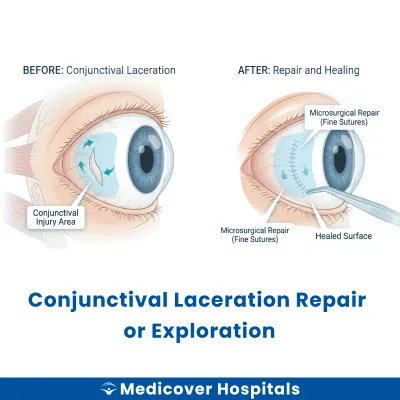
Conjunctival Laceration Repair or Exploration is a surgical procedure to treat tears in the conjunctiva. The conjunctiva is the thin, transparent tissue covering the white part of the eye and the inside of the eyelids. This procedure involves carefully examining and repairing any lacerations (tears) to restore the integrity of the eye's protective layer.
This surgery is needed when the conjunctiva is damaged due to trauma or injury. Conditions like foreign body impact, sharp objects, or accidents can lead to conjunctival lacerations. If left untreated, it may cause infection, discomfort, or vision problems. Modern surgical approaches include suturing techniques and tissue adhesives to ensure proper healing. These methods help in maintaining eye health and function.
Conjunctival Laceration Repair or Exploration Doctors Near You
Find skilled ophthalmologists for conjunctival laceration repair at Medicover Hospitals across India. Choose your city and book a consultation to explore your treatment options today.
Why Choose Medicover Hospitals for Conjunctival Laceration Repair or Exploration?
Get a second opinion from trusted experts and makeconfident, informed decisions.
 Get Second Opinion
Complete Guide To Conjunctival Laceration Repair Or Exploration
Everything you need to know about the procedure, preparation, and recovery
Conjunctival Laceration Repair or Exploration Surgery Indications
Doctors recommend conjunctival laceration repair or exploration when the eye's conjunctiva is injured. This procedure helps restore the eye's protective layer and prevent further complications.
Severe Eye Trauma
Patients may experience intense pain, redness, and swelling around the eye. Examination often reveals a visible tear or cut in the conjunctiva. When initial treatments like eye patches or medication do not heal the injury, surgery is needed.
Persistent Bleeding
Continuous bleeding from the eye can indicate a deep laceration. Doctors notice blood pooling under the conjunctiva during examination. If pressure and medication fail to stop the bleeding, surgical intervention is required.
Foreign Body Penetration
Patients often feel irritation, tearing, and a sensation of something in the eye. Doctors may find a foreign object embedded in the conjunctiva through imaging or direct examination. Surgery is necessary when the object cannot be removed safely without causing further damage.
Infection Risk
Signs include redness, discharge, and increasing pain. Examination may show a laceration with signs of infection. If antibiotics and cleaning do not control the infection, surgery is considered to prevent further complications.
Non-healing Wounds
Some lacerations fail to heal with standard care, leading to persistent discomfort and redness. Doctors observe that the wound remains open despite conservative treatment. Surgery is then recommended to promote proper healing.
How to Prepare for Conjunctival Laceration Repair or Exploration?
Proper preparation is crucial for a successful conjunctival laceration repair or exploration. It helps minimise risks and ensures a smoother recovery.
- Medication Review: Stop NSAIDs, anticoagulants, and herbal supplements as advised by your doctor.
- Fasting Guidelines: Fast for at least 6-8 hours before the procedure if general anaesthesia is used.
- Eye Hygiene: Clean your eyes gently with a mild cleanser as instructed by your healthcare provider.
- Clothing Choice: Wear loose, comfortable clothing on the day of the procedure.
- Transportation: Arrange for someone to drive you home post-procedure, as vision may be temporarily affected.
- Medication List: Bring a list of all medications you are taking, including dosages.
- Follow Instructions: Adhere to any additional pre-operative instructions given by your healthcare team.
- Insurance Details: Confirm insurance coverage. Contact the hospital for current details as insurance panels may change.
Conjunctival Laceration Repair or Exploration Surgery (Step-by-Step)
This procedure is performed by eye specialists. It typically lasts 30-60 minutes. Local anaesthesia is commonly used to numb the eye area.
- Preparation: The patient is positioned comfortably. Local anaesthesia is administered to numb the eye. This ensures the patient feels no pain during the procedure.
- Cleaning: The eye area is cleaned with a sterile solution. This prevents infection and ensures a clear view for the surgeon.
- Exploration: The surgeon uses a fine forceps to gently examine the laceration. They assess the extent of the injury to plan the repair.
- Repair: Small, precise sutures are used to close the laceration. The sutures are typically made of fine, absorbable material. This helps the tissue heal properly.
- Inspection: The surgeon checks the repair to ensure proper alignment. They ensure there is no bleeding or other complications.
- Application of Ointment: Antibiotic ointment is applied to the eye. This helps prevent infection and aids in healing.
- Post-Procedure Care: The patient is given instructions for eye care. They may need to use eye drops and avoid rubbing the eye.
Who Performs Conjunctival Laceration Repair or Exploration Surgery?
This surgery is performed by ophthalmologists. They specialise in eye care and are trained to handle delicate eye structures. Their expertise ensures precise repair of conjunctival injuries.
Recovery After Conjunctival Laceration Repair or Exploration Surgery
Recovery from conjunctival laceration repair or exploration surgery involves careful attention to eye care and gradual return to normal activities. Expect some discomfort and blurred vision initially, which should improve over time.
Day 1-3:
- Rest your eyes as much as possible. Avoid reading or screen time.
- Apply prescribed eye drops to prevent infection and reduce inflammation.
- Stick to a soft diet. Include curd, dal-rice, and soups to aid healing.
Day 4-7:
- Continue using eye drops as advised. Wear protective eyewear if recommended.
- Gradually increase light activities. Avoid strenuous exercises.
- Include easily digestible foods like khichdi and moong dal in your meals.
Day 8-14:
- Most patients can resume work or school, but avoid activities that strain the eyes.
- Monitor for any discomfort or changes in vision.
- Maintain a balanced diet to support recovery.
Phase 3 (Week 3 onwards):
- Resume normal activities gradually. Continue avoiding heavy lifting or contact sports.
- Regular follow-up appointments to ensure proper healing.
When to Seek Urgent Help:
- Sudden loss of vision or severe eye pain.
- Persistent redness, swelling, or discharge from the eye.
- Fever or signs of infection.
Benefits of Conjunctival Laceration Repair or Exploration Surgery
Conjunctival laceration repair or exploration surgery helps restore the eye's function and appearance.
- Restored Vision: Helps improve vision by repairing damage to the conjunctiva.
- Prevention of Infection: Reduces the risk of infection by closing open wounds.
- Minimised Scarring: Promotes healing with less scarring, preserving eye aesthetics.
- Enhanced Comfort: Alleviates discomfort caused by the laceration.
Risks and Complications of Conjunctival Laceration Repair or Exploration Surgery
While this surgery is generally safe, there are potential risks and complications to consider.
- Common: Temporary discomfort or irritation in the eye.
- Common: Swelling or redness around the surgical site.
- Rare: Infection despite preventive measures.
- Rare: Bleeding during or after the procedure.
- Rare: Allergic reaction to anaesthesia or medications used.
- Rare: Vision changes or disturbances post-surgery.
Cost of Conjunctival Laceration Repair or Exploration Surgery
The cost of Conjunctival Laceration Repair or Exploration Surgery at Medicover Hospitals ranges from Rs. 28,500 to Rs. 71,500. The price varies based on the ward category chosen, such as day care, general, or private rooms. We offer transparent pricing with support for insurance and TPA, including CGHS, ESI, and major TPAs. A cashless facility is also available for your convenience. Please contact the hospital for the latest insurance panel details as these may change periodically.
Frequently Asked Questions
1. How much does Conjunctival Laceration Repair or Exploration surgery cost at Medicover Hospitals?
The cost for Conjunctival Laceration Repair or Exploration surgery at Medicover Hospitals ranges from Rs. 28,500 to Rs. 71,500, depending on the facility and care type.
2. Is Conjunctival Laceration Repair or Exploration surgery covered under health insurance at Medicover?
Yes, this surgery is often covered under CGHS, ESI, and major TPAs with cashless options. Please contact the hospital for current panel details.
3. Will I have blurry vision after surgery?
Blurry vision is common immediately after surgery but usually improves within a few days. Follow-up with your doctor is essential for proper recovery.
4. Can I rub my eyes after the surgery?
Avoid rubbing your eyes for at least two weeks post-surgery to prevent complications. Protective eyewear may be recommended during recovery.
5. Is there a risk of infection after surgery?
There is a small risk of infection, which can be minimized by following post-operative care instructions. Use prescribed eye drops and maintain hygiene.
6. When can I resume wearing contact lenses?
You can usually resume wearing contact lenses after two weeks, depending on your healing progress. Consult your doctor for personalized advice.
7. What foods should I eat during recovery?
Consume a balanced diet with soft foods like curd, dal-rice, and khichdi. These foods help maintain nutrition while being gentle on your system.
8. Does the conjunctiva repair itself?
Yes, the conjunctiva can usually repair itself. Minor injuries or irritation often heal on their own without treatment. However, serious damage or infection may need medical care.
9. How long does it take for conjunctiva to heal?
The conjunctiva typically heals within a few days to 1–2 weeks, depending on the severity. Small scratches heal quickly, while larger injuries may take longer.


