 Call
Call Patient Reports
Best Hospital for Compound Fracture Repair Surgery with Advanced Trauma Care
At Medicover Hospitals, our skilled orthopaedic surgeons, with qualifications like MS and DNB, perform open compound fracture repair. This approach effectively stabilises fractures, promoting faster healing. Patients often experience shorter hospital stays due to the precise techniques employed by our experienced team.
Expert Surgeons
Yearly Surgeries
Patient Satisfaction
What is Compound Fracture Repair?
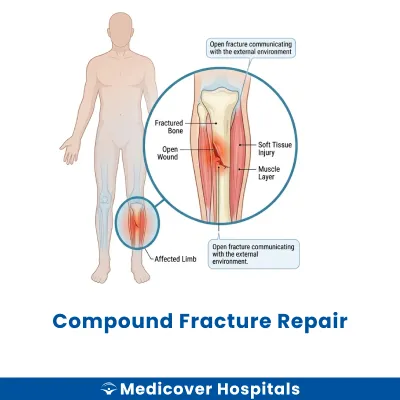
Compound fracture repair is a surgical procedure to fix a broken bone that pierces through the skin. This type of fracture, also known as an open fracture, involves the bones of the limbs, such as the arms or legs. The surgery involves cleaning the wound, aligning the bone fragments, and securing them with metal rods, plates, or screws to promote healing.
This surgery is crucial when a bone breaks and protrudes through the skin, increasing the risk of infection. Conditions like severe trauma or accidents often lead to compound fractures. If left untreated, it can result in infection, improper healing, or permanent disability. Modern surgical approaches include internal fixation and external fixation, which help in stabilising the bone and ensuring proper recovery.
Compound Fracture Repair Doctors Near You
Discover skilled orthopedics for compound fracture repair at Medicover Hospitals across India. Choose your city and book a consultation to receive expert care tailored to your needs.
Why Choose Medicover Hospitals for Compound Fracture Repair?
Get a second opinion from trusted experts and makeconfident, informed decisions.
 Get Second Opinion
Complete Guide To Compound Fracture Repair
Everything you need to know about the procedure, preparation, and recovery
Compound Fracture Repair Surgery Indications
Doctors recommend compound fracture repair surgery when a broken bone pierces the skin, creating an open wound. This procedure is crucial to prevent infection and ensure proper healing of the bone.
Severe Pain and Swelling
Patients often experience intense pain and swelling at the fracture site. On examination, doctors may notice significant bruising and tenderness. If pain management and immobilisation fail to improve symptoms, surgery is considered.
Visible Bone Protrusion
When a bone visibly protrudes through the skin, it indicates a compound fracture. This requires immediate medical attention. X-rays confirm the extent of the fracture, necessitating surgical intervention to realign the bone.
Severe Bleeding
Compound fractures can cause severe bleeding due to damaged blood vessels. Patients may present with continuous bleeding from the wound. If pressure and bandaging do not control the bleeding, surgery is needed to repair the vessels and fracture.
Infection Risk
Open fractures are prone to infection due to exposure to bacteria. Signs include redness, warmth, and pus at the site. If antibiotics and wound care do not prevent infection, surgery is required to clean the area and stabilise the bone.
Failed Conservative Treatment
In some cases, initial conservative treatments like splinting and medication do not lead to healing. Persistent instability or misalignment seen on follow-up X-rays may prompt the need for surgical repair.
How to Prepare for Compound Fracture Repair?
Proper preparation is crucial for a successful compound fracture repair. It helps minimise complications and ensures a smoother recovery.
- Medication Review: Stop NSAIDs, anticoagulants, and herbal supplements as advised by your doctor to reduce bleeding risk.
- Fasting Guidelines: Fast for at least 8 hours before the surgery if general anaesthesia is planned.
- Pre-Surgery Hygiene: Take a shower with antibacterial soap the night before and the morning of the surgery.
- Clothing: Wear loose, comfortable clothing to the hospital for easy dressing post-surgery.
- Transportation: Arrange for someone to drive you home after the procedure, as you may feel groggy from anaesthesia.
- Medication List: Bring a list of all medications you take, including dosages, to inform your healthcare team.
- Home Preparation: Set up a comfortable recovery area at home with essentials within easy reach.
- Pre-surgery Instructions: Follow any additional instructions given by your surgeon specific to your condition.
Compound Fracture Repair Surgery (Step-by-Step)
Compound fracture repair is performed by orthopaedic surgeons. The procedure typically lasts 2-4 hours. General anaesthesia is commonly used to ensure the patient is unconscious and pain-free.
- Preparation: The patient is positioned on the operating table. The surgical area is cleaned and sterilised. Anaesthesia is administered.
- Incision: A 1-2 cm incision is made near the fracture site to access the bone. The surgeon uses a scalpel for precision.
- Debridement: Damaged tissue and foreign material are removed using a curette. This helps prevent infection and promotes healing.
- Bone Alignment: The surgeon realigns the broken bone fragments. Instruments like bone clamps and reduction forceps are used to hold the bones in place.
- Fixation: Metal plates, screws, or rods are inserted to stabilise the bone. A drill and screwdriver are used for securing these implants.
- Closure: The incision is closed with sutures or staples. A sterile dressing is applied to protect the wound.
- Recovery: The patient is moved to the recovery room. Vital signs are monitored as the anaesthesia wears off.
Who Performs Compound Fracture Repair Surgery?
Orthopaedic surgeons perform compound fracture repair surgeries. They specialise in diagnosing and treating musculoskeletal injuries. Their expertise ensures proper alignment and healing of broken bones.
Recovery After Compound Fracture Repair Surgery
Recovering from compound fracture repair surgery requires patience and care. The healing process involves managing pain, following dietary guidelines, and adhering to activity restrictions. Here's a general timeline to help you understand what to expect during recovery.
Day 1-3:
- Rest is crucial. Keep the affected limb elevated to reduce swelling.
- Pain management with prescribed medications.
- Begin with a soft diet. Include curd, dal-rice, and soups for easy digestion.
Day 4-7:
- Gradual increase in mobility with the help of a physiotherapist.
- Continue with a nutritious diet. Add moong dal and khichdi for protein and energy.
- Monitor the wound for any signs of infection.
Week 2-4:
- Start gentle exercises as advised by your doctor.
- Resume light activities, but avoid putting weight on the affected area.
- Include more fruits and vegetables in your diet for vitamins and minerals.
Month 1-3:
- Gradual return to normal activities, but avoid strenuous tasks.
- Consult your doctor before resuming work or school.
- Continue a balanced diet to support bone healing.
When to Seek Urgent Help
- Increased pain or swelling that doesn't subside with medication.
- Fever or chills, indicating possible infection.
- Redness or discharge from the surgical site.
- Numbness or tingling in the affected limb.
Benefits of Compound Fracture Repair Surgery
Compound fracture repair surgery is essential for restoring the function and integrity of the affected bone.
- Restored Mobility: Helps regain movement and use of the injured limb.
- Bone Alignment: Ensures proper alignment for optimal healing.
- Infection Prevention: Reduces the risk of infection by addressing open fractures promptly.
- Pain Reduction: Alleviates pain by stabilizing the fracture site.
Risks and Complications of Compound Fracture Repair Surgery
While this surgery is crucial, it carries certain risks and potential complications.
- Infection : Risk due to open wound and surgical intervention.
- Non-union : The bone may not heal properly.
- Nerve Damage : Possible injury to nearby nerves during surgery.
- Blood Clots : Risk of clots forming in the veins.
- Hardware Problems : Issues with plates or screws used in the repair.
- Delayed Healing : Healing may take longer than expected.
Cost of Compound Fracture Repair Surgery
The cost of Compound Fracture Repair Surgery at Medicover Hospitals ranges from Rs.90,000 to Rs.1,50,000, depending on the ward category chosen. The pricing is transparent and varies based on the type of accommodation, from outpatient to suite options.
We offer support for insurance and TPA, including CGHS, ESI, and major TPAs, with a cashless facility available for your convenience. Please contact the hospital for the latest insurance panel details as these may change periodically.
Frequently Asked Questions
1. How much does Compound Fracture Repair cost?
The cost for Compound Fracture Repair surgery at Medicover Hospitals ranges from Rs. 90,000 to Rs. 1,50,000, depending on the type of care.
2. Is Compound Fracture Repair covered by insurance?
Compound Fracture Repair surgery may be covered by CGHS, ESI, and major TPAs. Please contact the hospital for current panel details.
3. Will I need physical therapy after surgery?
Yes, physical therapy is often necessary to regain strength and mobility in the affected limb. It usually starts a few weeks post-surgery.
4. Can I drive after a compound fracture repair?
Driving is usually restricted until the fracture has healed sufficiently. This may take several weeks, depending on the severity of the injury.
5. Is there a risk of infection after surgery?
Yes, there is a risk of infection due to the open nature of compound fractures. Proper wound care and antibiotics help in preventing infections.
6. Will I have metal implants after surgery?
Metal implants like plates or screws may be used to stabilize the bone. These may remain permanently or be removed in a later procedure.
7. What foods help in bone healing post-surgery?
Foods rich in calcium and protein, like curd, dal-rice, and leafy greens, support bone healing. Adequate nutrition aids in faster recovery.


