 Call
Call Patient Reports
Best Hospital for Coblation Tonsillectomy with Advanced ENT Care
At Medicover Hospitals, Coblation Tonsillectomy is performed using the coblation technique by skilled ENT surgeons with qualifications such as MS and DNB. This advanced approach ensures reduced blood loss during the procedure, making it a preferred choice for tonsil removal across India.
Expert Surgeons
Yearly Surgeries
Patient Satisfaction
What is Coblation Tonsillectomy?
Coblation Tonsillectomy is a surgical procedure that removes the tonsils, which are small glands located at the back of the throat. This technique uses controlled radiofrequency energy to dissolve tissue at low temperatures. It minimizes damage to surrounding areas and reduces pain and recovery time compared to traditional methods.
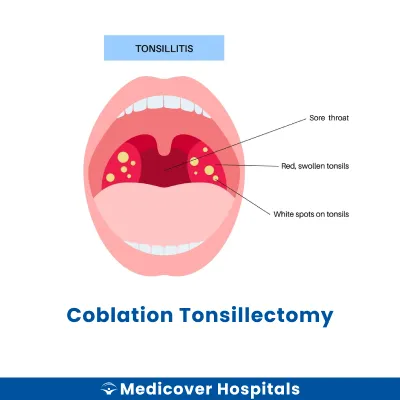
This surgery is often needed for recurrent tonsillitis (inflammation of the tonsils), sleep apnea, or breathing difficulties. If left untreated, these conditions can lead to chronic throat infections or obstructive sleep issues. Modern surgical approaches for Coblation Tonsillectomy include the use of advanced tools that ensure precise removal with minimal bleeding. These techniques offer a quicker recovery and less discomfort for patients.
Coblation Tonsillectomy Doctors Near You
Find experienced ENT specialists for coblation tonsillectomy at Medicover Hospitals across India. Choose your city and book a consultation to discuss your treatment options with our experts.
Why Choose Medicover Hospitals for Coblation Tonsillectomy?
Get a second opinion from trusted experts and makeconfident, informed decisions.
 Get Second Opinion
Complete Guide To Coblation Tonsillectomy
Everything you need to know about the procedure, preparation, and recovery
Coblation Tonsillectomy Surgery Indications
Coblation tonsillectomy is often recommended when conservative treatments fail to alleviate symptoms related to tonsil issues. This procedure is considered when patients experience recurrent or severe symptoms affecting their quality of life.
Recurrent Tonsillitis
Patients often suffer from frequent sore throats, fever, and swollen tonsils. Doctors may notice enlarged tonsils with pus or redness. When antibiotics and other treatments do not prevent repeated infections, surgery becomes necessary.
Obstructive Sleep Apnea
Patients experience disrupted sleep, snoring, and daytime fatigue. Examination may reveal enlarged tonsils blocking the airway. When CPAP or other non-surgical treatments fail, coblation tonsillectomy is considered.
Chronic Tonsillitis
Persistent throat pain, bad breath, and swollen lymph nodes are common symptoms. Doctors find chronic inflammation and infection in the tonsils. If symptoms persist despite medication, surgery is advised.
Tonsillar Hypertrophy
Patients have difficulty swallowing or breathing due to enlarged tonsils. Examination shows significant tonsil enlargement. When these symptoms interfere with daily life and do not improve with other treatments, surgery is recommended.
Peritonsillar Abscess
Severe throat pain, difficulty opening the mouth, and fever are typical symptoms. Doctors identify pus-filled swelling near the tonsils. If drainage and antibiotics do not resolve the issue, coblation tonsillectomy is performed.
How to Prepare for Coblation Tonsillectomy?
Proper preparation is crucial for a smooth Coblation Tonsillectomy. It helps reduce risks and ensures a quicker recovery.
- Medication Review: Inform your doctor about all medications. Stop NSAIDs, anticoagulants, and herbal supplements as advised.
- Fasting Instructions: Do not eat or drink anything for at least 6-8 hours before the surgery.
- Health Check: Complete any required blood tests or health assessments before the procedure.
- Clothing: Wear loose, comfortable clothing on the day of the surgery.
- Transportation: Arrange for someone to drive you home post-surgery.
- Medication List: Bring a list of your current medications, including dosages, to the hospital.
- Pre-Surgery Instructions: Follow any specific instructions given by your healthcare provider.
- Post-Surgery Care: Prepare your home for recovery with soft foods and necessary supplies.
Coblation Tonsillectomy Surgery (Step-by-Step)
Coblation Tonsillectomy is performed by ENT specialists. The procedure typically lasts 30 to 60 minutes. It is done under general anaesthesia.
- Preparation: The patient is given general anaesthesia to ensure they are asleep and pain-free during the procedure.
- Positioning: The patient is positioned with their mouth open using a mouth gag to provide clear access to the tonsils.
- Accessing Tonsils: The surgeon uses a coblation wand, which emits radiofrequency energy, to gently remove the tonsils. This tool minimizes damage to surrounding tissues.
- Tissue Removal: The coblation wand dissolves the tonsil tissue at a low temperature, reducing bleeding and postoperative pain.
- Bleeding Control: Bipolar cautery may be used to seal blood vessels and control bleeding during the procedure.
- Closure: No stitches are required as the area heals naturally. The surgeon ensures the site is clean and free of debris.
- Recovery: The patient is moved to a recovery room to wake up from anaesthesia. Monitoring continues until they are stable.
Who Performs Coblation Tonsillectomy Surgery?
An ENT (Ear, Nose, and Throat) specialist, also known as an otolaryngologist, performs Coblation Tonsillectomy. These specialists are trained to handle conditions related to the ear, nose, and throat, including surgical procedures like tonsillectomy.
Recovery After Coblation Tonsillectomy Surgery
Recovery from Coblation Tonsillectomy is generally smoother compared to traditional methods. Patients can expect less pain and quicker healing. However, it's essential to follow post-operative care instructions for a smooth recovery.
Day 1-3:
- Expect mild to moderate throat pain and discomfort.
- Stick to a soft diet. Include foods like curd, dal-rice, and soups.
- Stay hydrated with plenty of fluids.
- Rest is crucial. Avoid strenuous activities.
Day 4-7:
- Pain may decrease, but throat might still feel sore.
- Continue with soft foods such as khichdi and moong dal.
- Gradually increase activity but avoid heavy lifting or exercise.
- Children can consider returning to school if they feel comfortable.
Day 8-14:
- Most patients experience significant improvement in pain.
- Introduce more solid foods as tolerated, but avoid spicy or crunchy items.
- Adults can consider returning to work, depending on their comfort level.
- Continue to avoid vigorous activities until fully healed.
When to Seek Urgent Help:
- Severe bleeding from the throat.
- High fever not responding to medication.
- Difficulty breathing or swallowing.
- Signs of dehydration like reduced urination or dizziness.
Benefits of Coblation Tonsillectomy Surgery
Coblation tonsillectomy is a modern technique that offers several advantages over traditional methods.
- Reduced Pain: Patients often experience less post-operative pain compared to traditional tonsillectomy.
- Minimal Bleeding: The procedure typically results in less bleeding, enhancing safety.
- Faster Recovery: Many patients return to normal activities sooner due to the gentle nature of the procedure.
- Precision: Coblation allows for precise removal of tonsil tissue, preserving surrounding areas.
Risks and Complications of Coblation Tonsillectomy Surgery
While coblation tonsillectomy is generally safe, it carries some risks, as with any surgical procedure.
- Mild post-operative pain and discomfort.
- Minor bleeding during or after the procedure.
- Infection at the surgical site.
- Adverse reactions to anaesthesia.
- Injury to surrounding tissues.
What is the Cost of Coblation Tonsillectomy Surgery?
The cost of Coblation Tonsillectomy Surgery across Medicover Hospitals ranges from Rs. 75,000 to Rs. 2,03,000. The price varies depending on the ward category chosen, such as day care, general, or private rooms. We offer transparent pricing to ensure clarity for our patients. Insurance and TPA support, including CGHS, ESI, and major TPAs, are accepted. A cashless facility is also available for your convenience. Please contact the hospital for the latest insurance panel details as these may change periodically.
Frequently Asked Questions
1. How much does Coblation Tonsillectomy cost?
Coblation Tonsillectomy surgery costs between Rs. 75,000 and Rs. 203,000 across Medicover Hospitals, depending on the type of room and care level.
2. Is Coblation Tonsillectomy covered by insurance?
Coblation Tonsillectomy may be covered by CGHS, ESI, and major TPAs, offering cashless options. Please contact the hospital for current panel details.
3. Can I speak normally after Coblation Tonsillectomy?
You may experience a temporary change in voice after Coblation Tonsillectomy. Normal speech usually returns within a few weeks.
4. Will I have difficulty swallowing post-surgery?
Swallowing difficulties are common after Coblation Tonsillectomy. This typically improves within one to two weeks.
5. What foods should I eat after Coblation Tonsillectomy?
Post-surgery, consume soft foods like curd, dal-rice, and khichdi. Avoid spicy and hard foods to aid recovery.
6. Can I resume exercise immediately after surgery?
Avoid strenuous activities for at least two weeks after Coblation Tonsillectomy. Gradually reintroduce exercise based on your doctor's advice.
7. Is bleeding common after Coblation Tonsillectomy?
Minor bleeding is possible after Coblation Tonsillectomy. If bleeding persists or is heavy, seek medical attention immediately.


