 Call
Call Patient Reports
Closed Reduction of Hip Dislocation Procedure at Medicover Hospitals
Closed reduction of hip dislocation at Medicover Hospitals is performed using an open surgical approach. Our orthopaedic team, with qualifications like MS and DNB, ensures precise treatment. This procedure typically results in shorter hospital stays for patients across India.
Expert Specialists
Yearly Treatments
Patient Satisfaction
What is Closed Reduction of Hip Dislocation?
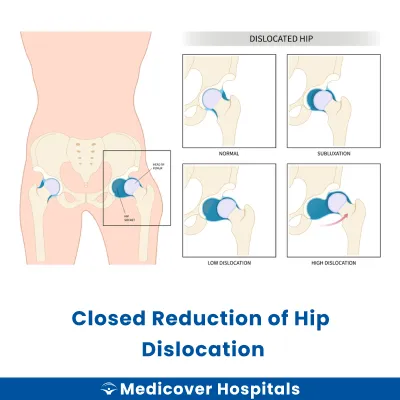
Closed Reduction of Hip Dislocation is a medical procedure to reposition the femoral head (the ball of the thigh bone) back into the acetabulum (hip socket) without surgical incision. This procedure is performed under anaesthesia to ensure the patient's comfort and to relax the muscles around the hip joint.
This procedure is necessary when the hip joint becomes dislocated due to trauma or injury. If left untreated, it can lead to complications like avascular necrosis (bone tissue death) or chronic hip pain. Modern approaches for Closed Reduction include gentle manipulation techniques guided by imaging technologies like X-ray or fluoroscopy to ensure accurate repositioning.
Closed Reduction of Hip Dislocation Doctors Near You
Find skilled orthopedics for closed reduction of hip dislocation at Medicover Hospitals across India. Choose your city and book a consultation to receive expert care tailored to your needs.
Why Choose Medicover Hospitals for Closed Reduction of Hip Dislocation?
Get a second opinion from trusted experts and makeconfident, informed decisions.
 Get Second Opinion
Complete Guide To Closed Reduction Of Hip Dislocation
Everything you need to know about the procedure, preparation, and recovery
Closed Reduction of Hip Dislocation Procedure Indications
Doctors recommend closed reduction of hip dislocation when the hip joint is dislocated but there is no fracture. This procedure is often chosen to quickly relieve pain and restore function.
Traumatic Hip Dislocation
Patients often experience severe hip pain and inability to move the leg. On examination, the leg may appear shorter or rotated. X-rays confirm dislocation without fracture. If pain and immobility persist despite rest and medication, closed reduction is advised.
Posterior Hip Dislocation
Patients feel intense pain and may notice the leg is internally rotated. Doctors find the hip joint displaced backward on imaging. When manual repositioning fails, closed reduction becomes necessary.
Anterior Hip Dislocation
Patients report pain and the leg may be externally rotated. Imaging shows the hip joint displaced forward. If conservative methods do not alleviate symptoms, closed reduction is performed.
Congenital Hip Dislocation
Infants may show limited hip movement or asymmetry. Ultrasound or X-ray reveals dislocation. If harnesses or braces do not correct the issue, closed reduction is considered.
Recurrent Hip Dislocation
Patients experience repeated dislocations with pain and instability. Imaging shows recurrent displacement. When physical therapy and bracing fail, closed reduction is needed to stabilize the joint.
How to Prepare for Closed Reduction of Hip Dislocation?
Proper preparation is crucial for a successful closed reduction of hip dislocation. It helps minimise risks and ensures a smooth procedure.
- Medication Review: Stop NSAIDs, anticoagulants, and herbal supplements as advised by your doctor.
- Fasting: Do not eat or drink anything for at least 6 hours before the procedure if general anaesthesia is used.
- Clothing: Wear loose, comfortable clothing to the hospital for easy access and comfort.
- Transportation: Arrange for someone to drive you home post-procedure, as you may feel drowsy.
- Medication List: Bring a list of all medications you are currently taking, including dosages.
- Pre-Procedure Instructions: Follow any specific instructions given by your healthcare provider, such as avoiding certain foods or activities.
- Health Conditions: Inform your doctor about any existing health conditions or allergies.
- Consent Form: Ensure you understand the procedure and sign the consent form before the surgery.
Closed Reduction of Hip Dislocation procedure (Step-by-Step)
Overview: This procedure is performed by orthopaedic specialists. It typically takes 30 minutes to 1 hour. General anaesthesia is commonly used, ensuring the patient feels no pain during the procedure.
- Preparation: The patient is positioned on the operating table. Vital signs are monitored. Anaesthesia is administered to ensure comfort.
- Assessment: The orthopaedic specialist examines the hip to confirm the dislocation. Imaging, like X-rays, may be used to guide the process.
- Reduction Maneuver: The specialist uses their hands to gently manipulate the hip back into its socket. No surgical instruments are typically needed for this step.
- Stabilization: Once the hip is back in place, the joint is checked for stability. The specialist ensures the hip remains in the correct position.
- Post-Reduction Imaging: X-rays are taken to confirm the success of the reduction. This ensures the hip is correctly aligned.
- Recovery: The patient is moved to a recovery area. They are monitored as they wake from anaesthesia. Pain management and instructions for movement are provided.
- Follow-Up Care: The patient receives guidance on rehabilitation exercises. Follow-up appointments are scheduled to monitor healing.
Who Performs Closed Reduction of Hip Dislocation procedure?
Orthopaedic specialists perform this procedure. They are trained in diagnosing and treating musculoskeletal issues. Their expertise ensures the hip is safely and effectively repositioned. Please contact the hospital for current details as insurance panels may change.
Recovery After Closed Reduction of Hip Dislocation procedure
Recovery from a closed reduction of hip dislocation involves rest, gradual mobility, and follow-up care. Patients can expect some discomfort initially, but with proper care, recovery is smooth.
Day 1-3:
- Rest is crucial. Avoid putting weight on the affected hip.
- Use crutches or a walker as advised by your doctor.
- Eat soft, easy-to-digest foods like curd and khichdi to maintain energy levels.
Day 4-7:
- Gradually increase mobility with short walks around the house.
- Continue using support aids for walking.
- Include protein-rich foods like moong dal and soups in your diet to aid healing.
Week 2-4:
- Physical therapy may begin to restore strength and flexibility.
- Resume light activities, but avoid strenuous exercises.
- Incorporate dal-rice and other balanced meals to support recovery.
Phase 2 (Week 4-6):
- Increase activity levels as advised by your physiotherapist.
- Most patients can return to work or school, depending on the nature of their activities.
- Maintain a balanced diet to ensure adequate nutrition.
When to Seek Urgent Help
If you experience severe pain, inability to move the hip, fever, or signs of infection like redness or swelling, contact your healthcare provider immediately. These could indicate complications that need prompt attention.
Benefits of Closed Reduction of Hip Dislocation procedure
Closed reduction is a non-surgical method to treat hip dislocation, aiming to restore the joint to its normal position.
- Non-Invasive: This procedure avoids surgical incisions, reducing recovery time.
- Quick Recovery: Patients often experience faster recovery compared to surgical options.
- Immediate Relief: It can provide immediate pain relief by realigning the dislocated joint.
- Cost-Effective: As a non-surgical procedure, it is generally less expensive than surgical alternatives.
Risks and Complications of Closed Reduction of Hip Dislocation procedure
While closed reduction is generally safe, it carries some risks and potential complications.
Common Risks
- Temporary pain or discomfort during the procedure.
- Swelling or bruising around the hip area.
Rare Risks
- Nerve damage leading to numbness or weakness.
- Fracture of the hip or surrounding bones.
- Re-dislocation of the hip joint.
- Damage to blood vessels around the hip.
Cost of Closed Reduction of Hip Dislocation procedure
The cost of a Closed Reduction of Hip Dislocation procedure at Medicover Hospitals varies depending on the ward category. Prices range from ₹8,000 and ₹20,000. This ensures that patients have options based on their preferences and budget.
Medicover Hospitals offers transparent pricing with support for insurance and TPA, including CGHS, ESI, and major TPAs. A cashless facility is also available for added convenience. Please contact the hospital for the latest insurance panel details as these may change periodically.
Frequently Asked Questions
1. How much does Closed Reduction of Hip Dislocation procedure cost at Medicover Hospitals?
The cost for procedures like hip dislocation reduction varies across Medicover Hospitals, ranging from ₹8,000 and ₹20,000, depending on the type of implant used.
2. Is Closed Reduction of Hip Dislocation procedure covered under health insurance at Medicover?
Yes, many health insurance plans, including CGHS, ESI, and major TPAs, may cover this procedure. Please contact the hospital for current panel details.
3. Can I walk immediately after hip dislocation reduction?
Walking is usually restricted immediately after the procedure. You may need crutches or a walker for support during the initial recovery period.
4. Will I experience hip pain after the procedure?
Some discomfort is common after the procedure, but severe pain should be reported to your doctor. Pain management will be part of your recovery plan.
5. Can I drive after a hip dislocation reduction?
Driving is generally not recommended until your doctor approves. This usually happens once you regain full mobility and strength in your hip.
6. What exercises can help recovery after hip reduction?
Gentle exercises like leg lifts and ankle pumps are often recommended. Consult your physiotherapist for a tailored exercise plan.
7. Is there a risk of future hip dislocations?
There is a risk of recurrence, especially if the joint is not properly rehabilitated. Follow your doctor's advice on strengthening exercises and precautions.


