 Call
Call Patient Reports
Best Hospital for Closed Reduction of Fracture with Advanced Orthopedic Care
Closed reduction of fracture at Medicover Hospitals is performed by experienced orthopedic surgeons using advanced fracture management techniques to realign broken bones without large surgical incisions. Our team includes MS, DNB, and fellowship-trained orthopedic specialists dedicated to ensuring accurate bone alignment, faster recovery, reduced pain, and improved mobility outcomes for patients.
Expert Surgeons
Yearly Procedures
Patient Satisfaction
What is Closed Reduction of Fracture?
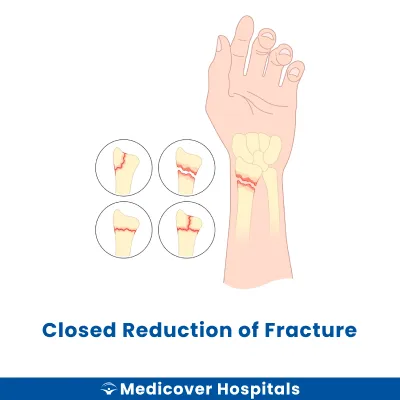
Closed Reduction of Fracture is a medical procedure to fix a broken bone without surgery. It involves manipulating the bone externally to align it properly. This technique is often used for fractures in limbs, such as arms and legs. The goal is to restore the bone's normal position and function without making an incision.
This procedure is necessary when a bone is fractured but the skin is not broken. Conditions like falls, accidents, or sports injuries often lead to such fractures. If left untreated, misaligned bones can cause pain, impaired movement, or deformity. Modern approaches for Closed Reduction include fluoroscopy (real-time X-ray) and ultrasound guidance to ensure accurate bone alignment.
Closed Reduction of Fracture Doctors Near You
Discover expert Orthopedic Surgeons for closed reduction of fractures at Medicover Hospitals across India. Choose your city and book a consultation today for specialized care and guidance.
Why Choose Medicover Hospitals for Closed Reduction of Fracture?
Advanced Orthopedic OT: Equipped with C-arm fluoroscopy, advanced imaging systems, and precision instruments to support accurate fracture reduction and safe orthopedic procedures.
Get a second opinion from trusted experts and makeconfident, informed decisions.
 Get Second Opinion
Complete Guide To Closed Reduction Of Fracture
Everything you need to know about the procedure, preparation, and recovery
Closed Reduction of Fracture Procedure Indications
Doctors recommend closed reduction of fracture when a bone is broken but the skin remains intact. This procedure is often chosen to realign bones without surgery when non-surgical methods are insufficient.
Displaced Fracture
Patients often experience severe pain and swelling at the fracture site. X-rays reveal misaligned bone fragments. If immobilisation and pain management fail to realign the bone, closed reduction is considered.
Greenstick Fracture
Common in children, this fracture causes pain and limited movement. X-rays show a partial break with bending. When splinting does not correct the alignment, closed reduction is advised.
Angulated Fracture
Patients report pain and visible deformity. Imaging shows bones at an abnormal angle. When bracing does not improve alignment, closed reduction is necessary.
Impacted Fracture
Patients may feel pain and stiffness. X-rays show one bone fragment driven into another. If traction and rest do not resolve the issue, closed reduction is performed.
Stable Fracture with Poor Healing
Persistent pain and swelling are common. Follow-up X-rays show no improvement in alignment. When conservative care fails, closed reduction is recommended.
Please contact the hospital for current details as insurance panels may change.
How to Prepare for Closed Reduction of Fracture?
Proper preparation for a closed reduction of fracture is crucial for a smooth procedure and recovery. It helps minimise complications and ensures a successful outcome.
- Medication Review: Stop NSAIDs, anticoagulants, and herbal supplements as advised by your doctor.
- Fasting Guidelines: If general anaesthesia is used, fast for at least 6-8 hours before the procedure.
- Clothing: Wear loose, comfortable clothing that is easy to remove and put on.
- Transportation: Arrange for someone to drive you home post-procedure, as you may feel drowsy.
- Medication List: Bring a list of all medications you are taking, including dosages, to share with the medical team.
- Pre-Procedure Instructions: Follow any specific instructions given by your healthcare provider regarding the fracture site.
- Allergy Information: Inform the medical team of any allergies, especially to medications or anaesthesia.
- Hydration: Stay hydrated before the fasting period begins, unless otherwise instructed.
Closed Reduction of Fracture Procedure (Step-by-Step)
Closed reduction of fracture is performed by orthopaedic specialists. The procedure typically lasts 30 minutes to 1 hour. It is usually done under local or regional anaesthesia to numb the affected area.
- Preparation: The patient is positioned comfortably. The fractured area is cleaned and sterilised. Local or regional anaesthesia is administered to ensure the patient feels no pain.
- Assessment: The orthopaedic specialist examines the fracture. X-rays may be used to understand the alignment and severity of the fracture.
- Manipulation: The specialist uses hands to gently manoeuvre the bone back into its correct position. No surgical instruments like curette or scalpel are used in this non-invasive step.
- Stabilisation: Once the bone is aligned, it is stabilised using a cast or splint. This helps maintain the position during the healing process.
- Verification: X-rays are taken again to ensure the bone is correctly aligned. Adjustments are made if necessary.
- Post-Procedure Care: The patient is monitored for a short period. Instructions on care and follow-up appointments are provided before discharge.
Who Performs Closed Reduction of Fracture procedure?
Closed reduction of fracture is performed by orthopaedic specialists. These professionals are trained in diagnosing and treating bone and joint injuries. They ensure the bone is properly aligned without the need for surgical incisions. Their expertise helps in promoting effective healing and recovery.
Recovery After Closed Reduction of Fracture Procedure
Recovery from a closed reduction of fracture involves rest and gradual return to normal activities. Proper care and adherence to medical advice are crucial for healing.
Day 1-3:
- Rest is essential. Keep the affected limb elevated to reduce swelling.
- Apply ice packs intermittently to manage pain and swelling.
- Stick to a soft diet. Include foods like curd, dal-rice, and soups to maintain nutrition.
Day 4-7:
- Continue using any prescribed splints or casts.
- Gradually increase movement as advised by your doctor.
- Include protein-rich foods like moong dal and khichdi to support bone healing.
Week 2-4:
- Begin gentle exercises to improve mobility, as recommended by a physiotherapist.
- Return to light activities, but avoid heavy lifting or strenuous tasks.
- Maintain a balanced diet with plenty of fruits and vegetables for vitamins and minerals.
Week 5-8:
- Most individuals can resume work or school, depending on the nature of their activities.
- Continue physiotherapy exercises to regain strength and flexibility.
- Ensure adequate calcium intake through dairy products or supplements if advised.
When to Seek Urgent Help
- Severe pain that does not improve with medication.
- Swelling or redness that worsens.
- Numbness or tingling in the affected area.
- Fever or signs of infection around the fracture site.
Benefits of Closed Reduction of Fracture Procedure
Closed reduction is a non-surgical method to treat fractures, promoting healing and restoring function.
- Non-Invasive: This procedure avoids surgical incisions, reducing the risk of infection.
- Quick Recovery: Patients often experience faster recovery compared to surgical options.
- Cost-Effective: It is generally less expensive than surgical interventions.
- Less Pain: Patients typically report less post-procedure pain.
- Minimal Scarring: As no cuts are made, there is no scarring.
Risks and Complications of Closed Reduction of Fracture Procedure
While closed reduction is generally safe, there are potential risks and complications.
- Swelling and bruising around the fracture site.
- Temporary stiffness in the affected area.
- Improper alignment of the bone, requiring further intervention.
- Nerve or blood vessel damage during manipulation.
- Compartment syndrome, a serious condition needing immediate attention.
What is the Cost of Closed Reduction of Fracture Procedure?
The cost for a Closed Reduction of Fracture procedure at Medicover Hospitals varies depending on the ward category. Prices range from Rs. 17,000 to Rs. 51,000 across different ward types. This ensures that patients can choose a suitable option based on their preferences and budget.
We offer transparent pricing and support for insurance and TPA, including CGHS, ESI, and major TPAs. A cashless facility is also available for added convenience. Please contact the hospital for the latest insurance panel details as these may change periodically.
Frequently Asked Questions
1. How much does Closed Reduction of Fracture cost?
The cost for Closed Reduction of Fracture at Medicover Hospitals ranges from Rs. 17,000 to Rs. 51,000, depending on the specifics of the treatment.
2. Is Closed Reduction of Fracture covered under insurance?
Closed Reduction of Fracture may be covered by CGHS, ESI, and major TPAs, offering cashless options. Please contact the hospital for current panel details.
3. Will I need a cast after Closed Reduction?
Yes, a cast or splint is usually needed to immobilise the bone after a closed reduction. This helps in proper healing and alignment.
4. Can I drive after Closed Reduction of Fracture?
Driving is generally not recommended immediately after a closed reduction. It is best to wait until your doctor confirms it's safe, usually after a few weeks.
5. Will I experience swelling after Closed Reduction?
Swelling is common after a closed reduction and can last for several days. Elevating the limb and applying ice can help reduce it.
6. What foods help bone healing after Closed Reduction?
Foods rich in calcium and protein like curd, paneer, and dal-rice can support bone healing. Adequate nutrition aids in faster recovery.
7. Can I play sports after Closed Reduction of Fracture?
Returning to sports should be gradual and only after your doctor's approval. This usually happens several weeks after the bone has healed properly.


