 Call
Call Patient Reports
Closed Reduction of Finger or Toe Dislocation Procedure by Expert Orthopedics
Closed reduction of finger or toe dislocation at Medicover Hospitals is performed using an open surgical approach. Our team includes specialists with qualifications like MS and DNB in Orthopaedics. This procedure typically results in a shorter hospital stay for patients.
Expert Surgeons
Yearly Surgeries
Patient Satisfaction
What is Closed Reduction of Finger or Toe Dislocation?
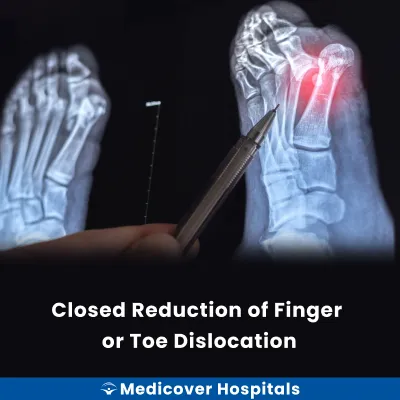
Closed Reduction of Finger or Toe Dislocation is a medical procedure to realign dislocated joints in the fingers or toes. A dislocation occurs when bones in a joint are forced out of their normal positions. This procedure involves manipulating the bones back into place without making an incision. It is often performed under local anaesthesia to minimise discomfort during the process.
This surgery is necessary when a finger or toe joint is dislocated due to injury, such as a fall or sports accident. If untreated, dislocations can lead to joint instability, pain, and impaired function. Modern approaches for closed reduction include manual manipulation techniques and, in some cases, the use of imaging guidance to ensure proper alignment. Prompt treatment helps restore normal function and prevents complications.
Closed Reduction of Finger or Toe Dislocation Doctors Near You
Find skilled orthopedics for closed reduction of finger or toe dislocation at Medicover Hospitals across India. Choose your city and book a consultation today for expert care.
Why Choose Medicover Hospitals for Closed Reduction of Finger or Toe Dislocation?
Get a second opinion from trusted experts and makeconfident, informed decisions.
 Get Second Opinion
Complete Guide To Closed Reduction Of Finger Or Toe Dislocation
Everything you need to know about the procedure, preparation, and recovery
Closed Reduction of Finger or Toe Dislocation Procedure Indications
Doctors recommend closed reduction for finger or toe dislocations when the joint is misaligned but the skin is intact. This procedure is often suggested when non-surgical methods do not realign the joint effectively.
Severe Pain and Swelling
Patients often experience intense pain and noticeable swelling around the dislocated joint. On examination, doctors may find that the joint is visibly out of place. When pain and swelling do not subside with rest, ice, or elevation, closed reduction may be necessary.
Visible Deformity
Dislocations can cause the finger or toe to appear crooked or bent at an unnatural angle. This deformity is usually evident during a physical examination. If splinting or taping does not correct the alignment, a closed reduction is considered.
Limited Range of Motion
Patients may struggle to move the affected finger or toe. This limitation is often confirmed through a physical examination. When exercises and immobilization fail to restore movement, closed reduction is recommended.
Numbness or Tingling
Some patients report numbness or tingling in the affected area. These symptoms suggest nerve involvement, which can be confirmed through sensory tests. If symptoms persist despite conservative care, closed reduction is advised.
Failed Initial Treatment
In some cases, initial treatments like splinting or buddy taping do not resolve the dislocation. Follow-up X-rays may show persistent misalignment. When these methods fail, closed reduction becomes necessary.
How to Prepare for Closed Reduction of Finger or Toe Dislocation?
Proper preparation is crucial for a successful closed reduction of finger or toe dislocation. It ensures a smooth procedure and aids in recovery.
- Medication Review: Stop NSAIDs, anticoagulants, and herbal supplements as advised by your doctor to reduce bleeding risk.
- Fasting: If sedation is planned, fast for 6-8 hours before the procedure. Follow specific instructions from your healthcare provider.
- Clothing: Wear loose, comfortable clothing to the hospital. It makes changing and movement easier post-procedure.
- Transport: Arrange for someone to drive you home after the procedure, as you may feel drowsy from sedation.
- Medication List: Bring a list of current medications, including dosages, to inform the medical team.
- Pre-Procedure Instructions: Follow any specific instructions given by your doctor, such as avoiding certain activities before the procedure.
- Allergy Information: Inform your healthcare provider about any known allergies, especially to medications or anaesthetics.
- Hydration: Stay well-hydrated before fasting begins to help maintain overall health and ease recovery.
Closed Reduction of Finger or Toe Dislocation procedure (Step-by-Step)
Overview: This procedure is performed by orthopaedics. It typically takes about 15-30 minutes. Local anaesthesia is commonly used to numb the affected area.
- Assessment: The doctor examines the dislocated finger or toe. X-rays may be taken to confirm the dislocation and rule out fractures.
- Anaesthesia: Local anaesthesia is administered to numb the area. The patient remains awake but should not feel pain in the affected finger or toe.
- Preparation: The area is cleaned and sterilised. The patient is positioned comfortably to allow easy access to the dislocated joint.
- Reduction: The doctor gently manipulates the dislocated joint back into its normal position. This may involve traction and pressure. The patient may feel pressure but should not feel pain.
- Stabilisation: Once the joint is back in place, a splint or buddy taping is applied to keep the finger or toe stable. This helps in healing and prevents further dislocation.
- Post-Procedure Care: The doctor checks the joint's stability and circulation. Instructions are given for home care, including rest and elevation.
- Follow-Up: A follow-up appointment is scheduled to monitor healing and remove the splint if necessary.
Who Performs Closed Reduction of Finger or Toe Dislocation procedure?
An orthopaedic surgeon or a trained emergency physician typically performs this procedure. They have expertise in managing musculoskeletal injuries and ensuring proper joint alignment.
Recovery After Closed Reduction of Finger or Toe Dislocation procedure
Recovery from a closed reduction of a finger or toe dislocation involves rest and gradual return to normal activities. It is important to follow your doctor's advice to ensure proper healing and avoid complications.
Day 1-3:
- Rest the affected area and keep it elevated to reduce swelling.
- Apply ice packs for 15-20 minutes every few hours.
- Consume a light diet with foods like curd, dal-rice, and soups to support healing.
Day 4-7:
- Begin gentle movements as advised by your doctor to prevent stiffness.
- Continue with a balanced diet, including khichdi and moong dal, to maintain energy levels.
- Avoid strenuous activities and heavy lifting.
Week 2-3:
- Gradually increase activity levels, but avoid any activity that causes pain.
- Return to work or school if your job or studies do not involve heavy physical activity.
- Focus on a nutritious diet to aid recovery, incorporating a variety of vegetables and fruits.
Phase 4-6 Weeks:
- Engage in strengthening exercises as recommended by your physiotherapist.
- Resume normal activities, but continue to avoid high-impact sports until fully healed.
When to Seek Urgent Help
If you experience severe pain, increased swelling, numbness, or if the affected area becomes cold or discoloured, seek medical attention immediately. These could be signs of complications that need prompt evaluation.
Benefits of Closed Reduction of Finger or Toe Dislocation procedure
Closed reduction is a non-surgical method used to realign dislocated fingers or toes.
- Non-Invasive: This procedure avoids the need for surgical intervention.
- Quick Recovery: Patients often experience a faster recovery compared to surgical options.
- Reduced Pain: Proper realignment can significantly decrease pain and discomfort.
- Improved Functionality: Restores normal function and movement to the affected digit.
Risks and Complications of Closed Reduction of Finger or Toe Dislocation procedure
While generally safe, closed reduction carries some risks and potential complications.
Common Risks
- Swelling and bruising may occur around the affected area.
- Temporary stiffness in the finger or toe is possible post-procedure.
Rare Risks
- Nerve damage, leading to numbness or tingling, can occur.
- Blood vessel damage, which may affect circulation to the digit.
- Incomplete reduction, necessitating further intervention.
- Infection, though uncommon, can develop at the site.
Cost of Closed Reduction of Finger or Toe Dislocation procedure
The cost for the Closed Reduction of Finger or Toe Dislocation procedure ranges from ₹10,000 to ₹40,000 across Medicover Hospitals. Prices vary depending on the ward category chosen.
We offer transparent pricing and support for insurance and TPA, including CGHS, ESI, and major TPAs. Cashless facilities are available for added convenience. Please contact the hospital for the latest insurance panel details as these may change periodically.
Frequently Asked Questions
1. How much does Closed Reduction of Finger or Toe Dislocation procedure cost at Medicover Hospitals?
The cost for Closed Reduction of Finger or Toe Dislocation without anaesthesia ranges from ₹10,000 to ₹40,000 across Medicover Hospitals.
2. Is Closed Reduction of Finger or Toe Dislocation procedure covered under health insurance at Medicover?
Coverage may be available under CGHS, ESI, and major TPAs. Please contact the hospital for current panel details.
3. Can I move my finger immediately after the procedure?
You should avoid moving the finger immediately post-procedure. Follow your doctor's advice on when to resume normal activities.
4. Will I need physiotherapy after finger dislocation?
Physiotherapy may be recommended to restore full function. It helps in regaining strength and flexibility in the affected finger.
5. Can I drive after a toe dislocation procedure?
Driving is not advisable immediately after the procedure. Wait until pain and swelling reduce and you can comfortably operate the vehicle.
6. What foods help in recovery after finger dislocation?
Consume foods rich in calcium and protein like curd and dal-rice. These nutrients aid in healing and strengthening bones.
7. Can my finger dislocate again after reduction?
There is a possibility of re-dislocation if not properly healed. Follow your doctor's advice to minimise the risk of recurrence.


