 Call
Call Patient Reports
Best Hospital for Closed Reduction of Elbow Dislocation with Expert Care
Closed reduction of elbow dislocation at Medicover Hospitals is performed using open surgical techniques by skilled orthopaedic surgeons with MS and DNB qualifications. This procedure helps restore joint alignment effectively, often resulting in shorter hospital stays and quicker recovery for patients.
Expert Surgeons
Yearly Surgeries
Patient Satisfaction
What is Closed Reduction OF Elbow Dislocation?
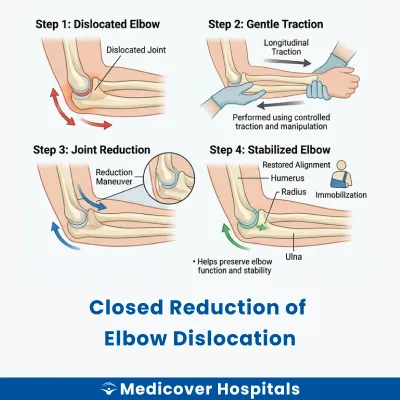
Closed reduction of elbow dislocation is a non-surgical procedure to realign a dislocated elbow joint (where the bones of the elbow are out of place). The elbow is a hinge joint formed by the humerus, radius, and ulna. During this procedure, a healthcare provider manually manipulates the bones back into their normal position without making any incisions.
This procedure is necessary when the elbow joint becomes dislocated due to trauma, falls, or sports injuries. If left untreated, a dislocated elbow can lead to chronic pain, instability, and limited range of motion. Modern approaches for closed reduction include gentle traction and manipulation techniques under sedation or local anaesthesia to ensure patient comfort and effective realignment.
Closed Reduction OF Elbow Dislocation Doctors Near You
Find expert orthopedics for closed reduction of elbow dislocation at Medicover Hospitals across India. Choose your city and book a consultation to discuss your treatment options today.
Why Choose Medicover Hospitals for Closed Reduction OF Elbow Dislocation?
Get a second opinion from trusted experts and makeconfident, informed decisions.
 Get Second Opinion
Complete Guide To Closed Reduction Of Elbow Dislocation
Everything you need to know about the procedure, preparation, and recovery
Closed Reduction of Elbow Dislocation procedure Indications
Doctors recommend closed reduction of elbow dislocation when the elbow joint is dislocated without associated fractures. This procedure is often advised when non-surgical methods fail to restore joint alignment and relieve symptoms.
Acute Elbow Dislocation
Patients experience sudden, severe pain and visible deformity of the elbow. Doctors find the joint misaligned on physical examination and confirm dislocation through X-rays. When immediate manual manipulation is necessary to restore function, this procedure is recommended.
Swelling and Bruising
Significant swelling and bruising around the elbow indicate possible dislocation. Doctors observe restricted movement and tenderness. If swelling persists despite initial treatments like ice and rest, closed reduction may be needed.
Loss of Elbow Function
Patients report inability to move the elbow or use the arm effectively. Examination shows limited range of motion and instability. When conservative methods like immobilization do not improve function, closed reduction is considered.
Neurovascular Compromise
Symptoms include numbness or tingling in the hand, indicating nerve involvement. Doctors may find compromised blood flow or nerve function. Immediate reduction is crucial if these symptoms do not resolve quickly.
Recurrent Dislocations
Patients with repeated elbow dislocations experience chronic pain and instability. Imaging reveals joint laxity. If physical therapy and bracing fail to prevent further dislocations, closed reduction is advised.
How to Prepare for Closed Reduction of Elbow Dislocation?
Proper preparation for a closed reduction of elbow dislocation ensures a smoother procedure and recovery. It helps in minimizing risks and enhances the effectiveness of the treatment.
- Medication Adjustment: Stop NSAIDs, anticoagulants, and herbal supplements as advised by your doctor.
- Fasting: Fast for at least 6-8 hours before the procedure if general anaesthesia is used.
- Clothing: Wear loose, comfortable clothing that can be easily removed or adjusted.
- Transportation: Arrange for someone to drive you home post-procedure due to the effects of anaesthesia.
- Medication List: Bring a list of all medications you are taking, including dosages, to the hospital.
- Allergy Information: Inform the medical team about any known allergies, especially to medications.
- Pre-Procedure Instructions: Follow any specific instructions given by your healthcare provider.
- Comfort Items: Bring any personal items that may help you relax, like a book or music player.
Closed Reduction of Elbow Dislocation Procedure (Step-by-Step)
Performed by orthopaedic specialists, this procedure typically lasts 30 to 60 minutes. It is usually done under regional or general anaesthesia to ensure the patient is comfortable and pain-free.
- Assessment: The doctor examines the elbow to confirm the dislocation and assess any associated injuries. Imaging tests like X-rays may be used.
- Anaesthesia Administration: Anaesthesia is administered to numb the area or put the patient to sleep, ensuring no pain is felt during the procedure.
- Positioning: The patient is positioned comfortably, usually lying on their back with the affected arm supported.
- Reduction Maneuver: The doctor uses their hands to gently manipulate and guide the dislocated bones back into their proper position. No surgical instruments are typically used in this step.
- Stabilization: Once the bones are realigned, the elbow is stabilized using a splint or cast to maintain the position and allow healing.
- Post-Procedure Imaging: X-rays are taken to confirm the success of the reduction and ensure proper alignment.
- Recovery and Monitoring: The patient is monitored as the anaesthesia wears off. Instructions for care and follow-up are provided.
Who Performs Closed Reduction of Elbow Dislocation Procedure?
This procedure is performed by orthopaedic surgeons. They are trained in diagnosing and treating musculoskeletal injuries. Their expertise ensures that the dislocation is corrected safely and effectively. Please contact the hospital for current details as insurance panels may change.
Recovery After Closed Reduction Of Elbow Dislocation procedure
Recovery from a closed reduction of elbow dislocation involves rest, gradual return to activities, and following medical advice. It's essential to follow your doctor's instructions for a smooth recovery.
Day 1-3:
- Rest the affected arm and keep it elevated to reduce swelling.
- Apply ice packs as advised to manage pain and inflammation.
- Consume a light diet including curd, dal-rice, and soups to maintain energy levels.
Day 4-7:
- Begin gentle movements of the fingers and wrist to prevent stiffness.
- Continue with a balanced diet, incorporating khichdi and moong dal for easy digestion.
- Avoid lifting heavy objects or engaging in strenuous activities.
Week 2-4:
- Start physiotherapy exercises as recommended by your healthcare provider.
- Gradually resume daily activities, avoiding any pressure on the elbow.
- Return to work or school may be possible, depending on the nature of your activities.
Phase 2 (Week 4-6):
- Increase the range of motion exercises under guidance.
- Continue with a nutritious diet to support healing.
- Regular follow-up with your doctor to monitor recovery progress.
When to Seek Urgent Help:
- Severe pain or swelling that does not improve with medication.
- Numbness or tingling in the arm or fingers.
- Fever or signs of infection at the site of injury.
Benefits of Closed Reduction of Elbow Dislocation Procedure
Closed reduction is a non-surgical method to treat elbow dislocation, offering several advantages.
- Non-Invasive: Avoids surgical incisions, reducing recovery time.
- Quick Pain Relief: Realigns the joint, providing immediate pain reduction.
- Preservation of Joint Function: Helps restore normal movement and function of the elbow.
- Lower Infection Risk: Minimizes the risk of infection compared to surgical procedures.
Risks and Complications of Closed Reduction of Elbow Dislocation Procedure
While generally safe, closed reduction carries some risks and potential complications.
- Temporary pain or discomfort during the procedure.
- Swelling and bruising around the elbow area post-procedure.
- Nerve injury leading to temporary or permanent weakness or numbness.
- Blood vessel damage, potentially affecting circulation.
- Incomplete reduction, requiring further intervention.
- Recurrence of dislocation if not properly immobilized.
Cost of Closed Reduction of Elbow Dislocation Procedure
The cost of the Closed Reduction of Elbow Dislocation procedure at Medicover Hospitals ranges from Rs. 5,000 to Rs. 25,000. The price varies based on the ward category chosen, such as outpatient, day care, or private rooms.
We offer transparent pricing and support for insurance and TPAs, including CGHS, ESI, and major TPAs. A cashless facility is also available for your convenience. Please contact the hospital for the latest insurance panel details as these may change periodically.
Frequently Asked Questions
1. How much does Closed Reduction of Elbow Dislocation procedure cost at Medicover Hospitals?
The cost ranges from Rs. 5,000 to Rs. 25,000 across Medicover Hospitals. Prices vary based on the type of care and room selected.
2. Is Closed Reduction of Elbow Dislocation procedure covered under health insurance at Medicover?
Coverage may be available through CGHS, ESI, and major TPAs. Please contact the hospital for current panel details.
3. Will I regain full range of motion after elbow reduction?
Most patients regain full range of motion with proper rehabilitation. Regular physiotherapy is crucial for optimal recovery.
4. Can I drive immediately after an elbow dislocation?
Driving is not recommended immediately after the procedure. Wait until your doctor confirms it's safe, usually a few weeks post-reduction.
5. What should I avoid eating after elbow reduction?
Avoid foods that are hard to digest like spicy curries. Opt for light meals like dal-rice or khichdi to aid recovery.
6. Is swelling normal after elbow dislocation reduction?
Mild swelling is common and should subside within a few days. Elevating the arm and applying ice can help reduce swelling.
7. Can I lift weights after an elbow dislocation?
Avoid lifting heavy weights until your doctor approves. Gradual strengthening exercises will be introduced during your rehabilitation.


