 Call
Call Patient Reports
Closed Reduction and Percutaneous Pinning Procedure by Expert Orthopedics
Closed Reduction and Percutaneous Pinning at Medicover Hospitals is performed using a minimally invasive approach. Our team, with qualifications like MS and DNB, specialises in treating fractures and dislocations. This technique often results in smaller incisions and reduced blood loss, enhancing recovery.
Expert Surgeons
Yearly Surgeries
Patient Satisfaction
What is Closed Reduction and Percutaneous Pinning?
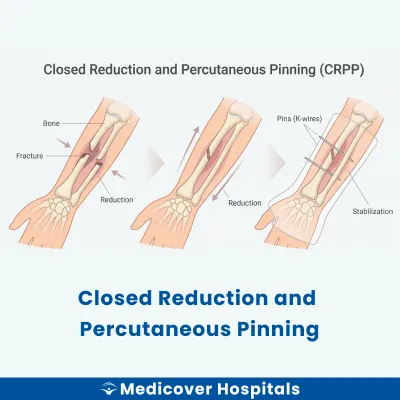
Closed Reduction and Percutaneous Pinning is a surgical procedure used to treat fractures, particularly in the bones of the hand, wrist, or other limbs. The process involves realigning the broken bone without making a large incision (closed reduction) and then stabilizing it with pins inserted through the skin (percutaneous pinning). This method helps in maintaining the correct position of the bone during healing.
This surgery is often needed for fractures that cannot be aligned manually or are unstable. Conditions like displaced fractures or complex breaks may require this procedure. If left untreated, such fractures can lead to improper healing, deformity, or loss of function. Modern surgical approaches for this procedure include minimally invasive techniques, which aim to reduce recovery time and improve outcomes.
Closed Reduction and Percutaneous Pinning Doctors Near You
Discover skilled orthopedics for closed reduction and percutaneous pinning at Medicover Hospitals across India. Choose your city and book a consultation to address your orthopedic needs today.
Why Choose Medicover Hospitals for Closed Reduction and Percutaneous Pinning?
Get a second opinion from trusted experts and makeconfident, informed decisions.
 Get Second Opinion
Complete Guide To Closed Reduction And Percutaneous Pinning
Everything you need to know about the procedure, preparation, and recovery
Closed Reduction and Percutaneous Pinning Procedure Indications
Doctors recommend Closed Reduction and Percutaneous Pinning (CRPP) for specific fractures that require stabilization. This procedure is often chosen when non-surgical methods do not suffice to align the bone properly.
Displaced Fractures
Patients with severe pain and visible deformity may have displaced fractures. X-rays show misaligned bone fragments. When splints or casts fail to realign the bones, CRPP is considered.
Unstable Fractures
Patients may experience persistent pain and swelling. Imaging reveals fractures that are likely to shift. If these fractures cannot be stabilized with external methods, CRPP is recommended.
Fractures with Joint Involvement
Patients report joint pain and limited movement. Scans show fractures extending into the joint space. When joint function is at risk, CRPP helps restore alignment and movement.
Open Fractures
Open wounds with bone exposure are painful and prone to infection. X-rays confirm fracture severity. If immediate stabilization is needed to prevent complications, CRPP is performed.
Fractures in Children
Children with pain and swelling may have growth plate fractures. X-rays indicate potential growth disturbances. When alignment is crucial for normal growth, CRPP is advised.
Please contact the hospital for current details as insurance panels may change.
How to Prepare for Closed Reduction and Percutaneous Pinning?
Proper preparation for Closed Reduction and Percutaneous Pinning ensures a smoother procedure and recovery. Follow these steps for optimal results.
- Medication Review: Stop NSAIDs, anticoagulants, and herbal supplements as advised by your doctor to reduce bleeding risks.
- Fasting Guidelines: Fast for at least 8 hours before the procedure if general anaesthesia is used.
- Pre-Procedure Hygiene: Bathe and clean the affected area thoroughly to reduce infection risk.
- Clothing Choice: Wear loose, comfortable clothing to the hospital for easy dressing post-procedure.
- Transport Arrangement: Arrange for someone to drive you home after the procedure due to anaesthesia effects.
- Medication List: Bring a list of all medications with dosages to inform the medical team.
- Pre-Op Instructions: Follow any additional instructions given by your healthcare provider specific to your condition.
- Rest and Relaxation: Ensure a good night's sleep before the procedure to help your body prepare.
Closed Reduction and Percutaneous Pinning Procedure (Step-by-Step)
Overview: This procedure is performed by orthopaedic surgeons to treat fractures. It typically lasts 30 to 60 minutes. General or regional anaesthesia is used to ensure the patient is comfortable and pain-free.
- Preparation: The patient is positioned to allow easy access to the fracture site. The area is cleaned and sterilised to prevent infection.
- Anaesthesia: Anaesthesia is administered. The patient remains unconscious or numb in the affected area, depending on the type used.
- Closed Reduction: The surgeon manipulates the fractured bone externally to align it correctly. No incisions are made during this step.
- Pin Insertion: Using a trocar, small incisions (about 1-2 cm) are made. Kirschner wires (K-wires) are inserted through the skin and into the bone to hold the fracture in place.
- Stabilisation: The position of the pins is confirmed using X-ray imaging. Adjustments are made if necessary to ensure proper alignment.
- Closure: The incisions are closed with sutures or adhesive strips. A sterile dressing is applied to protect the site.
- Recovery: The patient is monitored as they wake from anaesthesia. Instructions for care and follow-up are provided before discharge.
Who Performs Closed Reduction and Percutaneous Pinning Procedure?
This procedure is performed by orthopaedic surgeons. They specialise in diagnosing and treating bone and joint disorders. Their expertise ensures proper alignment and healing of fractures.
Recovery After Closed Reduction and Percutaneous Pinning Procedure
Recovery from a Closed Reduction and Percutaneous Pinning procedure involves careful management to ensure proper healing. Patients can expect some swelling and discomfort initially, which will gradually improve. Adhering to post-operative instructions is crucial for a smooth recovery.
Day 1-3:
- Rest and keep the affected limb elevated to reduce swelling.
- Apply ice packs as advised by your doctor.
- Consume soft, easy-to-digest foods like curd, dal-rice, and soups to maintain nutrition.
Day 4-7:
- Continue with elevation and icing as needed.
- Begin gentle finger movements if permitted by your doctor.
- Include protein-rich foods like moong dal and khichdi in your diet to aid recovery.
Day 8-14:
- Swelling should start to decrease significantly.
- Follow up with your doctor for a check-up and possible pin removal.
- Gradually resume light activities, avoiding any strain on the affected area.
Phase 3-6 Weeks:
- Engage in physiotherapy exercises as recommended to restore mobility.
- Return to work or school may be possible, depending on the nature of your activities.
- Continue a balanced diet to support healing.
When to Seek Urgent Help
- Severe pain not relieved by medication.
- Signs of infection like fever, redness, or pus at the pin site.
- Numbness or tingling in the affected limb.
If you experience any of these symptoms, contact your healthcare provider immediately.
Benefits of Closed Reduction and Percutaneous Pinning Procedure
This procedure is commonly used to treat fractures, especially in the limbs, offering several advantages.
- Minimally Invasive: The procedure requires only small incisions, reducing recovery time.
- Quick Recovery: Patients often experience faster healing compared to open surgery.
- Reduced Scarring: Smaller incisions lead to less noticeable scars.
- Stability: Pins provide stable fixation, allowing for proper bone alignment.
- Outpatient Procedure: Often performed as a day-care procedure, reducing hospital stay.
Risks and Complications of Closed Reduction and Percutaneous Pinning Procedure
While generally safe, this procedure carries some risks and potential complications.
Common Risks
- Infection at the pin site can occur, requiring medical attention.
- Pin migration or loosening may necessitate further intervention.
Rare Risks
- Nerve damage can happen, leading to temporary or permanent issues.
- Non-union of the fracture may occur, delaying healing.
- Allergic reactions to materials used in the procedure are possible.
- Blood vessel damage can occur, affecting circulation.
Cost of Closed Reduction and Percutaneous Pinning Procedure
The cost for Closed Reduction and Percutaneous Pinning Procedure at Medicover Hospitals ranges from Rs. 5000 to Rs. 9800, depending on the ward category. Prices vary based on the type of accommodation chosen, ensuring transparent pricing for all patients.
We offer insurance and TPA support, accepting CGHS, ESI, and major TPAs, with a cashless facility available for ease of payment. Please contact the hospital for the latest insurance panel details as these may change periodically.
Frequently Asked Questions
1. How much does Closed Reduction and Percutaneous Pinning procedure cost at Medicover Hospitals?
The cost ranges from Rs. 5000 to Rs. 9800 across Medicover Hospitals. Prices vary based on room type and facilities.
2. Is Closed Reduction and Percutaneous Pinning procedure covered under health insurance at Medicover?
This procedure may be covered by CGHS, ESI, and major TPAs. Please contact the hospital for current panel details.
3. Will I need a cast after Closed Reduction and Pinning?
Yes, a cast is usually applied to immobilize the bone. It helps in proper healing and alignment of the fracture.
4. Can I drive immediately after Closed Reduction and Pinning?
Driving is not recommended until full recovery. It may take several weeks before you can safely operate a vehicle.
5. Will I experience stiffness after Closed Reduction and Pinning?
Some stiffness is common post-procedure. Physiotherapy is often recommended to restore full range of motion.
6. Can I return to sports after Closed Reduction and Pinning?
Returning to sports depends on the healing process. It usually takes a few months before resuming high-impact activities.
7. Will I need physiotherapy after Closed Reduction and Pinning?
Physiotherapy is often advised to regain strength and mobility. It helps in reducing stiffness and improving joint function.


