 Call
Call Patient Reports
Closed Reduction and Internal Fixation Surgery by Expert Orthopedics
Closed Reduction and Internal Fixation at Medicover Hospitals involves an open surgical approach performed by experienced orthopaedic surgeons with qualifications like MS and DNB. This procedure aids in stabilising fractures, leading to shorter hospital stays and quicker recovery for patients across India.
Expert Surgeons
Yearly Surgeries
Patient Satisfaction
What is Closed Reduction and Internal Fixation?
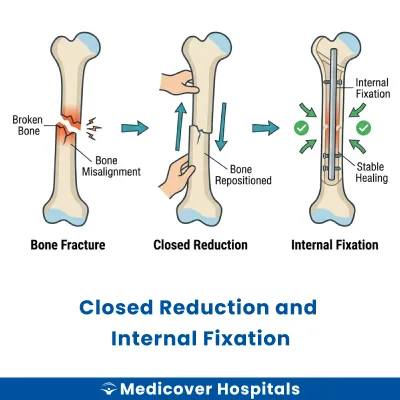
Closed Reduction and Internal Fixation (CRIF) is a surgical procedure used to treat fractures. It involves the realignment of broken bones without making a large incision. The bones are then stabilized using internal devices like screws, plates, or rods. This procedure is commonly performed on long bones such as those in the arms and legs.
CRIF is necessary for fractures that cannot heal properly on their own. Conditions like displaced fractures or unstable fractures often require this surgery. If left untreated, these fractures can lead to improper healing, chronic pain, or loss of function. Modern surgical approaches for CRIF include minimally invasive techniques that reduce recovery time and improve outcomes.
Closed Reduction and Internal Fixation Doctors Near You
Discover skilled orthopedics for closed reduction and internal fixation at Medicover Hospitals across India. Choose your city and book a consultation to address your orthopedic needs today.
Why Choose Medicover Hospitals for Closed Reduction and Internal Fixation?
Get a second opinion from trusted experts and makeconfident, informed decisions.
 Get Second Opinion
Complete Guide To Closed Reduction And Internal Fixation
Everything you need to know about the procedure, preparation, and recovery
Closed Reduction and Internal Fixation Surgery Indications
Doctors recommend Closed Reduction and Internal Fixation (CRIF) when a bone fracture needs stabilization to heal properly. This procedure is often suggested when non-surgical methods are insufficient for recovery.
Severe Fractures
Patients experience intense pain and swelling at the fracture site. X-rays reveal misaligned bone fragments. When casting or splinting fails to align the bones, CRIF is considered.
Displaced Fractures
Patients may notice visible deformity and have difficulty moving the affected limb. Imaging shows bones out of their normal position. Surgery is advised when manual realignment is unsuccessful.
Comminuted Fractures
Patients report severe pain and bruising. Scans show the bone shattered into multiple pieces. When conservative treatment cannot stabilize the fragments, CRIF is necessary.
Fractures with Joint Involvement
Patients experience joint pain and limited range of motion. X-rays indicate fractures extending into the joint. Surgery is recommended when joint function is at risk.
Non-Union Fractures
Persistent pain and instability are common symptoms. Follow-up imaging shows the fracture has not healed over time. CRIF is chosen when healing stalls despite conservative care.
How to Prepare for Closed Reduction and Internal Fixation?
Proper preparation is crucial for a successful Closed Reduction and Internal Fixation surgery. It helps reduce complications and ensures a smoother recovery.
- Medication Review: Stop NSAIDs, anticoagulants, and herbal supplements as advised by your doctor.
- Fasting: Fast for at least 8 hours before the surgery if general anaesthesia is used.
- Pre-Surgery Instructions: Follow any specific instructions given by your surgeon regarding the affected area.
- Clothing: Wear loose, comfortable clothing on the day of surgery to accommodate any post-operative bandages or splints.
- Transportation: Arrange for someone to drive you home after the procedure, as you may not be able to drive yourself.
- Medication List: Bring a list of all medications you are currently taking, including dosages, to the hospital.
- Smoking and Alcohol: Avoid smoking and alcohol for a few days before and after the surgery to promote healing.
- Home Preparation: Set up a comfortable recovery area at home with easy access to essentials.
Closed Reduction and Internal Fixation Surgery (Step-by-Step)
Closed reduction and internal fixation surgery is performed by experienced specialists from the Orthopedics department. The procedure usually takes 1-3 hours and is carried out under general or regional anaesthesia.
- Preparation: The patient is positioned comfortably on the operating table, and anaesthesia is administered to ensure a pain-free procedure.
- Closed Reduction: The surgeon carefully realigns the fractured bone externally without making a large incision to restore proper bone positioning.
- Incision: A small incision is made near the fracture site to allow access for internal fixation devices.
- Internal Fixation: Specialised implants such as screws, plates, or rods are inserted to stabilise the fractured bone and maintain proper alignment during healing.
- Verification: Imaging techniques such as X-rays are used to confirm accurate bone alignment and implant placement.
- Closure: The incision is closed using sutures or staples, and a sterile dressing is applied to protect the surgical site.
- Recovery: After surgery, the patient is monitored in the recovery area while the effects of anaesthesia wear off, and pain management support is provided.
Who Performs Closed Reduction and Internal Fixation Surgery?
This surgery is performed by skilled orthopaedic surgeons trained in treating fractures, bone injuries, and musculoskeletal conditions using advanced fixation techniques.
Recovery After Closed Reduction and Internal Fixation Surgery
Recovery from Closed Reduction and Internal Fixation (CRIF) surgery involves several stages. It's essential to follow your doctor's advice to ensure proper healing and regain mobility.
Day 1-3:
- Rest is crucial. Keep the affected limb elevated to reduce swelling.
- Apply ice packs as advised to manage pain and swelling.
- Consume a soft diet with options like curd, dal-rice, and soups to maintain nutrition.
Day 4-7:
- Begin gentle movements as instructed by your physiotherapist.
- Continue with a balanced diet including moong dal and khichdi for easy digestion.
- Avoid lifting heavy objects or putting pressure on the affected area.
Week 2-4:
- Gradually increase activity levels under guidance. Light exercises may be introduced.
- Maintain a nutritious diet to support bone healing.
- Most can resume desk work or school by the end of this phase, depending on recovery.
Week 5-8:
- Focus on strengthening exercises as advised by your physiotherapist.
- Continue to avoid high-impact activities until cleared by your doctor.
When to Seek Urgent Help
Contact your healthcare provider if you experience severe pain, increased swelling, redness, or fever. These could indicate complications related to the surgery.
Benefits of Closed Reduction and Internal Fixation Surgery
Closed Reduction and Internal Fixation (CRIF) is a surgical procedure used to treat fractures. It offers several benefits for patients.
- Minimally Invasive: CRIF involves smaller incisions, leading to reduced scarring.
- Faster Recovery: Patients often experience quicker recovery times compared to open surgeries.
- Stable Fixation: The procedure provides stable alignment of fractured bones, promoting effective healing.
- Reduced Infection Risk: Smaller incisions decrease the risk of postoperative infections.
Risks and Complications of Closed Reduction and Internal Fixation Surgery
While CRIF is generally safe, like any surgery, it carries certain risks and potential complications.
- Common: Infection at the incision site can occur, requiring further treatment.
- Common: Blood clots may form, necessitating medical intervention.
- Rare: Nerve damage might happen, leading to temporary or permanent issues.
- Rare: Non-union or delayed healing of the fracture can occur, requiring additional procedures.
- Rare: Allergic reactions to materials used in fixation may arise.
Cost of Closed Reduction and Internal Fixation Surgery
The cost of Closed Reduction and Internal Fixation Surgery at Medicover Hospitals ranges from Rs.150,000 to Rs.240,000. The price varies based on the ward category chosen, from day care to suite options. Medicover Hospitals offers transparent pricing, ensuring clarity in costs.
We support insurance and TPA services, including CGHS, ESI, and major TPAs, with cashless facilities available. Please contact the hospital for the latest insurance panel details as these may change periodically.
Frequently Asked Questions
1. How much does Closed Reduction and Internal Fixation surgery cost at Medicover Hospitals?
The cost ranges from Rs. 150000 to Rs. 240000 across Medicover Hospitals, depending on the type of room and care required.
2. Is Closed Reduction and Internal Fixation surgery covered under health insurance at Medicover?
Many insurance providers like CGHS, ESI, and major TPAs offer coverage. Please contact the hospital for current panel details.
3. Will I need physiotherapy after Closed Reduction and Internal Fixation?
Yes, physiotherapy is often recommended to regain strength and mobility. It usually starts a few weeks post-surgery.
4. Can I drive after Closed Reduction and Internal Fixation surgery?
Driving is generally not advised until you have full control and strength. This may take several weeks post-surgery.
5. What are the risks of bone infection after this surgery?
Bone infection, though rare, can occur and requires prompt medical attention. Symptoms may include fever, swelling, and pain at the site.
6. Will I need a cast after Closed Reduction and Internal Fixation?
A cast or splint may be used to immobilize the bone initially. The duration depends on the specific fracture and healing progress.
7. What foods should I eat after Closed Reduction and Internal Fixation?
A balanced diet with foods like curd, dal-rice, and khichdi is recommended. These aid in recovery and provide essential nutrients.
8. What is closed reduction with internal fixation?
Closed reduction with internal fixation is a procedure where a broken bone is realigned without making a large incision (closed reduction) and then stabilized using internal devices like screws, rods, or plates (internal fixation) to keep the bone in place during healing.
9. Is internal fixation a major surgery?
Yes, internal fixation is generally considered a major surgery, as it involves placing implants inside the body to stabilize bones.
10. How many months before you can walk after ORIF?
Walking after ORIF depends on the fracture type and location. Partial weight-bearing may begin within a few weeks, but full walking typically takes about 2 to 3 months or more, with guidance from the doctor.
11. How painful is a closed reduction?
Closed reduction is usually not painful during the procedure because anesthesia or sedation is used. Afterward, there may be mild to moderate pain, which is managed with medications.


