 Call
Call Patient Reports
Cholecystostomy Procedure by Expert Gastroenterologists Surgical
At Medicover Hospitals, our consultant surgical gastroenterologists, with qualifications like MS, DNB, and MCh, perform cholecystostomy using advanced laparoscopic techniques. This approach ensures smaller incisions and reduced blood loss, contributing to a shorter hospital stay for patients across India.
Expert Surgeons
Yearly Surgeries
Patient Satisfaction
What is Cholecystostomy?
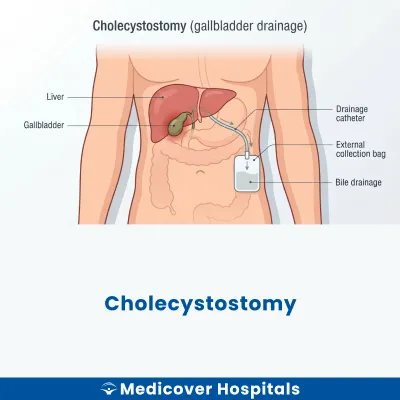
Cholecystostomy is a surgical procedure involving the gallbladder. It involves creating an opening in the gallbladder to drain its contents. This is often done when the gallbladder is inflamed or infected. The procedure helps relieve symptoms and prevent further complications.
This surgery is needed when there is acute cholecystitis (inflammation of the gallbladder) or when gallstones cause blockage. If left untreated, these conditions can lead to severe infections or gallbladder rupture. Modern surgical approaches for cholecystostomy include percutaneous cholecystostomy, where a tube is inserted through the skin, and laparoscopic cholecystostomy, which uses small incisions and a camera for guidance.
Cholecystostomy Doctors Near You
Find skilled gastroenterologists surgical at Medicover Hospitals across India. Choose your city and book a consultation to discuss cholecystostomy and receive expert guidance for your healthcare needs.
Why Choose Medicover Hospitals for Cholecystostomy?
Get a second opinion from trusted experts and makeconfident, informed decisions.
 Get Second Opinion
Complete Guide To Cholecystostomy
Everything you need to know about the procedure, preparation, and recovery
Cholecystostomy Procedure Indications
Doctors recommend a cholecystostomy when less invasive treatments for gallbladder issues are not effective. This procedure is often considered for patients who cannot undergo more extensive surgery due to their condition or overall health.
Acute Cholecystitis
Patients experience severe right upper abdominal pain, fever, and nausea. Imaging shows an inflamed gallbladder, often with fluid around it. When antibiotics and other non-surgical treatments do not relieve symptoms, a cholecystostomy may be necessary.
Gallbladder Empyema
Patients may have intense abdominal pain, high fever, and signs of infection. Ultrasound or CT scans reveal pus in the gallbladder. When drainage and antibiotics fail to improve the condition, doctors may opt for a cholecystostomy.
Severe Biliary Sepsis
Patients present with fever, chills, and jaundice. Blood tests show infection markers, and imaging indicates gallbladder involvement. If immediate drainage is needed to control sepsis, a cholecystostomy is performed.
Critically Ill Patients
Patients with multiple health issues may experience abdominal pain and fever. Imaging shows gallbladder inflammation. When surgery poses too high a risk, a cholecystostomy provides temporary relief.
Gallbladder Perforation
Patients suffer from sudden severe abdominal pain and signs of peritonitis. Imaging reveals a perforated gallbladder. When immediate intervention is required, a cholecystostomy can help manage the condition.
How to Prepare for Cholecystostomy?
Proper preparation for cholecystostomy is crucial to ensure a smooth procedure and recovery. It helps minimise risks and enhances the effectiveness of the surgery.
- Medication Review: Stop NSAIDs, anticoagulants, and herbal supplements as advised by your doctor.
- Fasting: Do not eat or drink anything for at least 6-8 hours before the procedure.
- Medical History: Share your complete medical history and current medications with your healthcare team.
- Clothing: Wear loose, comfortable clothing on the day of the procedure.
- Transportation: Arrange for someone to drive you home after the procedure.
- Medication List: Bring a list of your current medications, including dosages, to the hospital.
- Pre-Procedure Tests: Complete any required blood tests or imaging studies as instructed.
- Consent Form: Ensure you understand the procedure and sign the consent form.
Cholecystostomy procedure (Step-by-Step)
Overview: Cholecystostomy is performed by gastroenterologists-surgical. The procedure typically lasts 30 to 60 minutes. It is usually done under local anaesthesia with sedation.
- Preparation: The patient is positioned comfortably. The skin over the gallbladder area is cleaned and sterilised. Local anaesthesia is administered to numb the area.
- Incision: A small incision, about 1-2 cm, is made on the skin over the gallbladder. The patient may feel slight pressure but no pain.
- Trocar Insertion: A trocar is inserted through the incision to access the gallbladder. The patient remains relaxed and may feel some movement.
- Catheter Placement: A catheter is guided through the trocar into the gallbladder. This allows drainage of bile and relief from symptoms. The patient might feel a sensation of fullness.
- Drainage Confirmation: The position of the catheter is confirmed with imaging techniques. Proper drainage is ensured. The patient is monitored for any discomfort.
- Securing the Catheter: The catheter is secured in place to prevent displacement. The incision site is dressed. The patient is informed about care instructions.
- Post-Procedure Care: The patient is observed for a short period. Instructions on managing the catheter and follow-up care are provided. The patient can usually return home the same day.
Who Performs Cholecystostomy procedure?
Cholecystostomy is performed by surgical gastroenterologists, specialists trained in managing gallbladder conditions. They have expertise in minimally invasive techniques and patient care during such procedures.
Recovery After Cholecystostomy Procedure
Recovering from a cholecystostomy involves careful monitoring and gradual return to normal activities. Patients can expect some discomfort initially, but this typically improves over time. Following your doctor's advice is crucial for a smooth recovery.
Day 1-3:
- Rest is essential. Avoid strenuous activities.
- Stick to a liquid diet. Include clear soups and broths.
- Monitor the surgical site for any signs of infection.
Day 4-7:
- Gradually introduce soft foods like khichdi, dal-rice, and moong dal.
- Continue avoiding heavy lifting and strenuous exercise.
- Attend follow-up appointments as scheduled.
Day 8-14:
- Begin light activities as tolerated. Walking is encouraged.
- Incorporate more solid foods, such as curd and soft fruits.
- Most patients can resume work or school by the end of this period, depending on their recovery progress.
Phase 3 (Week 3 and Beyond):
- Resume normal diet gradually, avoiding fatty and spicy foods.
- Engage in regular activities but continue to avoid heavy lifting.
- Consult your doctor about resuming full physical activities.
When to Seek Urgent Help:
- Fever or chills indicating possible infection.
- Severe abdominal pain or swelling.
- Persistent nausea or vomiting.
- Redness or discharge from the surgical site.
Benefits of Cholecystostomy procedure
Cholecystostomy is a minimally invasive procedure that offers several advantages for patients with gallbladder issues.
- Minimally Invasive: The procedure involves a small incision, reducing recovery time.
- Pain Relief: It helps alleviate pain caused by gallbladder inflammation.
- Quick Recovery: Patients often experience a faster return to daily activities.
- Temporary Solution: Useful for patients who are not immediate candidates for surgery.
- Reduced Hospital Stay: Often requires a shorter hospitalisation compared to open surgery.
Risks and Complications of Cholecystostomy procedure
While generally safe, cholecystostomy carries some risks and potential complications.
Common Risks
- Infection at the insertion site.
- Bleeding during or after the procedure.
Rare Risks
- Injury to surrounding organs or tissues.
- Dislodgement or blockage of the drainage tube.
- Allergic reaction to anaesthesia or contrast material.
- Bile leakage into the abdominal cavity.
Cost of Cholecystostomy procedure
The cost of a Cholecystostomy procedure can vary from ₹30,000 to ₹1,35,000, based on factors such as the surgical approach, length of hospital stay, room category, required diagnostics, and post-operative care.
At Medicover Hospitals, we ensure transparent pricing for all procedures. We offer support for insurance and TPA, including CGHS, ESI, and major TPAs, with cashless facility options available. Please contact the hospital for the latest insurance panel details as these may change periodically.
Frequently Asked Questions
1. How much does Cholecystostomy procedure cost at Medicover Hospitals?
the price ranges from ₹30,000 to ₹1,35,
2. For in detail pricing information on Cholecystostomy, please contact Medicover Hospitals directly. 2. Is Cholecystostomy procedure covered under health insurance at Medicover?
Cholecystostomy may be covered by CGHS, ESI, and major TPAs. Please contact the hospital for current panel details.
3. Does Cholecystostomy affect bile production?
Cholecystostomy does not affect bile production as the liver continues to produce bile. The procedure only drains the gallbladder.
4. Can I eat spicy food after Cholecystostomy?
Avoid spicy foods for at least a few weeks post-procedure. Opt for bland meals like dal-rice and khichdi to aid recovery.
5. Will I need a follow-up after Cholecystostomy?
Yes, follow-up appointments are necessary to monitor healing and remove the drainage tube. Your doctor will guide you on the schedule.
6. Can gallstones recur after Cholecystostomy?
Cholecystostomy addresses infection or inflammation but doesn't remove gallstones. Gallstones may recur unless the gallbladder is removed later.
7. Is it normal to have drainage after Cholecystostomy?
Yes, drainage is expected as the procedure involves placing a tube to drain the gallbladder. The doctor will advise on managing the drainage.


