 Call
Call Patient Reports
Best Hospital for Cheek Reconstruction Surgery with Expert Care
At Medicover Hospitals, our plastic surgeons, holding qualifications like MS, MCh, and DNB, perform open cheek reconstruction surgeries. This approach is essential for restoring facial structure and function. Patients benefit from shorter recovery times and improved outcomes across India.
Expert Surgeons
Yearly Surgeries
Patient Satisfaction
What is Cheek Reconstruction?
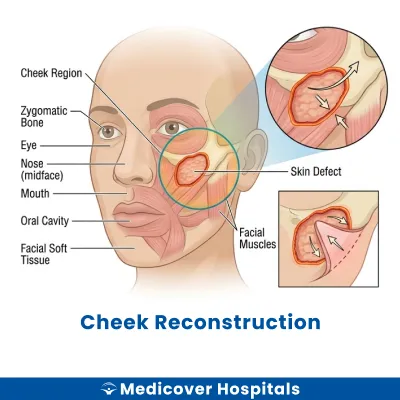
Cheek reconstruction is a surgical procedure aimed at restoring the form and function of the cheek area. The cheek, medically referred to as the buccal region, can be affected by trauma, congenital defects, or diseases like cancer. This procedure involves repairing or replacing damaged tissues to achieve a natural appearance and proper function.
This surgery is often needed after injury, tumour removal, or congenital deformities. If left untreated, these conditions can lead to facial asymmetry, impaired function, and psychological distress. Modern surgical approaches for cheek reconstruction include flap techniques, grafting, and microvascular surgery. These methods help in achieving optimal results by using the patient's own tissues or synthetic materials.
Cheek Reconstruction Doctors Near You
Find expert plastic surgeons for cheek reconstruction at Medicover Hospitals across India. Select your city and book a consultation to discuss your needs with our experienced specialists.
Why Choose Medicover Hospitals for Cheek Reconstruction?
Advanced Plastic Surgery OT: Equipped with modern technology, sterile environment, and specialized instruments for safe, precise, and aesthetic reconstructive and cosmetic procedures.
Get a second opinion from trusted experts and makeconfident, informed decisions.
 Get Second Opinion
Complete Guide To Cheek Reconstruction
Everything you need to know about the procedure, preparation, and recovery
Cheek Reconstruction Surgery Indications
Doctors recommend cheek reconstruction surgery when there is a need to restore the form and function of the cheek area. This procedure is often necessary when conservative treatments do not provide adequate results.
Facial Trauma
Patients may experience severe pain, swelling, or deformity following an accident or injury. Imaging tests like X-rays or CT scans reveal fractures or significant tissue damage. Surgery is considered when the injury does not heal with rest or immobilization.
Tumour Removal
After the removal of facial tumours, patients may notice asymmetry or loss of cheek volume. Biopsy and imaging confirm the presence of a tumour. Reconstruction is needed when the defect affects appearance or function.
Congenital Anomalies
Individuals with birth defects may have noticeable facial asymmetry or underdeveloped cheekbones. Clinical examination and imaging highlight these structural issues. Surgery is advised when these anomalies impact daily life or self-esteem.
Infection or Abscess
Patients may suffer from persistent pain, redness, or swelling due to an infection. Lab tests and imaging can show abscess formation. When antibiotics and drainage fail, surgical intervention is necessary.
Previous Surgery Complications
Some patients experience dissatisfaction or complications like scarring after prior surgeries. Examination reveals issues like skin irregularities. Reconstruction is needed when these complications do not resolve with non-surgical methods.
How to Prepare for Cheek Reconstruction?
Preparation is crucial for a smooth cheek reconstruction surgery and recovery. It helps minimise risks and ensures optimal outcomes.
- Medication Review: Stop NSAIDs, anticoagulants, and herbal supplements at least 1 week before surgery.
- Fasting: Do not eat or drink anything for 8 hours before the procedure to prepare for anaesthesia.
- Smoking Cessation: Quit smoking several weeks before surgery to promote healing and reduce complications.
- Pre-Surgery Checkup: Complete any required blood tests or imaging studies as advised by your surgeon.
- Comfortable Clothing: Wear loose, comfortable clothing on the day of surgery for ease of changing and comfort.
- Transportation: Arrange for someone to drive you home post-surgery as you may feel drowsy from anaesthesia.
- Medication List: Bring a list of current medications with dosages for the medical team to review.
- Hydration: Stay well-hydrated in the days leading up to surgery to aid recovery.
Cheek Reconstruction Surgery (Step-by-Step)
Cheek reconstruction surgery is performed by plastic surgeons. The procedure typically lasts between 2 to 4 hours. It is usually done under general anaesthesia.
- Preparation: The patient is given general anaesthesia to ensure comfort and pain-free experience during the surgery. The surgical area is cleaned and sterilised.
- Incision: A small incision, usually 1-2 cm, is made in a discreet area of the cheek. This allows access to the underlying structures.
- Tissue Manipulation: The surgeon uses instruments like curettes and bipolar cautery to carefully reshape or reposition the cheek tissues. This may involve removing or adding tissue.
- Implant Insertion (if needed): If implants are required, they are inserted through the incision. The surgeon ensures they are positioned correctly to achieve the desired contour.
- Closure: The incision is closed with sutures. The surgeon may use absorbable or non-absorbable stitches, depending on the case.
- Bandaging: A sterile bandage is applied to protect the incision site and support the new cheek structure during initial healing.
- Recovery: The patient is moved to a recovery area. They are monitored as the effects of anaesthesia wear off. Mild discomfort and swelling are common.
Who Performs Cheek Reconstruction Surgery?
Cheek reconstruction surgery is performed by plastic surgeons. These specialists have expertise in facial anatomy and reconstructive techniques. They ensure that the procedure restores both function and appearance. Please contact the hospital for current details as insurance panels may change.
Recovery After Cheek Reconstruction Surgery
Recovering from cheek reconstruction surgery requires patience and care. You may experience swelling, bruising, and discomfort initially. Following your surgeon's advice is crucial for a smooth recovery.
Day 1-3:
- Rest is essential. Keep your head elevated to reduce swelling.
- Apply cold compresses as advised to manage swelling and discomfort.
- Stick to soft foods like curd, dal-rice, and soups to avoid strain on the surgical area.
Day 4-7:
- Swelling and bruising should begin to subside.
- Continue with a soft diet. Include moong dal and khichdi for nutrition.
- Avoid strenuous activities. Gentle walks are encouraged to promote circulation.
Day 8-14:
- Most swelling should decrease, and you may start feeling more comfortable.
- Gradually reintroduce regular foods as tolerated, but avoid hard or chewy items.
- You may return to work or school if your job or studies do not involve physical exertion.
Phase 3 (Week 3-6):
- Resume normal activities, but continue to avoid contact sports or heavy lifting.
- Follow up with your surgeon to ensure proper healing.
When to Seek Urgent Help
- Persistent or worsening pain not relieved by medication.
- Excessive swelling or redness around the surgical site.
- Fever or chills indicating a possible infection.
- Any unusual discharge or bleeding from the incision.
Benefits of Cheek Reconstruction Surgery
Cheek reconstruction surgery can significantly improve facial appearance and function. Here are some benefits:
- Enhanced Aesthetics: Restores facial symmetry and contour, improving overall appearance.
- Improved Functionality: Helps restore normal facial movements and expressions.
- Boosted Confidence: Enhances self-esteem by addressing facial deformities or asymmetries.
- Scar Minimization: Advanced techniques aim to reduce visible scarring.
Risks and Complications of Cheek Reconstruction Surgery
Like any surgical procedure, cheek reconstruction carries certain risks. It's important to be aware of these potential complications:
- Swelling and Bruising: Temporary swelling and bruising are expected post-surgery.
- Infection: Risk of infection at the surgical site, manageable with antibiotics.
- Nerve Damage: Potential for temporary or permanent nerve injury affecting sensation.
- Asymmetry: Possible unevenness in facial appearance post-recovery.
- Hematoma: Accumulation of blood under the skin, requiring medical attention.
- Scarring: Unfavorable scarring may occur, though techniques aim to minimize this.
Cost of Cheek Reconstruction Surgery
The cost of cheek reconstruction surgery ranges from Rs. 69,000 to Rs. 1,37,000, depending on the surgical approach, duration of hospital stay, room category, required diagnostics, and post-operative care.
At Medicover Hospitals, we ensure transparent pricing for all procedures. We offer support for insurance and TPA, including CGHS, ESI, and major TPAs, with a cashless facility available for your convenience. Please contact the hospital for the latest insurance panel details as these may change periodically.
Frequently Asked Questions
1. How much does Cheek Reconstruction surgery cost at Medicover Hospitals?
The cost of Cheek Reconstruction surgery typically ranges from Rs. 69,000 to Rs. 1,37,
2. For exact pricing based on individual needs, please contact Medicover Hospitals. 2. Is Cheek Reconstruction surgery covered under health insurance at Medicover?
Cheek Reconstruction surgery may be covered by CGHS, ESI, and major TPAs. Please contact the hospital for current panel details.
3. Will my facial symmetry be restored after surgery?
Cheek Reconstruction aims to improve facial symmetry. However, complete symmetry may not always be possible depending on the extent of reconstruction needed.
4. Can I smile normally after Cheek Reconstruction?
Post-surgery, most patients regain the ability to smile normally. Recovery time can vary, and physiotherapy may aid in restoring facial movements.
5. What foods should I avoid after Cheek Reconstruction?
Avoid hard and crunchy foods like nuts and chips for the first few weeks. Soft foods like dal-rice, khichdi, and curd are recommended.
6. Will there be visible scars after Cheek Reconstruction?
Scarring is possible but often minimized through surgical techniques. Your surgeon will discuss scar management and healing expectations with you.
7. Can I resume sports activities after Cheek Reconstruction?
You should avoid contact sports for at least 6-8 weeks post-surgery. Consult your surgeon for a personalized timeline based on your recovery.


