 Call
Call Patient Reports
Hospital for Catheter Directed Intra Arterial Thrombolysis for Acute Limb Ischemia Procedure: Safe & Faster Recovery
Catheter Directed Intra Arterial Thrombolysis for Acute Limb Ischemia at Medicover Hospitals is performed using advanced interventional radiology techniques. Our team, with qualifications like MD and DNB, ensures precise treatment. This approach often results in shorter hospital stays for patients.
Expert Specialists
Yearly Treatments
Patient Satisfaction
What is Catheter Directed Intra Arterial Thrombolysis for Acute Limb Ischemia?
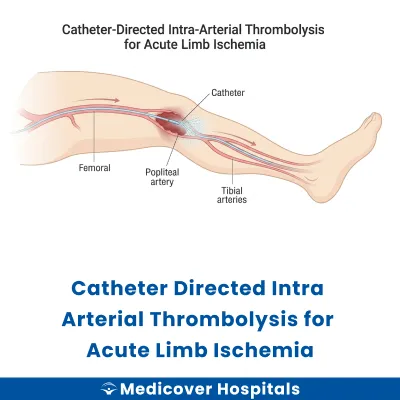
Catheter Directed Intra Arterial Thrombolysis is a medical procedure used to treat Acute Limb Ischemia. This condition affects the limbs, usually the legs, where blood flow is suddenly blocked. A catheter (a thin tube) is inserted into the artery to deliver clot-dissolving medication directly to the site of the blockage. This helps restore blood flow quickly and effectively.
This procedure is necessary when blood clots obstruct blood flow to the limbs, causing severe pain and potential tissue damage. If left untreated, it can lead to limb loss or other serious complications. Modern approaches include endovascular techniques like catheter-based thrombolysis and mechanical thrombectomy. These methods aim to quickly dissolve or remove the clot, reducing the risk of long-term damage. Early intervention is crucial for the best outcomes.
Catheter Directed Intra Arterial Thrombolysis for Acute Limb Ischemia Doctors Near You
Discover skilled interventional-radiology specialists for catheter directed intra arterial thrombolysis for acute limb ischemia at Medicover Hospitals. Choose your city and book a consultation today.
Why Choose Medicover Hospitals for Catheter Directed Intra Arterial Thrombolysis for Acute Limb Ischemia?
Get a second opinion from trusted experts and makeconfident, informed decisions.
 Get Second Opinion
Complete Guide To Catheter Directed Intra Arterial Thrombolysis For Acute Limb Ischemia
Everything you need to know about the procedure, preparation, and recovery
Catheter Directed Intra Arterial Thrombolysis for Acute Limb Ischemia procedure Indications
Doctors recommend Catheter Directed Intra Arterial Thrombolysis when a patient experiences sudden blockage in the arteries of the limbs. This procedure is considered when immediate restoration of blood flow is necessary to prevent tissue damage.
Severe Pain and Pallor
Patients often report intense pain and a pale appearance in the affected limb. On examination, doctors may find reduced or absent pulses. When pain persists despite medication, this procedure is considered.
Coldness and Numbness
Patients may experience coldness and numbness in the limb. Doctors might notice a significant drop in skin temperature. If these symptoms do not improve with initial treatments, thrombolysis is recommended.
Impaired Mobility
Difficulty in moving the affected limb can be a sign. Doctors may observe muscle weakness or paralysis. When physical therapy and medications fail to restore function, intervention is needed.
Ultrasound Findings
Imaging may reveal a clot obstructing blood flow. If the blockage is confirmed and does not respond to anticoagulants, this procedure is advised.
Failed Conservative Management
When initial treatments like blood thinners do not resolve the ischemia, and symptoms worsen, catheter-directed thrombolysis becomes necessary to restore circulation.
Progressive Tissue Damage
Signs of tissue damage, such as skin discoloration or ulcers, may appear. If these signs progress despite conservative care, immediate intervention is crucial to prevent further complications.
How to Prepare for Catheter Directed Intra Arterial Thrombolysis for Acute Limb Ischemia?
Proper preparation is crucial for the success and safety of catheter directed intra arterial thrombolysis. It helps in reducing risks and ensuring a smooth procedure.
- Medication Review: Stop NSAIDs, anticoagulants, and herbal supplements as advised by your doctor.
- Fasting Guidelines: Fast for at least 6 hours before the procedure if general anaesthesia is used.
- Hydration: Drink clear fluids until 2 hours before the procedure unless instructed otherwise.
- Clothing: Wear loose, comfortable clothing on the day of the procedure for easy access to the affected limb.
- Transportation: Arrange for someone to drive you home post-procedure as you may feel drowsy.
- Medication List: Bring a list of all medications you are currently taking, including dosages.
- Allergy Information: Inform your healthcare provider about any known allergic reaction, especially to contrast dyes.
- Consent and Queries: Ensure you have signed the consent form and clarified any doubts with your doctor.
Catheter Directed Intra Arterial Thrombolysis for Acute Limb Ischemia procedure (Step-by-Step)
Overview: This procedure is performed by interventional radiologists. It typically lasts 1 to 3 hours. Local anaesthesia is commonly used.
- Preparation: The patient lies on an X-ray table. The area of the groin or arm is cleaned and numbed with local anaesthesia.
- Access: A small incision, about 1-2 cm, is made to insert a catheter. A guide wire helps navigate the catheter to the blocked artery.
- Imaging: Contrast dye is injected through the catheter. This helps in visualising the blockage on X-ray images.
- Thrombolysis: A special catheter, like a microcatheter, is positioned at the clot site. Thrombolytic medication is delivered to dissolve the clot.
- Monitoring: The patient is monitored for several hours. The progress of clot dissolution is checked with repeat imaging.
- Completion: Once the clot is sufficiently dissolved, the catheter is removed. Pressure is applied to the incision site to prevent bleeding.
- Recovery: The patient is observed for a few hours. They may need to stay overnight for further monitoring.
Who Performs Catheter Directed Intra Arterial Thrombolysis for Acute Limb Ischemia procedure?
This procedure is performed by interventional radiologists. They are specialists trained in minimally invasive techniques using imaging guidance. Their expertise ensures precise catheter placement and effective clot dissolution.
Recovery After Catheter Directed Intra Arterial Thrombolysis for Acute Limb Ischemia procedure
Recovery from Catheter Directed Intra Arterial Thrombolysis for Acute Limb Ischemia involves careful monitoring and gradual return to normal activities. Patients can expect some discomfort and need to follow specific guidelines to ensure optimal healing.
Day 1-3:
- Rest is crucial. Avoid strenuous activities.
- Keep the affected limb elevated to reduce swelling.
- Follow a light diet. Include easily digestible foods like dal-rice, khichdi, and soups.
Day 4-7:
- Gradually increase light activities as tolerated.
- Continue with a balanced diet. Add curd and moong dal to your meals.
- Monitor the puncture site for any signs of infection.
Day 8-14:
- Most patients can resume work or school, depending on their recovery and type of job.
- Engage in gentle exercises like walking, as advised by your doctor.
- Maintain a nutritious diet to support healing.
Phase 3 (Week 3-4):
- Regular activities can be resumed, but avoid heavy lifting or intense exercise.
- Continue to eat a balanced diet rich in fruits, vegetables, and lean proteins.
When to Seek Urgent Help:
- Severe pain or swelling in the affected limb.
- Fever or chills indicating possible infection.
- Bleeding or unusual discharge from the puncture site.
- Sudden shortness of breath or chest pain.
Benefits of Catheter Directed Intra Arterial Thrombolysis for Acute Limb Ischemia procedure
This procedure is used to dissolve blood clots in arteries, restoring blood flow and saving limbs.
- Minimally Invasive: It involves a small incision, reducing recovery time.
- Targeted Treatment: Directly delivers medication to the clot, enhancing effectiveness.
- Preserves Limb Function: Helps in preventing permanent damage to the limb.
- Quick Symptom Relief: Rapidly alleviates pain and swelling associated with ischemia.
Risks and Complications of Catheter Directed Intra Arterial Thrombolysis for Acute Limb Ischemia procedure
While effective, the procedure carries certain risks that need consideration.
Common Risks
- Bleeding at the catheter insertion site.
- Bruising or swelling around the treated area.
Rare Risks
- Allergic reaction to the thrombolytic medication.
- Damage to the blood vessel from the catheter.
- Risk of stroke due to dislodged clots.
- Infection at the catheter insertion site.
Cost of Catheter Directed Intra Arterial Thrombolysis for Acute Limb Ischemia procedure
The cost of the Catheter Directed Intra Arterial Thrombolysis for Acute Limb Ischemia procedure at Medicover Hospitals varies depending on the ward category. Prices range from ₹1,00,000 to ₹2,50,000, The cost is influenced by the type of ward chosen, such as outpatient, day care, or private rooms.
Medicover Hospitals offers transparent pricing with support for insurance and TPA, including CGHS, ESI, and major TPAs. A cashless facility is also available. Please contact the hospital for the latest insurance panel details as these may change periodically.
Frequently Asked Questions
1. How much does Catheter Directed Intra Arterial Thrombolysis for Acute Limb Ischemia procedure cost at Medicover Hospitals?
The cost for this procedure at Medicover Hospitals ranges from ₹1,00,000 to ₹2,50,000, depending on the facility and care level.
2. Is Catheter Directed Intra Arterial Thrombolysis for Acute Limb Ischemia procedure covered under health insurance at Medicover?
This procedure is generally covered by CGHS, ESI, and major TPAs, offering cashless options. Please contact the hospital for current panel details.
3. Can I walk immediately after the procedure?
Walking is usually restricted for a few days post-procedure to ensure proper healing. Your doctor will guide you on when to resume activities.
4. Will I need blood thinners after the procedure?
Blood thinners may be prescribed post-procedure to prevent clot recurrence. Follow your doctor's instructions for medication management.
5. What are the risks of limb swelling post-procedure?
Limb swelling can occur due to fluid retention or inflammation. It is important to follow post-procedure care to minimise this risk.
6. Can I eat spicy food after the procedure?
It's advisable to consume a bland diet such as dal-rice or khichdi initially. Spicy food should be avoided to prevent discomfort.
7. Will I experience numbness in the limb?
Temporary numbness may occur as the limb recovers from ischemia. Consult your doctor if numbness persists beyond the initial recovery period.


