 Call
Call Patient Reports
Advanced Cataract Surgery with Multifocal IOL Implantation Surgery Hospital
At Medicover Hospitals, cataract surgery with multifocal IOL implantation is performed using advanced phacoemulsification techniques. Our team of ophthalmologists, holding qualifications like MS and DNB, ensures precise outcomes. This approach often results in smaller incisions and a quicker recovery for patients across India.
Expert Surgeons
Yearly Surgeries
Patient Satisfaction
What is Cataract Surgery With Multifocal IOL Implantation?
Cataract surgery with multifocal IOL (Intraocular Lens) implantation is a procedure to remove the cloudy lens (cataract) from the eye and replace it with a multifocal lens. The eye's natural lens becomes cloudy due to ageing or other factors, affecting vision. The multifocal IOL helps focus light at different distances, improving vision for both near and far objects.
This surgery is needed when cataracts cause blurry vision, glare, or difficulty seeing at night. If untreated, cataracts can lead to significant vision loss. Modern approaches for this surgery include phacoemulsification, where the cloudy lens is emulsified and removed, and femtosecond laser-assisted cataract surgery, which uses lasers for precision. These methods ensure effective removal and implantation.
Cataract Surgery With Multifocal IOL Implantation Doctors Near You
Discover skilled ophthalmologists for cataract surgery with multifocal IOL implantation at Medicover Hospitals across India. Choose your city and book a consultation to explore your treatment options today.
Why Choose Medicover Hospitals for Cataract Surgery With Multifocal IOL Implantation?
Get a second opinion from trusted experts and makeconfident, informed decisions.
 Get Second Opinion
Complete Guide To Cataract Surgery With Multifocal Iol Implantation
Everything you need to know about the procedure, preparation, and recovery
Cataract Surgery with Multifocal IOL Implantation Surgery Indications
Doctors recommend cataract surgery with multifocal IOL implantation when cataracts significantly impair vision and affect daily activities. This procedure is often suggested when patients seek to reduce dependence on glasses for both near and distance vision.
Blurry Vision
Patients often experience blurry or cloudy vision, making it difficult to read or drive. Ophthalmologists find lens opacity during an eye examination. When vision impairment affects daily life and glasses no longer help, surgery is recommended.
Difficulty with Night Vision
Patients report trouble seeing in low light or at night, often noticing increased glare from headlights. Eye exams reveal significant cataract development. When night vision issues compromise safety, surgery becomes necessary.
Frequent Prescription Changes
Patients may need frequent changes in eyeglass prescriptions. Eye tests show progressive lens changes due to cataracts. When new prescriptions no longer improve vision, surgery is advised.
Double Vision in One Eye
Some patients experience double vision in a single eye. This symptom is confirmed through a detailed eye exam. When it persists despite other treatments, surgery is considered.
Reduced Colour Perception
Patients notice colours appearing faded or yellowed. Ophthalmologists confirm this through colour vision tests. When this affects quality of life, surgery is recommended.
Halos Around Lights
Seeing halos around lights is a common complaint. Eye exams reveal cataract progression. When halos interfere with daily tasks, surgery is suggested.
How to Prepare for Cataract Surgery with Multifocal IOL Implantation?
Proper preparation is crucial for a smooth cataract surgery with multifocal IOL implantation. It helps ensure better outcomes and reduces the risk of complications.
- Medication Review: Consult your doctor about stopping NSAIDs, anticoagulants, and herbal supplements a few days before surgery.
- Fasting Guidelines: Do not eat or drink anything for at least 6 hours before the procedure, as local anaesthesia is typically used.
- Eye Drops: Use prescribed antibiotic and anti-inflammatory eye drops as directed before surgery.
- Clothing Choice: Wear loose, comfortable clothing on the day of surgery for ease and comfort.
- Transportation: Arrange for someone to drive you home after the procedure, as you will not be able to drive yourself.
- Medication List: Bring a list of all medications you are taking, including dosages, to share with the medical team.
- Pre-Surgery Instructions: Follow any additional instructions provided by your surgeon to prepare for the procedure.
- Relaxation Techniques: Practice relaxation techniques to help ease anxiety before surgery.
Cataract Surgery with Multifocal IOL Implantation Surgery (Step-by-Step)
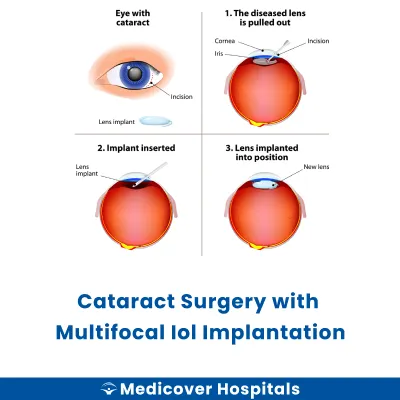
Cataract surgery with multifocal IOL implantation is performed by ophthalmologists. It typically lasts 30 to 45 minutes. Local anaesthesia is commonly used to numb the eye.
- Pre-operative Preparation: The patient receives eye drops to dilate the pupil. Local anaesthesia is administered to ensure comfort.
- Incision: A small incision, about 2-3 mm, is made in the cornea using a microkeratome or a femtosecond laser.
- Phacoemulsification: An ultrasonic probe is inserted to break up the cloudy lens into small pieces. These pieces are then suctioned out.
- IOL Insertion: A multifocal intraocular lens (IOL) is folded and inserted through the incision. It is placed in the lens capsule.
- Incision Closure: The incision is usually self-sealing and may not require stitches. The eye is left to heal naturally.
- Post-operative Care: The patient is monitored briefly before discharge. Eye drops are prescribed to prevent infection and inflammation.
- Recovery: Vision may be blurry initially. It improves over a few days as the eye heals.
Who Performs Cataract Surgery with Multifocal IOL Implantation Surgery?
This surgery is performed by eye doctors. They specialise in eye and vision care. They have extensive training in surgical procedures involving the eye.
Recovery After Cataract Surgery with Multifocal IOL Implantation Surgery
Recovery from cataract surgery with multifocal IOL implantation is generally smooth. You may experience mild discomfort, but this usually subsides quickly. It's important to follow your doctor's instructions for a successful recovery.
Day 1:
- Rest is crucial. Avoid touching or rubbing your eye.
- Use prescribed eye drops as directed.
- Wear protective eyewear to prevent accidental injury.
Day 2-3:
- You may notice improved vision, but it can be blurry initially.
- Continue using eye drops and avoid strenuous activities.
- Consume light meals like dal-rice or moong dal to aid recovery.
Day 4-7:
- Gradually resume light activities, but avoid heavy lifting.
- Include soft foods like khichdi and soups in your diet.
- Most people can return to work or school after a week, depending on their comfort level.
Week 2:
- Vision should be clearer, but full stabilization may take longer.
- Regular follow-up appointments are essential to monitor healing.
- Continue to avoid swimming and dusty environments.
When to Seek Urgent Help:
- Severe eye pain or redness.
- Sudden vision loss or flashes of light.
- Persistent nausea or vomiting.
For any concerns, contact your healthcare provider promptly. Please contact the hospital for current details as insurance panels may change.
Benefits of Cataract Surgery with Multifocal IOL Implantation Surgery
Cataract surgery with multifocal intraocular lens (IOL) implantation offers several advantages for patients seeking improved vision.
- Enhanced Vision Range: Provides clear vision at multiple distances, reducing the need for glasses.
- Improved Quality of Life: Enhances daily activities like reading and driving.
- Quick Recovery: Most patients experience rapid visual improvement post-surgery.
- Long-lasting Results: Multifocal IOLs are designed to last a lifetime, offering sustained vision correction.
Risks and Complications of Cataract Surgery with Multifocal IOL Implantation Surgery
While generally safe, cataract surgery with multifocal IOL implantation carries some risks and potential complications.
- Common: Glare and halos around lights, especially at night.
- Common: Difficulty adjusting to the new lenses, which may require time.
- Rare: Infection or inflammation in the eye.
- Rare: Dislocation of the lens implant.
- Rare: Retinal detachment, which requires prompt medical attention.
- Rare: Persistent vision problems that may need additional treatment.
Cost of Cataract Surgery with Multifocal IOL Implantation Surgery
The cost of cataract surgery with multifocal IOL implantation ranges from Rs. 85,000 to Rs. 173,000 across Medicover Hospitals. The price varies depending on the ward category chosen, such as outpatient, day care, or private rooms.
We offer transparent pricing and support for insurance and TPA services, including CGHS, ESI, and major TPAs. Cashless facilities are available for your convenience. Please contact the hospital for the latest insurance panel details as these may change periodically.
Frequently Asked Questions
1. How much does Cataract Surgery with Multifocal IOL Implantation surgery cost at Medicover Hospitals?
The cost ranges from Rs. 85,000 to Rs. 173,000 across Medicover Hospitals, depending on the type of accommodation chosen.
2. Is Cataract Surgery with Multifocal IOL Implantation surgery covered under health insurance at Medicover?
Yes, it is covered under CGHS, ESI, and major TPAs with cashless options. Please contact the hospital for current panel details.
3. Can I drive after Cataract Surgery with Multifocal IOL?
Driving is not recommended immediately after surgery. Wait for your doctor's approval, typically after a week, to ensure safe vision recovery.
4. Will I need glasses after Multifocal IOL Implantation?
Most patients experience improved vision and may not need glasses for most activities. However, some may still require glasses for specific tasks.
5. What are the common complications of Multifocal IOL?
Common complications include glare and halos, especially at night. These usually improve over time as your eyes adjust to the lenses.
6. How soon can I resume work after Cataract Surgery?
You can typically return to work within a week, depending on your recovery and job type. Avoid strenuous activities during the initial recovery period.
7. Can I eat spicy food after Cataract Surgery?
It's best to consume mild foods like curd, dal-rice, and khichdi initially. Spicy foods should be avoided for at least a week to prevent irritation.
8. What are the risks of IOL implantation?
IOL implantation is generally safe, but risks may include infection, inflammation, glare/halos, or retinal detachment (rare). Most complications are uncommon and treatable if detected early.
9. How long do multifocal lens implants last?
Multifocal Intraocular Lens implants are designed to last a lifetime and do not usually need replacement. They remain permanently in the eye unless a rare complication occurs.


