 Call
Call Patient Reports
Cataract Surgery with IOL Implantation Hospital with Advanced Vision Care
Cataract surgery with intraocular lens implantation at Medicover Hospitals is performed using advanced phacoemulsification techniques. Our team of ophthalmologists, with qualifications like MS and DNB, ensures precise procedures. This approach typically results in smaller incisions and faster recovery for patients across India.
Expert Surgeons
Yearly Surgeries
Patient Satisfaction
What is Cataract Surgery With Intraocular Lens Implantation?
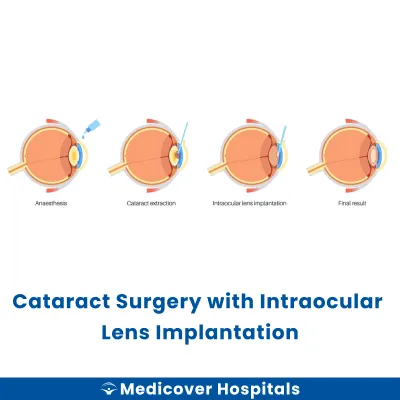
Cataract surgery with intraocular lens implantation is a procedure to remove the cloudy lens (cataract) from the eye and replace it with an artificial lens. The eye's natural lens becomes cloudy, affecting vision. The surgery involves making a small incision in the eye to remove the cataract and implant a clear intraocular lens (IOL).
This surgery is needed when cataracts cause blurry vision, glare, or difficulty seeing at night. If untreated, cataracts can lead to significant vision loss. Modern surgical approaches include phacoemulsification, where ultrasound waves break up the cataract, and laser-assisted cataract surgery, which uses laser technology for precision. These methods help restore clear vision effectively.
Cataract Surgery With Intraocular Lens Implantation Doctors Near You
Discover skilled ophthalmologists for cataract surgery with intraocular lens implantation at Medicover Hospitals across India. Choose your city and book a consultation to explore your treatment options today.
Why Choose Medicover Hospitals for Cataract Surgery With Intraocular Lens Implantation?
Get a second opinion from trusted experts and makeconfident, informed decisions.
 Get Second Opinion
Complete Guide To Cataract Surgery With Intraocular Lens Implantation
Everything you need to know about the procedure, preparation, and recovery
Cataract Surgery with Intraocular lens Implantation Surgery Indications
Doctors recommend cataract surgery with intraocular lens implantation when cataracts significantly impair vision. This procedure is advised when daily activities become challenging due to blurred vision or glare.
Severe Vision Impairment
Patients often experience blurred or cloudy vision, making it difficult to read or drive. Eye examinations reveal significant lens opacity. When glasses or contact lenses no longer improve vision, surgery is considered.
Glare and Halos
Patients report seeing halos around lights or experiencing glare, especially at night. These symptoms are confirmed during an eye exam with bright light tests. When these issues hinder night driving or other activities, surgery may be necessary.
Double Vision in One Eye
Some patients experience double vision in a single eye, which persists despite corrective lenses. Eye tests show cataract formation causing this distortion. Surgery is recommended when it disrupts daily tasks.
Frequent Prescription Changes
Patients notice frequent changes in their eyeglass prescription without significant improvement. Eye exams reveal cataracts as the underlying cause. Surgery is suggested when stable vision cannot be achieved with lenses.
Colour Perception Changes
Patients may notice colours appearing faded or yellowed. This is confirmed through vision tests showing altered colour perception. When this affects quality of life, surgery is advised.
How to Prepare for Cataract Surgery with Intraocular lens Implantation?
Proper preparation is crucial for a smooth cataract surgery with intraocular lens implantation. It helps minimise risks and ensures a quicker recovery.
- Medication Review: Discuss all medications with your doctor. You may need to stop NSAIDs, anticoagulants, and herbal supplements a few days prior.
- Fasting Guidelines: Follow the fasting instructions provided by your doctor. Typically, avoid eating or drinking 6-8 hours before surgery.
- Eye Drops: Use prescribed eye drops as instructed before the surgery to prevent infection and inflammation.
- Clothing: Wear loose, comfortable clothing on the day of surgery. Avoid wearing makeup, lotions, or perfumes.
- Transportation: Arrange for someone to drive you home post-surgery, as you will not be able to drive yourself.
- Medication List: Bring a list of all medications you are currently taking, including dosages, to the hospital.
- Pre-Surgery Tests: Complete any required tests like blood tests or eye measurements as advised by your doctor.
- Rest and Relax: Ensure you get a good night's sleep before the surgery to help your body prepare.
Cataract Surgery with Intraocular lens Implantation Surgery (Step-by-Step)
This surgery is performed by ophthalmologists. It typically lasts 30 to 45 minutes. Local anaesthesia is commonly used to numb the eye.
- Preparation: The patient is given local anaesthesia. The eye is cleaned and covered with a sterile drape. The patient remains awake but does not feel pain.
- Incision: A small incision, about 2-3 mm, is made at the edge of the cornea using a surgical blade or a femtosecond laser. The patient may feel slight pressure.
- Capsulorhexis: A circular opening is created in the lens capsule using a cystotome or forceps. This allows access to the cataract.
- Phacoemulsification: An ultrasonic probe is inserted through the incision. It breaks up the cloudy lens into tiny pieces, which are then suctioned out. The patient may hear a buzzing sound.
- Lens Implantation: A foldable intraocular lens (IOL) is inserted through the same incision. It unfolds in the lens capsule. The patient might see some light flashes.
- Incision Closure: The incision is usually self-sealing, but sometimes a suture may be used. The patient may feel slight discomfort as the eye adjusts.
- Recovery: A protective shield is placed over the eye. The patient is monitored briefly before being discharged. Vision may be blurry initially but improves over time.
Who Performs Cataract Surgery with Intraocular lens Implantation Surgery?
This surgery is performed by ophthalmologists, who are specialists in eye care and surgery. They are trained to handle various eye conditions and use precision instruments for procedures like cataract surgery.
Recovery After Cataract Surgery with Intraocular Lens Implantation Surgery
Recovery from cataract surgery with intraocular lens implantation is generally smooth and quick. Most patients experience improved vision within a few days. However, complete healing may take a few weeks. Follow your doctor's instructions for a successful recovery.
Day 1:
- Rest is crucial. Avoid touching or rubbing your eye.
- Wear the protective eye shield as advised.
- Stick to light meals like curd, dal-rice, or khichdi.
Days 2-3:
- Vision may still be blurry. Continue using prescribed eye drops.
- Avoid strenuous activities and bending over.
- Include soft foods like moong dal and soups in your diet.
Days 4-7:
- Gradual improvement in vision is expected.
- Resume light activities but avoid heavy lifting.
- Maintain a balanced diet with easily digestible foods.
Week 2:
- Most patients can return to work or school, depending on their comfort.
- Avoid swimming and dusty environments.
- Continue with a nutritious diet to support healing.
Phase 3-4 Weeks:
- Vision should stabilize. Follow-up with your doctor for an eye check-up.
- Resume normal activities, but be cautious with eye protection.
When to Seek Urgent Help:
- Severe pain or sudden vision loss.
- Persistent redness or swelling.
- Flashes of light or floaters in your vision.
Benefits of Cataract Surgery with Intraocular lens Implantation Surgery
Cataract surgery with intraocular lens implantation can significantly improve vision and quality of life.
- Improved Vision: Restores clear vision by removing the cloudy lens.
- Quick Recovery: Most patients experience rapid recovery and return to daily activities.
- Reduced Dependence on Glasses: Many patients find they need glasses less often after surgery.
- Enhanced Colour Perception: Colours appear more vibrant and true to life.
- Increased Safety: Improved vision reduces the risk of falls and accidents.
Risks and Complications of Cataract Surgery with Intraocular lens Implantation Surgery
While generally safe, cataract surgery does carry some risks and potential complications.
Common Risks:
- Mild discomfort or irritation in the eye post-surgery.
- Temporary blurred vision as the eye heals.
Rare Complications:
- Infection or inflammation in the eye.
- Retinal detachment, which requires immediate attention.
- Increased intraocular pressure, potentially leading to glaucoma.
- Dislocation of the intraocular lens.
- Persistent swelling of the cornea or retina.
Cost of Cataract surgery with intraocular lens implantation Surgery
The cost of cataract surgery with intraocular lens implantation at Medicover Hospitals ranges from Rs. 30,000 to Rs. 58,000. Prices vary based on the type of ward selected. We offer transparent pricing and support for insurance and TPA, including CGHS, ESI, and major TPAs. Cashless facilities are available for a hassle-free experience. Please contact the hospital for the latest insurance panel details as these may change periodically.
Frequently Asked Questions
1. How much does Cataract surgery with intraocular lens implantation surgery cost at Medicover Hospitals?
The cost ranges from Rs. 30,000 to Rs. 58,000 for different types of lens and room categories at Medicover Hospitals.
2. Is Cataract surgery with intraocular lens implantation surgery covered under health insurance at Medicover?
This surgery is often covered by CGHS, ESI, and major TPAs, offering cashless options. Please contact the hospital for current panel details.
3. Will I need glasses after cataract surgery?
Many patients experience improved vision and may not need glasses. However, some may still require them for reading or distance vision.
4. How soon can I drive after cataract surgery?
Most patients can resume driving within a week after surgery. It's important to ensure your vision is clear and comfortable before driving.
5. Can cataracts return after surgery?
Cataracts cannot return after surgery as the cloudy lens is replaced. However, a secondary cataract may develop, which is treatable with a simple laser procedure.
6. What foods should I eat after cataract surgery?
Consume a balanced diet including curd, dal-rice, and khichdi. These foods are easy to digest and support recovery.
7. Can I watch TV after cataract surgery?
You can watch TV in moderation a day after surgery. Avoid straining your eyes and take regular breaks to rest them.


