What is Eye Cataract Surgery?
Cataract surgery is a safe and highly effective procedure used to treat cataracts, a condition in which the eye's natural lens becomes cloudy, causing blurred or dim vision.
The goal of the surgery is to restore clear sight by removing the cloudy lens and replacing it with an artificial intraocular lens (IOL).
The operation is typically performed by an ophthalmologist as a quick outpatient procedure, allowing patients to go home the same day. If both eyes are affected, surgeries are generally scheduled a few weeks apart.
Modern cataract surgery not only improves vision but can also reduce dependence on glasses, since advanced IOLs are designed to correct additional vision problems such as astigmatism or presbyopia.
For most people, it is a simple, painless, and life-changing treatment that restores sharp, clear vision.
Types of Cataract Surgery
Cataract surgery can be performed using different techniques, depending on the condition of the eye and the severity of the cataract. The main cataract surgery types include:
Phacoemulsification (Phaco)
This is the most common method of cataract eye surgery. A tiny incision is made in the cornea, and ultrasound waves are used to break up the cloudy lens. The fragments are gently removed, and an artificial intraocular lens (IOL) is implanted. Because it is minimally invasive, recovery is usually quicker.
Extracapsular Cataract Extraction (ECCE)
In this method, the cloudy lens is removed in one piece through a larger incision. An IOL is then placed to restore vision. ECCE is generally recommended for very advanced or hard cataracts that cannot be treated with ultrasound.
Laser Cataract Surgery
A modern, bladeless option where a femtosecond laser is used to create precise incisions and soften the lens before removal. Laser cataract surgery offers greater accuracy, but availability and cost may vary.
15-30 minutes per eye
Surgery Duration
Local Anesthesia
Anesthesia Used
Same Day Discharge
Hospital Stay
4-6 weeks
Full Recovery Timeline
Indications of Cataract Surgery
Cataract surgery is usually advised when vision loss from cataracts begins to interfere with daily activities and overall quality of life.
Who needs cataract surgery procedure?
Cataract surgery may be recommended if cataracts cause vision problems that interfere with everyday tasks such as reading, driving, or recognizing faces. Your eye care specialist may also suggest surgery if the cloudy lens makes it harder to monitor or treat other eye conditions, such as age-related macular degeneration or diabetic retinopathy.
It's important to note that cataract surgery only improves vision loss caused by cataracts. It will not correct vision problems from other unrelated eye diseases.
What conditions does cataract surgery treat?
The cataract surgery procedure is specifically designed to treat cataracts, a condition where the eye's natural lens becomes cloudy. By removing the cloudy lens and replacing it with a clear artificial one, cataracts treatment helps restore:
- Clearer vision
- Reduced glare and light sensitivity
- Better contrast sensitivity
- Improved ability to carry out daily activities
When would a doctor recommend cataract eye surgery?
An ophthalmologist may suggest cataract eye surgery when vision problems cannot be managed with glasses or contact lenses. Common indications of cataract surgery include:
- Blurred or cloudy vision that does not improve with eyewear
- Increased glare or light sensitivity, especially while driving at night
- Frequent changes in eyeglass prescriptions due to worsening vision
- Difficulty distinguishing between shades and contrasts
- Struggles with everyday activities such as reading, cooking, or watching TV
- Impaired ability to live independently and safely
In short, cataract surgery is recommended not only based on how cloudy the lens looks during an eye exam, but also on how much the cataract affects your comfort, safety, and quality of life.
Preparing for the Cataract Surgery Procedure
Preparing for cataract surgery involves a few important steps to make sure your eyes are healthy and ready, and to help achieve the best possible results.
How should I prepare before the procedure?
Your doctor will guide you through several preparation steps, which may include:
- Eye Exam: A detailed evaluation to measure your eyes and assess the severity of the cataract.
- Lens Options: Discussing the best intraocular lens (IOL) for your lifestyle and vision goals.
- Medication Review: Sharing a list of current medications-some may need to be adjusted or stopped.
- Hygiene: Washing your face with mild soap and avoiding lotions or makeup around the eyes.
- Eye Drops: Using prescribed drops before and after surgery to reduce infection and inflammation risk.
What tests are done before surgery?
Before the cataract surgery procedure, your eye specialist may recommend:
- Visual acuity tests to measure clarity of vision
- Tonometry to check eye pressure
- Ultrasound or biometry to measure the size and shape of your eye for accurate lens placement
- Retinal exam to ensure there are no underlying eye conditions affecting vision
These tests help customize the surgery for your specific needs.
Should I stop eating, drinking, or taking medicines?
Your surgeon will give specific instructions, but in general:
- You may be asked to avoid eating or drinking for several hours before the procedure.
- Some blood-thinning medications or other prescriptions may need temporary adjustments.
- Always follow your doctor's advice before making changes to your medication routine.
Steps Involved in Cataract Surgery Procedure
Cataract surgery itself is a common and safe procedure performed by ophthalmologists, during which the cloudy lens is removed from the eye and replaced with an artificial one to restore clear vision.
How is cataract surgery done?
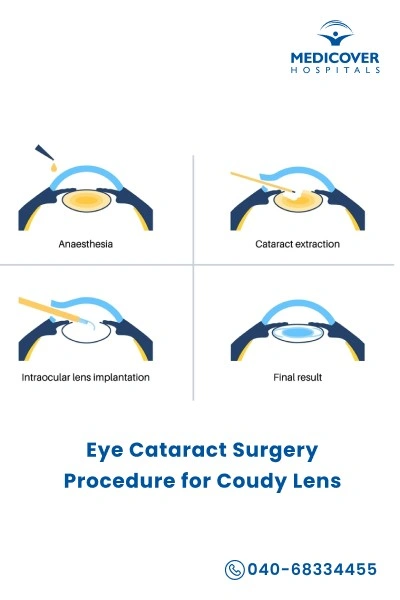
The cataract surgery procedure is performed in several precise steps:
- Preoperative Evaluation: A comprehensive eye exam is performed to assess cataract severity and determine the correct IOL power for the eye.
- Anaesthesia: Local anaesthesia, usually eye drops or a small injection, is given to numb the eye. Patients remain awake but comfortable.
- Incision Creation: A tiny incision (less than 3 mm) is made in the cornea.
- Capsulorhexis: A circular opening is created in the lens capsule to access the cataract.
- Phacoemulsification: An ultrasonic probe breaks the cloudy lens into pieces, which are gently suctioned out.
- IOL Placement: A clear artificial intraocular lens (IOL) is inserted into the natural lens capsule.
- Stabilisation: The lens is adjusted and positioned for sharp vision.
- Wound Closure: The incision usually seals naturally without stitches.
- Immediate Recovery: An eye shield is placed for protection, and prescribed eye drops are given to prevent infection and reduce swelling.
What type of anaesthesia is used?
Cataract surgery is usually performed under local anaesthesia, which keeps the eye numb and pain-free. Sedation may also be offered to help patients relax during the procedure.
How long does it take for cataract surgery?
The actual surgery is quick, typically lasting 15-30 minutes, with a short recovery period at the hospital before going home the same day.
Who performs cataract eye surgery?
Cataract eye surgery is performed by an ophthalmologist, a medical doctor who specializes in eye care and eye surgery.
Recovery and Management After Cataract Surgery
Recovery after cataract surgery is usually smooth, and most patients notice clearer vision within just a few days. With proper care and precautions after cataract surgery, you can expect safe healing and long-term vision improvement.
How long does recovery take?
Most people experience noticeable improvement in vision within 2-5 days, but full recovery can take a few weeks. During this time, your eye continues to heal, and your vision gradually stabilizes.
What should I expect immediately after the procedure?
Right after surgery, you may notice:
- Blurry vision for the first day or two
- Mild discomfort or itching in the operated eye
- A protective eye shield to prevent accidental rubbing
- Prescription eye drops to prevent infection and reduce inflammation
These effects are temporary and improve as the eye heals. Contact your doctor immediately if you notice severe pain, sudden vision loss, redness, or discharge.
When can I return to normal activities?
You can usually resume light activities like walking or reading within a couple of days. However, you should avoid:
- Heavy lifting or bending
- Strenuous exercise
- Exposure to dust, dirt, or bright sunlight
- Driving until your doctor gives clearance
Most patients return to normal routines within 1-2 weeks, depending on healing progress.
Are lifestyle changes required after recovery?
You don't need major lifestyle changes, but a few habits will help protect your eyes and maximize results:
- Wear sunglasses outdoors for UV protection
- Eat a healthy diet rich in fruits, vegetables, and nutrients like vitamins A, C, E, and omega-3s (avoid junk food or excessively salty and sugary foods often advised as food not to eat after cataract surgery)
- Stay hydrated and get adequate sleep
- Avoid eye rubbing and reduce screen strain with proper lighting
- Keep your environment clean and free from dust/allergens
- Manage chronic conditions such as diabetes to support long-term eye health
- Attend regular follow-ups with your ophthalmologist
With these simple steps, most people enjoy clear vision and a significant improvement in quality of life after cataract eye surgery.
What are the Benefits of the Cataract Surgery Procedure?
The cataract surgery procedure is the only proven way to remove cataracts, since no medicines or eye drops can reverse lens clouding. After surgery, most patients experience:
- Sharper, clearer vision
- Reduced glare from bright lights, especially while driving at night
- More vivid color perception
- Less dependence on glasses or contact lenses (depending on the type of lens implanted)
Overall, the biggest benefit of cataract eye surgery is better vision for daily activities and improved independence.
What are the risks and complications of cataract eye surgery?
Although it is considered very safe, there are some possible cataract surgery complications, such as:
- Infection or inflammation: Rare, usually controlled with antibiotic or steroid drops
- Bleeding or swelling: Mild and temporary, often resolves with medication
- Posterior Capsule Opacification (PCO): A common late issue where the lens capsule becomes cloudy, treated easily with a quick laser procedure (YAG capsulotomy)
- Retinal detachment: Rare but serious, requires urgent treatment
- Dislocated intraocular lens (IOL): Rare, may require repositioning
What are the side effects of the cataract surgery procedure?
Temporary side effects can happen while your eye heals, including:
- Blurry or double vision in the first few days
- Mild eye irritation or dryness
- Increased eye pressure, usually short-term and managed with medication
Is cataract surgery painful?
Most patients are relieved to learn that cataract eye surgery is not painful. Local anesthesia (eye drops or a small injection) keeps the eye numb during the procedure. Some mild discomfort, scratchiness, or watery eyes may occur afterward, but these usually improve quickly.
What are the disadvantages of the cataract surgery procedure?
Although rare, some disadvantages include:
- The small chance of complications
- The need for glasses for certain activities
- Short-term lifestyle adjustments during recovery
For the majority of patients, however, the benefits of the cataract surgery procedure far outweigh the risks.
What is Cost of Cataract Surgery?
The cost of cataract surgery in India can range from Rs. 10,000 to Rs. 2,00,000 per eye, depending on several factors including the type of surgery, the type of lens used, and the hospital or clinic.
 040 68334455
 WhatsApp
 Patient Portal
 Home Care