 Call
Call Patient Reports
Burr Hole Procedure Surgery by Expert Neurosurgeons
The Burr Hole Procedure at Medicover Hospitals is an open surgical approach performed by skilled neurosurgeons with qualifications like MS, MCh, and DNB. This procedure is essential for treating various brain conditions. It often results in reduced blood loss, enhancing patient recovery.
Expert Surgeons
Yearly Surgeries
Patient Satisfaction
What is Burr Hole Procedure?
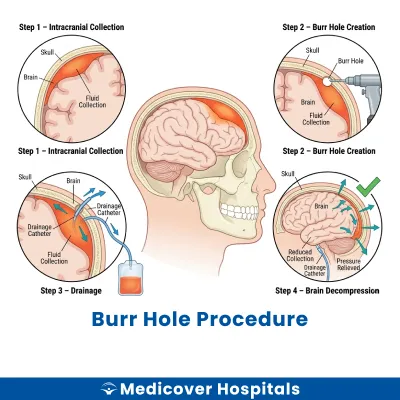
The Burr Hole Procedure is a surgical technique involving the skull. It involves creating a small hole in the cranium (skull) to access the brain. This procedure helps relieve pressure or drain fluid. It is often used in emergency situations to treat conditions like bleeding or swelling in the brain.
This surgery is needed for conditions such as subdural hematomas or brain abscesses. If untreated, these conditions can lead to severe complications, including brain damage or death. Modern surgical approaches for the Burr Hole Procedure include minimally invasive techniques. These methods aim to reduce recovery time and improve outcomes.
Burr Hole Procedure Doctors Near You
Find experienced neurosurgeons for burr hole procedures at Medicover Hospitals across India. Choose your city and book a consultation to discuss your treatment options with our specialists.
Why Choose Medicover Hospitals for Burr Hole Procedure?
Get a second opinion from trusted experts and makeconfident, informed decisions.
 Get Second Opinion
Complete Guide To Burr Hole Procedure
Everything you need to know about the procedure, preparation, and recovery
Burr Hole Procedure Surgery Indications
Doctors recommend a burr hole procedure when there is a need to relieve pressure on the brain or access it for treatment. This procedure is often considered when less invasive treatments have not been effective.
Subdural Hematoma
Patients may experience headaches, confusion, or weakness. Imaging tests like CT scans reveal blood accumulation under the dura mater. When symptoms worsen or do not improve with medication, surgery is necessary.
Epidural Hematoma
Symptoms include severe headache, nausea, and loss of consciousness. CT scans show blood between the skull and dura mater. Immediate surgical intervention is required if there is rapid deterioration.
Brain Abscess
Patients often have fever, headache, and neurological deficits. MRI or CT scans show a localized infection in the brain. If antibiotics fail to reduce the abscess, a burr hole may be needed for drainage.
Hydrocephalus
Symptoms include headache, nausea, and balance issues. Imaging reveals excess cerebrospinal fluid in the brain. When shunting is not feasible, a burr hole can help relieve pressure.
Intracranial Pressure Monitoring
Patients with severe head injuries may experience altered consciousness. Monitoring devices inserted through a burr hole help assess pressure levels. This is crucial when non-invasive monitoring is inadequate.
How to Prepare for Burr Hole Procedure?
Proper preparation is crucial for a successful Burr Hole Procedure. It helps minimise risks and ensures a smooth recovery process.
- Medication Review: Stop NSAIDs, anticoagulants, and herbal supplements at least a week before surgery.
- Fasting Guidelines: Fast for at least 8 hours before the procedure to ensure safety during anaesthesia.
- Pre-Operative Tests: Complete all required blood tests and imaging studies as advised by your doctor.
- Personal Items: Wear loose, comfortable clothing and remove any jewellery or accessories.
- Transportation: Arrange for someone to drive you home post-procedure, as you may feel drowsy.
- Medication List: Bring a list of current medications with dosages for hospital records.
- Hygiene: Bathe with antibacterial soap on the day of surgery to reduce infection risk.
- Rest Well: Ensure a good night's sleep before the procedure to help your body recover better.
Burr Hole Procedure Surgery (Step-by-Step)
The Burr Hole Procedure is performed by neurosurgeons. It typically lasts between 1 to 2 hours. General anaesthesia is commonly used to ensure the patient is unconscious and pain-free during the surgery.
- Preparation: The patient's head is shaved and cleaned to prevent infection. The patient is then positioned on the operating table, and general anaesthesia is administered.
- Incision: A small incision, about 1-2 cm, is made on the scalp. This allows access to the skull for the next steps.
- Drilling: A specialised drill is used to create a small hole in the skull. This hole is known as a burr hole. The size is just enough to allow access to the underlying brain tissue.
- Accessing the Brain: Through the burr hole, instruments such as a curette or a trocar may be used to remove or relieve pressure from the brain, such as draining a hematoma.
- Closure: Once the procedure is complete, the hole is covered, often with a small metal plate or left open if further drainage is needed. The scalp incision is then closed with sutures or staples.
- Recovery: The patient is moved to a recovery area to wake from anaesthesia. Vital signs are monitored, and pain management is provided as needed.
Who Performs Burr Hole Procedure Surgery?
The Burr Hole Procedure is performed by neurosurgeons. These specialists are trained in surgeries involving the brain and nervous system. They have expertise in using precise instruments to ensure successful outcomes. Please contact the hospital for current details as insurance panels may change.
Recovery After Burr Hole Procedure Surgery
Recovery from a Burr Hole Procedure varies for each individual. It involves rest, gradual return to activities, and dietary adjustments. It's important to follow your doctor's advice for a smooth recovery.
Day 1-3:
- Rest is crucial. Stay in bed or sit comfortably.
- Consume light meals. Opt for easily digestible foods like curd, dal-rice, or khichdi.
- Avoid strenuous activities. Limit movement to essential tasks.
Day 4-7:
- Gradually increase light activities. Short walks around the house are beneficial.
- Continue with a soft diet. Include moong dal and soups for nutrition.
- Avoid bending, lifting heavy objects, or any vigorous activities.
Day 8-14:
- Most patients can resume light work or school activities, depending on their comfort and doctor's advice.
- Introduce more variety in diet. Ensure meals are balanced and nutritious.
- Continue avoiding heavy lifting and strenuous exercises.
Phase 3 (Week 3-4):
- Gradually resume normal activities. Follow your doctor's guidance on exercise.
- Maintain a balanced diet. Include fruits, vegetables, and proteins.
- Regular follow-up appointments are important to monitor recovery.
When to Seek Urgent Help
- Severe headache or sudden increase in pain.
- Persistent nausea or vomiting.
- Confusion, drowsiness, or difficulty waking up.
- Any signs of infection at the surgical site, such as redness or discharge.
Benefits of Burr Hole Procedure Surgery
The burr hole procedure is a minimally invasive surgery used to relieve pressure on the brain. It offers several benefits for patients with specific conditions.
- Minimally Invasive: The procedure involves a small incision, reducing recovery time.
- Quick Relief: Provides rapid alleviation of symptoms caused by pressure on the brain.
- Effective for Hematomas: Particularly beneficial for draining subdural hematomas.
- Short Hospital Stay: Often requires a shorter hospital stay compared to more extensive surgeries.
Risks and Complications of Burr Hole Procedure Surgery
While the burr hole procedure is generally safe, there are potential risks and complications. Patients should be aware of these before undergoing surgery.
- Infection at the incision site.
- Bleeding, which may require additional intervention.
- Seizures following the procedure.
- Damage to surrounding brain tissue.
- Cerebrospinal fluid leakage.
- Blood clots forming in the brain.
What is the Cost of Burr Hole Procedure Surgery?
The cost of Burr Hole Procedure Surgery at Medicover Hospitals ranges from Rs. 37,500 to Rs. 1,09,000, depending on the surgical approach, hospital stay, room category, diagnostics, and post-operative care. We offer transparent pricing with insurance and TPA support, including CGHS, ESI, and major TPAs, with cashless facility available. Please contact the hospital for the latest insurance panel details.
Frequently Asked Questions
1. How much does Burr Hole Procedure cost?
The cost of a Burr Hole Procedure ranges from Rs. 37,500 to Rs. 1,09,
2. Please contact Medicover Hospitals for detailed pricing information. 2. Is Burr Hole Procedure covered by insurance?
Burr Hole Procedure may be covered by CGHS, ESI, and major TPAs. Please contact the hospital for current panel details.
3. Can the abscess return after burr hole drainage?
Yes, there is a possibility of recurrence. Regular follow-up and monitoring are essential to prevent complications.
4. Will I need to shave my head for the procedure?
Yes, a portion of your head may need to be shaved. This is necessary to maintain a sterile environment during surgery.
5. How soon can I resume normal activities?
Most patients can resume light activities within a week. However, complete recovery may take several weeks.
6. Will I experience headaches post-surgery?
Some patients may experience headaches after the procedure. These usually subside with medication and time.
7. What diet should I follow after the procedure?
A light diet with foods like curd, dal-rice, and khichdi is recommended. Avoid spicy and oily foods during the initial recovery period.


