What is Botox Treatment?
Botox is an injectable treatment made from a purified form of botulinum toxin. It works by temporarily blocking nerve signals to targeted muscles, preventing them from contracting. This helps soften wrinkles, improve facial contours, and can also be used for medical conditions like migraines, excessive sweating, and muscle spasms.
Types of Botox
Botox is available in different formulations, each with slightly different properties, but the same goal: relaxing targeted muscles to reduce wrinkles or treat certain medical conditions. The main types include:
- Botox Cosmetic: For facial rejuvenation and wrinkle and fine line reduction.
- Botox Therapeutic: Treats medical conditions like chronic migraines, overactive bladder, excessive sweating, and muscle stiffness.
- Dysport: Similar to Botox, used for treating wrinkles and larger muscle groups.
- Xeomin (Naked): May reduce the chance of developing resistance over time.
- Jeuveau ("Newtox"): Primarily used for cosmetic wrinkle treatment and is generally more affordable.
15-30 Minutes
Surgery Duration
No Anesthesia
Anesthesia Used
Same Day Discharge
Hospital Stay
1-2 Days
Full Recovery Timeline

When is Botox Recommended?
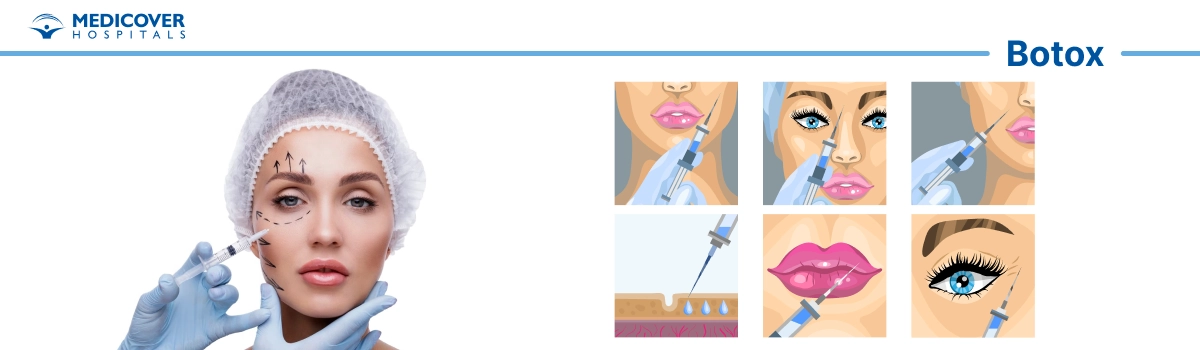
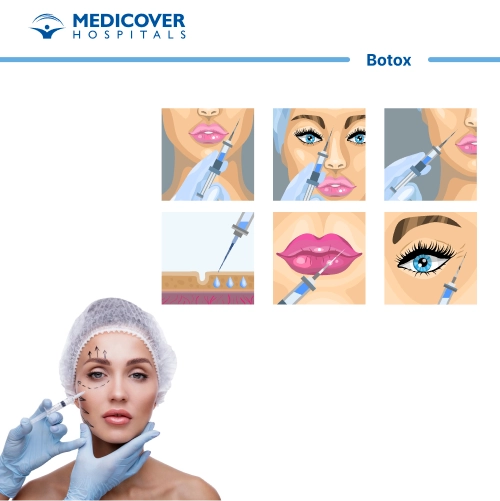
Botox is suggested for both cosmetic and medical purposes. A doctor may recommend it if you have:
Cosmetic Uses
- Wrinkle reduction on forehead, eyes, and frown lines
- Smoothing expression lines from smiling or frowning
- Subtle brow lift for a refreshed look
- Jawline contouring to slim the face
- Reducing excessive sweating (hyperhidrosis)
Medical Uses
- Chronic migraines that occur for 15 or more days a month
- Excessive sweating (hyperhidrosis), especially in the underarms, palms, or feet
- Muscle stiffness or spasms in the neck, shoulders, or limbs (e.g., cervical dystonia)
- Eye muscle problems like eyelid twitching or crossed eyes (strabismus)
- Overactive bladder symptoms, such as frequent urination or leakage
- Botox can help reduce Bruxism (jaw clenching) and teeth grinding caused by stress or sleep disorders.
- Treats temporomandibular joint disorders, relieving pain and muscle tightness.
Botox is generally recommended when other treatments haven't worked or when faster, minimally invasive results are desired.
Preparation for Botox Surgery
Preparing for a Botox procedure involves several steps to ensure a safe and successful experience.
Whether you're considering Botox for cosmetic or medical reasons, following these guidelines can help you achieve optimal results and minimize potential risks:
- Choose a Qualified Provider: Ensure your provider is licensed and experienced in Botox injections.
- Initial Consultation: Discuss your goals, medical history, medications, and concerns with the provider.
- Avoid Certain Substances: Avoid alcohol, smoking, blood thinners, and supplements like aspirin or fish oil before the procedure.
- Plan for Aftercare: Follow post-procedure care advice, such as avoiding strenuous activity or heat exposure.
- Stay Hydrated: Proper hydration promotes skin health and reduces the risk of bruising.
- Set Realistic Expectations: Understand that Botox results are temporary and may require follow-up sessions.
Botox Procedure Steps
Botox treatment is quick and minimally invasive, usually completed in less than 30 minutes. The steps generally include:
- Preparation: The treatment area is cleaned, and a numbing cream may be applied for comfort.
- Marking Sites: The provider identifies and marks the exact spots for injection based on muscle activity and desired results.
- Injection: Using a fine needle, Botox is injected into targeted muscles with minimal discomfort.
- Observation: Your facial movements are checked to ensure the Botox is placed correctly.
- Completion: The entire process takes about 15-30 minutes, with no recovery room needed.
- Follow-Up: Maintenance sessions may be scheduled every few months to sustain results.
Recovery Timeline After a Botox Treatment
Recovery after a Botox procedure is usually straightforward and relatively quick, with most individuals able to resume their normal activities immediately.
Day 0 (Treatment Day)
- Procedure takes 15-30 minutes.
- Mild redness or swelling at injection sites is normal.
- Avoid touching, rubbing, or lying down for at least 4 hours.
- No strenuous exercise for 24 hours.
Days 1-2
- Any minor swelling or bruising begins to fade.
- Some people may feel slight tenderness at injection sites.
- Follow aftercare instructions strictly.
Days 3-5
- Botox injection starts to take effect - facial muscles begin relaxing.
- Visible reduction in wrinkles may start to appear.
Weeks 2-4
- Results are stable and natural-looking.
- If needed, a follow-up appointment can address touch-ups.
Months 3-4
- Effects may start to fade gradually.
- Consider scheduling the next session to maintain results.
Months 5-6
- Most of the Botox injection effect has worn off.
- Wrinkles and fine lines may slowly reappear if no maintenance is done.
Lifestyle Tips After Botox Treatment
After a Botox procedure, no significant lifestyle changes are required, but there are a few recommendations to consider to ensure the best possible results and minimize any potential side effects. Here are some lifestyle considerations after a Botox procedure:
- Avoid touching treated areas for a few hours
- Skip vigorous exercise for 24 hours
- Stay upright for 4 hours after injections
- Avoid alcohol or blood thinners before and after treatment
- Use sunscreen to protect skin
- Stay Hydrated and Maintain a Healthy Diet
- Schedule Regular Maintenance
Benefits of Botox Treatment
- Smooth, youthful-looking skin
- Quick, office-based treatment
- No surgical risks or long recovery
- Versatile applications for cosmetic and medical needs
Potential Side Effects of Botox Treatment
Botox is generally safe when performed by an experienced provider, but like any procedure, it can have side effects.
Common and temporary side effects include:
- Mild pain or swelling at injection site
- Temporary bruising
- Headache or flu-like symptoms
- Temporary drooping of eyelid or eyebrow
- Dry eyes or watery eyes
- Mild nausea
Cost of Botox Treatment in India
The cost of Botox treatment in India varies depending on the number of units required, the area being treated, and the city or hospital chosen. On average, the price ranges from Rs. 7,000 to Rs. 25,000 per session. Factors like the doctor's expertise, clinic reputation, and whether it's for cosmetic or medical use (such as migraine or muscle spasm treatment) also influence the cost. Multiple sessions may be required for long-term results, adding to the overall expense.
 040 68334455
 WhatsApp
 Patient Portal
 Home Care