 Call
Call Patient Reports
Best Hospital for Biopsy Excision Surgery by Expert Surgeons
At Medicover Hospitals, our general surgeons, with qualifications like MS, DNB, and FMAS, perform biopsy excisions using open surgical techniques. This approach allows for precise removal of tissue samples. Patients benefit from smaller incisions and reduced blood loss, enhancing recovery and comfort.
Expert Surgeons
Yearly Surgeries
Patient Satisfaction
What is Biopsy Excision?
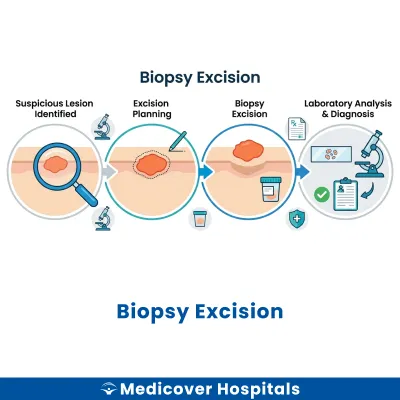
Biopsy excision is a surgical procedure to remove a small piece of tissue or an entire lump from an organ or body part for examination. Commonly, it involves areas like the skin, breast, or lymph nodes. The excised tissue is then analysed under a microscope to detect abnormalities such as cancer cells or infections.
This surgery is crucial for diagnosing conditions like cancer, infections, or inflammatory diseases. If left untreated, these conditions can worsen, leading to severe health complications. Modern surgical approaches for biopsy excision include minimally invasive techniques like laparoscopic surgery and robotic-assisted surgery. These methods aim to reduce recovery time and minimise scarring.
Biopsy Excision Doctors Near You
Discover skilled general-surgeons for biopsy excision at Medicover Hospitals across India. Select your city and book a consultation to receive expert care tailored to your needs.
Why Choose Medicover Hospitals for Biopsy Excision?
Get a second opinion from trusted experts and makeconfident, informed decisions.
 Get Second Opinion
Complete Guide To Biopsy Excision
Everything you need to know about the procedure, preparation, and recovery
Biopsy Excision Surgery (Step-by-Step)
Biopsy excision is performed by experienced specialists from the General Surgery department. The procedure typically takes 30 minutes to 1 hour and may be done under local, regional, or general anaesthesia depending on the site and clinical requirement.
- Preparation: The patient is positioned appropriately, and anaesthesia is administered to ensure comfort and a pain-free procedure.
- Incision: A small incision is made to access the area from which the tissue sample needs to be removed.
- Tissue Sampling: The surgeon carefully excises the required tissue using precise surgical instruments to ensure an adequate sample for diagnosis.
- Bleeding Control: Any bleeding is controlled using appropriate surgical techniques to maintain a clear field and reduce complications.
- Specimen Handling: The collected tissue sample is preserved in a sterile container and sent to the laboratory for histopathological examination.
- Closure: The incision is closed using sutures or adhesive strips, and a sterile dressing is applied to protect the wound.
- Recovery: The patient is monitored during recovery and provided instructions for wound care and follow-up.
Who Performs Biopsy Excision Surgery?
This procedure is performed by general surgeons trained in diagnostic surgical techniques to safely obtain tissue samples for accurate medical evaluation.
How to Prepare for Biopsy Excision?
Proper preparation for a biopsy excision is crucial to ensure a smooth procedure and optimal recovery. It helps in minimizing risks and ensuring accurate results.
- Medication Review: Stop NSAIDs, anticoagulants, and herbal supplements as advised by your doctor.
- Fasting Guidelines: If general anaesthesia is used, fast for at least 6-8 hours before the procedure.
- Clothing: Wear loose, comfortable clothing on the day of the procedure for easy access to the biopsy site.
- Transportation: Arrange for someone to drive you home post-procedure, especially if sedation is used.
- Medication List: Bring a list of all medications you are currently taking, including dosages.
- Pre-Procedure Instructions: Follow any specific instructions given by your healthcare provider, such as skin cleaning or avoiding certain products.
- Allergy Information: Inform your doctor about any known allergies, especially to medications or anaesthesia.
- Health History: Discuss your complete health history with your doctor, including any recent illnesses or surgeries.
Biopsy excision Surgery (Step-by-Step)
Biopsy excision is performed by general surgeons. It typically lasts between 30 minutes to 1 hour. The procedure may use local, regional, or general anaesthesia, depending on the biopsy location and patient condition.
- Preparation: The patient is positioned comfortably. Anaesthesia is administered to numb the area or induce sleep, ensuring no pain during the procedure.
- Incision: A small incision, usually 1-2 cm, is made using a scalpel. This provides access to the tissue that needs to be examined.
- Tissue Removal: The surgeon uses instruments like a curette or harmonic scalpel to carefully remove the tissue sample. The size and depth depend on the area and purpose of the biopsy.
- Bleeding Control: Bipolar cautery may be used to control bleeding and ensure a clear view of the surgical site. This helps in preventing excessive blood loss.
- Sample Handling: The excised tissue is placed in a sterile container. It is then sent to the laboratory for analysis to determine the presence of any abnormal cells.
- Closure: The incision is closed with sutures or adhesive strips. A sterile dressing is applied to protect the site and promote healing.
- Recovery: The patient is monitored as the anaesthesia wears off. Instructions are provided for care at home, including signs of infection to watch for.
Who Performs Biopsy excision Surgery?
Biopsy excision is performed by general surgeons. These specialists are trained in surgical techniques to safely remove tissue samples for diagnostic purposes. They ensure the procedure is done with precision and care.
Recovery After Biopsy Excision Surgery
Recovery after a biopsy excision surgery varies depending on the location and size of the excision. Generally, patients can expect some discomfort and swelling, which gradually subsides. Proper care and rest are crucial for a smooth recovery.
Day 1-2:
- Rest is essential. Avoid strenuous activities.
- Keep the surgical area clean and dry. Follow the doctor's instructions for dressing changes.
- Consume soft and easily digestible foods like curd, dal-rice, and moong dal to avoid straining.
Day 3-5:
- Swelling and discomfort should start to decrease.
- Continue with light activities. Avoid lifting heavy objects.
- Include soups and khichdi in your diet for nutrition and easy digestion.
Day 6-7:
- Most patients can resume work or school, depending on the nature of their job.
- Maintain a balanced diet to support healing. Hydration is key.
- Monitor the incision site for any signs of infection.
Week 2:
- Gradually return to normal activities, but listen to your body.
- Continue to eat nutritious meals to aid recovery.
- Follow up with your doctor as advised for stitch removal or check-up.
When to Seek Urgent Help
- Excessive bleeding or oozing from the incision site.
- Severe pain not relieved by prescribed medication.
- Signs of infection such as increased redness, warmth, or pus.
- Fever or chills.
Benefits of Biopsy Excision Surgery
Biopsy excision surgery is a crucial procedure for diagnosing and treating various medical conditions. It offers several benefits:
- Accurate Diagnosis: Provides precise information about the nature of a suspicious tissue.
- Early Detection: Helps in identifying diseases at an early stage, improving treatment outcomes.
- Minimally Invasive: Involves a small incision, reducing recovery time and discomfort.
- Targeted Treatment: Allows for the removal of abnormal tissue, potentially preventing disease progression.
Risks and Complications of Biopsy Excision Surgery
While biopsy excision is generally safe, it carries certain risks and complications. Patients should be aware of these possibilities:
- Common: Bleeding at the site of the incision.
- Common: Infection, which may require additional treatment.
- Rare: Allergic reaction to anaesthesia used during the procedure.
- Rare: Scarring at the site of the biopsy.
- Rare: Damage to surrounding tissues, depending on the location of the biopsy.
Cost of Biopsy excision Surgery
The cost of a biopsy excision surgery at Medicover Hospitals ranges from Rs. 1,650 to Rs. 11,500. Prices vary based on the type of ward selected, such as outpatient, day care, general, and private suites. We offer transparent pricing to ensure clarity for our patients.
Insurance and TPA support, including CGHS, ESI, and major TPAs, are accepted, with cashless facilities available for added convenience. Please contact the hospital for the latest insurance panel details as these may change periodically.
Frequently Asked Questions
1. How much does Biopsy excision surgery cost at Medicover Hospitals?
The cost for biopsy excision surgery at Medicover Hospitals ranges from Rs.1650 to Rs.11500, depending on the type and complexity of the procedure.
2. Is Biopsy excision surgery covered under health insurance at Medicover?
Biopsy excision surgery may be covered under CGHS, ESI, and major TPAs, offering cashless options. Please contact the hospital for current panel details.
3. Will I have a scar after biopsy excision?
A small scar may remain after biopsy excision, depending on the size and location of the incision. Proper wound care can help minimize its appearance.
4. Can I exercise after biopsy excision of a lump?
Light activities can resume after a week, but avoid strenuous exercise for 2-3 weeks. Consult your doctor for personalized advice based on your recovery.
5. Is fasting required before biopsy excision?
Fasting is usually required for 6-8 hours before the procedure, especially if general anaesthesia is used. Follow your doctor's specific instructions for best results.
6. What foods aid recovery after biopsy excision?
Consume soft, nutritious foods like dal-rice, curd, and khichdi to aid recovery. These are easy to digest and provide essential nutrients.
7. Can biopsy excision lead to infection?
Infection is a rare complication but possible after biopsy excision. Keep the area clean and follow your doctor's care instructions to prevent it.
8. Is excision biopsy a major surgery?
Excision biopsy is usually a minor procedure, especially when removing small lumps or lesions. It may be considered more extensive only if the lesion is large or located in a complex area.
9. What is the recovery time for an excisional biopsy?
Recovery is generally quick, with most patients healing within 1 to 2 weeks. Minor soreness or swelling may occur but improves quickly.
10. Is excision biopsy painful?
The procedure itself is not painful because it is done under local anesthesia. Afterward, there may be mild discomfort or tenderness, which is usually manageable with simple pain relief.


