 Call
Call Patient Reports
Bilateral Uterine Artery Ligation Surgery Hospital by Expert Gynecologists
Bilateral Uterine Artery Ligation at Medicover Hospitals is performed using laparoscopic techniques by skilled gynecologists with qualifications like MS, DNB, and FMAS. This procedure helps manage conditions like abnormal uterine bleeding. Patients benefit from reduced blood loss and a shorter hospital stay.
Expert Surgeons
Yearly Surgeries
Patient Satisfaction
What is Bilateral Uterine Artery Ligation?
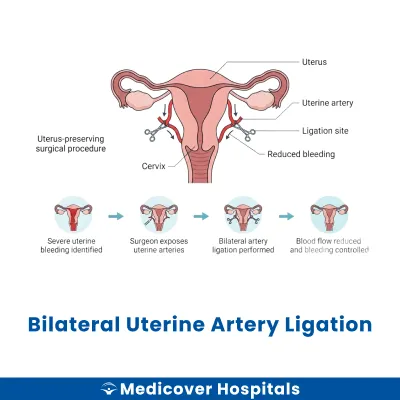
Bilateral Uterine Artery Ligation is a surgical procedure involving the ligation (tying off) of the uterine arteries. These arteries supply blood to the uterus (womb). The procedure aims to reduce blood flow to the uterus, helping manage conditions like severe postpartum haemorrhage (excessive bleeding after childbirth).
This surgery is often needed to control heavy bleeding that does not respond to medication. Conditions like uterine fibroids or adenomyosis may lead to this procedure. If left untreated, these conditions can cause severe blood loss and complications. Modern surgical approaches for Bilateral Uterine Artery Ligation include laparoscopic and hysteroscopic techniques. These methods are minimally invasive, promoting quicker recovery.
Bilateral Uterine Artery Ligation Doctors Near You
Find experienced gynecologists for bilateral uterine artery ligation at Medicover Hospitals across India. Choose your city and book a consultation to discuss your treatment options today.
Why Choose Medicover Hospitals for Bilateral Uterine Artery Ligation?
Get a second opinion from trusted experts and makeconfident, informed decisions.
 Get Second Opinion
Complete Guide To Bilateral Uterine Artery Ligation
Everything you need to know about the procedure, preparation, and recovery
Bilateral Uterine Artery Ligation Surgery Indications
Bilateral Uterine Artery Ligation is recommended by gynecologists when other treatments fail to manage certain uterine conditions effectively. This procedure helps control symptoms and improve quality of life.
Severe Postpartum Hemorrhage
Patients may experience heavy bleeding after childbirth, leading to dizziness and weakness. Doctors find excessive blood loss despite medication and uterine massage. When these measures do not control bleeding, surgery becomes necessary.
Fibroid-Related Heavy Menstrual Bleeding
Women may report prolonged and heavy periods, causing fatigue and anemia. Imaging reveals large or multiple fibroids. When medication and other non-surgical options do not relieve symptoms, this procedure is considered.
Uterine Arteriovenous Malformation
Patients might suffer from irregular bleeding and pelvic pain. Imaging studies show abnormal blood vessel connections in the uterus. Surgery is advised when embolization or other treatments fail to manage the condition.
Placenta Accreta
During pregnancy, patients may experience abnormal bleeding. Ultrasound or MRI confirms the placenta is deeply attached to the uterine wall. When conservative management is ineffective, surgical intervention is required.
Uterine Atony
After delivery, patients might have a soft uterus and continuous bleeding. Clinical examination shows the uterus is not contracting properly. When medications and manual techniques do not resolve the issue, surgery is indicated.
How to Prepare for Bilateral Uterine Artery Ligation?
Proper preparation for Bilateral Uterine Artery Ligation is crucial to ensure a smooth procedure and recovery. Following the guidelines helps minimize risks and enhances the effectiveness of the surgery.
- Medication Review: Stop NSAIDs, anticoagulants, and herbal supplements 7 days before surgery.
- Fasting: Fast for at least 8 hours before the procedure due to general anaesthesia.
- Pre-Surgery Tests: Complete all recommended blood tests and imaging studies as advised by your doctor.
- Clothing: Wear loose, comfortable clothing on the day of the surgery for ease and comfort.
- Transportation: Arrange for someone to drive you home post-surgery, as you may feel drowsy.
- Medication List: Bring a list of current medications with dosages for hospital records.
- Pelvic Floor Exercises: Practice pelvic floor exercises if advised by your healthcare provider.
- Hygiene: Follow any specific hygiene instructions given by your doctor before the procedure.
Bilateral Uterine Artery Ligation Surgery (Step-by-Step)
Overview: This procedure is performed by gynecologists to control heavy menstrual bleeding or postpartum hemorrhage. It typically lasts 1-2 hours and is done under general anaesthesia.
- Preparation: The patient is positioned on the operating table. General anaesthesia is administered to ensure comfort and pain-free surgery.
- Incision: A small incision, about 1-2 cm, is made in the abdomen. This allows access to the pelvic area.
- Insertion of Instruments: A laparoscope, a thin tube with a camera, is inserted through the incision. This provides a clear view of the uterus and surrounding structures.
- Identification of Arteries: The uterine arteries are located using the laparoscope. Careful examination ensures precise identification.
- Ligation: Bipolar cautery is used to ligate the uterine arteries. This involves sealing the arteries to prevent blood flow, reducing bleeding.
- Closure: The instruments are removed, and the incision is closed with sutures or surgical glue. The patient is then moved to the recovery area.
- Recovery: The patient is monitored as they wake from anaesthesia. Pain management and post-operative care instructions are provided.
Who Performs Bilateral Uterine Artery Ligation Surgery?
This surgery is performed by experienced gynecologists. They are trained in minimally invasive techniques and use specialized instruments like the laparoscope and bipolar cautery to ensure effective results.
Recovery After Bilateral Uterine Artery Ligation Surgery
Recovery from bilateral uterine artery ligation surgery involves gradual healing and resumption of daily activities. Patients can expect some discomfort initially, but it generally improves over time. Following the doctor's advice is crucial for a smooth recovery.
Day 1-3:
- Rest is essential. Avoid strenuous activities.
- Stick to a light diet. Include soft foods like curd, dal-rice, and soups.
- Take prescribed medications for pain and inflammation.
Day 4-7:
- Gradually increase light activities as tolerated.
- Continue with easy-to-digest foods like khichdi and moong dal.
- Monitor for any unusual symptoms and maintain hydration.
Day 8-14:
- Most patients can resume work or school, depending on comfort.
- Engage in mild exercises like walking, but avoid heavy lifting.
- Maintain a balanced diet to support recovery.
Phase 3 (Week 3-4):
- Resume normal activities gradually.
- Introduce more variety in diet, ensuring nutritional balance.
- Follow up with your doctor to assess recovery progress.
When to Seek Urgent Help
- Severe abdominal pain or swelling.
- Heavy bleeding or unusual discharge.
- Fever or signs of infection.
- Difficulty urinating or severe nausea.
If any of these symptoms occur, contact your healthcare provider immediately.
Benefits of Bilateral Uterine Artery Ligation Surgery
Bilateral Uterine Artery Ligation is a surgical procedure aimed at addressing certain uterine conditions. It offers several benefits for patients.
- Reduced Bleeding: This procedure helps in significantly reducing uterine bleeding.
- Preservation of Uterus: Unlike a hysterectomy, this surgery preserves the uterus.
- Fertility Retention: It may allow women to retain their fertility, unlike more invasive procedures.
- Minimally Invasive: Often performed laparoscopically, leading to quicker recovery.
Risks and Complications of Bilateral Uterine Artery Ligation Surgery
While generally safe, Bilateral Uterine Artery Ligation carries some risks and potential complications. Patients should be aware of these before undergoing the procedure.
- Common: Post-operative pain and discomfort are expected.
- Common: Risk of infection at the surgical site.
- Rare: Potential for injury to surrounding organs.
- Rare: Possibility of blood clots forming post-surgery.
- Rare: Unintended impact on future fertility.
Cost of Bilateral Uterine Artery Ligation Surgery
The cost of Bilateral Uterine Artery Ligation Surgery at Medicover Hospitals ranges from Rs. 67,500 to Rs. 216,000. Prices vary based on the ward category chosen. We offer transparent pricing and support for insurance and TPA, including CGHS, ESI, and major TPAs. Cashless facilities are available for your convenience. Please contact the hospital for the latest insurance panel details as these may change periodically.
Frequently Asked Questions
1. How much does Bilateral Uterine Artery Ligation surgery cost at Medicover Hospitals?
The cost ranges from Rs. 67,500 to Rs. 216,000 across Medicover Hospitals, depending on the type of room and care required.
2. Is Bilateral Uterine Artery Ligation surgery covered under health insurance at Medicover?
Yes, it is covered by CGHS, ESI, and major TPAs with cashless options. Please contact the hospital for current panel details.
3. Will I experience changes in menstrual cycles?
Bilateral Uterine Artery Ligation may lead to changes in menstrual flow or cycle. It is important to discuss these potential changes with your doctor.
4. Can I conceive after Bilateral Uterine Artery Ligation?
This procedure may affect fertility, making conception difficult. Consult your doctor about fertility options before undergoing the surgery.
5. What is the recovery period for Bilateral Uterine Artery Ligation?
Recovery typically takes a few weeks, with most women resuming normal activities in 2-4 weeks. Follow your doctor's advice for a smooth recovery.
6. Are there any dietary restrictions post-surgery?
Post-surgery, a light diet including curd, dal-rice, and khichdi is recommended. Avoid spicy and heavy foods for a few weeks.
7. What complications can arise from Bilateral Uterine Artery Ligation?
Potential complications include pelvic pain and changes in menstrual patterns. Discuss these risks with your healthcare provider.


