 Call
Call Patient Reports
Bilateral Total Knee Replacement Surgery Hospital with Advanced Ortho Care
Bilateral total knee replacement at Medicover Hospitals is performed using advanced robotic techniques by experienced orthopaedic surgeons with qualifications like MS and DNB. This approach ensures smaller incisions and reduced blood loss, leading to a shorter hospital stay for patients across India.
Expert Surgeons
Yearly Surgeries
Patient Satisfaction
What is Bilateral Total Knee Replacement?
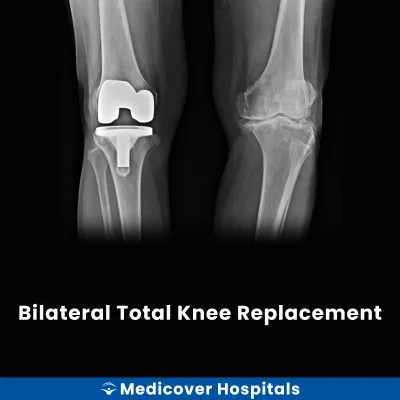
Bilateral total knee replacement is a surgical procedure involving both knees. It replaces damaged or worn-out knee joints (articulations between the thigh bone and shin bone) with artificial implants. This procedure is often recommended for patients with severe arthritis affecting both knees, providing relief from pain and improving mobility.
This surgery is necessary when conditions like osteoarthritis or rheumatoid arthritis cause significant pain and disability. If untreated, these conditions can lead to decreased mobility and quality of life. Modern surgical approaches for bilateral total knee replacement include minimally invasive techniques and computer-assisted surgery. These methods aim to enhance precision and recovery. Always consult with a healthcare professional for the most suitable treatment options.
Bilateral Total Knee Replacement Doctors Near You
Discover skilled orthopedics for bilateral total knee replacement at Medicover Hospitals across India. Choose your city and book a consultation to explore effective treatment options tailored for you.
Why Choose Medicover Hospitals for Bilateral Total Knee Replacement?
Get a second opinion from trusted experts and makeconfident, informed decisions.
 Get Second Opinion
Complete Guide To Bilateral Total Knee Replacement
Everything you need to know about the procedure, preparation, and recovery
Bilateral total knee replacement Surgery Indications
Doctors recommend bilateral total knee replacement when both knees are severely affected by conditions that limit mobility and cause significant pain. This procedure is considered when conservative treatments no longer provide relief.
Severe Osteoarthritis
Patients experience chronic knee pain, stiffness, and swelling, which worsen with activity. X-rays show joint space narrowing and bone spurs. When medications and physical therapy fail, surgery is advised.
Rheumatoid Arthritis
Patients suffer from joint pain, swelling, and deformity in both knees. Blood tests reveal elevated inflammatory markers. Surgery is considered when disease-modifying drugs and lifestyle changes are ineffective.
Post-Traumatic Arthritis
Following a knee injury, patients may have persistent pain and instability. Imaging shows joint damage and cartilage loss. Surgery is recommended when rehabilitation and pain management do not restore function.
Knee Deformities
Patients present with bow-legged or knock-kneed appearance, causing pain and difficulty walking. Physical examination and imaging confirm alignment issues. Surgery is necessary when braces and exercises fail to correct the deformity.
Failed Previous Knee Surgery
Patients report ongoing pain and limited movement after prior knee surgeries. Imaging may show implant failure or joint degeneration. Bilateral replacement is considered when revision surgeries are unsuccessful.
How to Prepare for Bilateral total knee replacement?
Proper preparation for bilateral total knee replacement can enhance recovery and reduce complications. Follow these steps to ensure a smooth surgical experience.
- Medication Review: Stop NSAIDs, anticoagulants, and herbal supplements as advised by your doctor to reduce bleeding risk.
- Fasting: Do not eat or drink anything for at least 8 hours before the surgery to prepare for anaesthesia.
- Pre-surgery Exercises: Perform recommended exercises to strengthen muscles around the knee for better recovery.
- Clothing: Wear loose, comfortable clothing on the day of surgery to accommodate bandages and swelling.
- Transportation: Arrange for someone to drive you home post-surgery as you will not be able to drive yourself.
- Medication List: Bring a list of all medications with dosages to inform the medical team of your current treatments.
- Home Preparation: Set up a recovery area at home with essentials within easy reach to avoid unnecessary movement.
- Support System: Arrange for someone to assist you at home during the initial recovery period.
Bilateral total knee replacement Surgery (Step-by-Step)
Bilateral total knee replacement is performed by orthopaedic surgeons. The surgery typically lasts 2-3 hours. It is usually done under general or regional anaesthesia.
- Preparation: The patient is positioned on the operating table. Anaesthesia is administered to ensure comfort and pain relief during the procedure.
- Incision: The surgeon makes a 6-10 inch incision over each knee to access the joint. The skin and underlying tissues are carefully moved aside.
- Joint Exposure: Using surgical instruments like retractors and curettes, the surgeon exposes the knee joint by moving the kneecap aside and cutting away damaged bone and cartilage.
- Implant Placement: The damaged surfaces of the knee joint are replaced with metal and plastic components. These implants are positioned using a harmonic scalpel for precision.
- Alignment and Testing: The surgeon checks the alignment and movement of the new joint. Adjustments are made if necessary to ensure proper function.
- Closure: The incisions are closed with sutures or staples. A sterile bandage is applied to protect the area and promote healing.
- Recovery: The patient is moved to a recovery area. They are monitored as the anaesthesia wears off. Pain management and initial physiotherapy begin soon after.
Who Performs Bilateral total knee replacement Surgery?
Bilateral total knee replacement is performed by orthopaedic surgeons. These specialists are trained in joint surgeries and have expertise in using surgical instruments for precise implant placement and joint alignment.
Recovery After Bilateral Total Knee Replacement Surgery
Recovery from bilateral total knee replacement surgery involves a gradual return to normal activities. It requires patience and adherence to your doctor's advice. Expect some discomfort and swelling initially, but these will improve over time.
Day 1-3:
- Hospital stay for monitoring. Pain management and physiotherapy begin.
- Start with liquid diet, progressing to soft foods like soups and khichdi.
- Begin gentle leg movements and breathing exercises.
Day 4-7:
- Continue physiotherapy to improve mobility.
- Introduce light Indian meals such as dal-rice and moong dal.
- Use a walker or crutches for support while walking short distances.
Day 8-14:
- Gradual increase in walking and exercises as per physiotherapist's guidance.
- Include curd in your diet for calcium and protein.
- Monitor for any unusual pain or swelling.
Phase 3-6 Weeks:
- Transition to walking without aids as strength improves.
- Resume light household activities. Avoid bending or heavy lifting.
- Return to work may be possible if it involves minimal physical activity.
Phase 6-12 Weeks:
- Continue strengthening exercises. Aim for full range of motion.
- Gradual return to normal diet. Maintain a balanced intake.
- Most daily activities can be resumed, but avoid high-impact sports.
When to Seek Urgent Help:
- Severe pain or swelling that doesn't improve.
- Fever or chills indicating possible infection.
- Sudden shortness of breath or chest pain.
Benefits of Bilateral total knee replacement Surgery
Bilateral total knee replacement surgery can significantly improve quality of life for those with severe knee arthritis or damage.
- Simultaneous Recovery: Recover from both knee surgeries at the same time, reducing overall downtime.
- Improved Mobility: Experience enhanced movement and flexibility in both knees.
- Pain Relief: Significant reduction in knee pain, allowing for a more active lifestyle.
- Cost Efficiency: Potentially lower costs compared to two separate surgeries.
Risks and Complications of Bilateral total knee replacement Surgery
While bilateral total knee replacement is generally safe, it comes with potential risks and complications.
- Common: Blood clots may form in the legs, requiring medical attention.
- Common: Infection at the surgical site, which may need further treatment.
- Rare: Nerve damage leading to numbness or weakness.
- Rare: Implant loosening or wear over time, possibly requiring revision surgery.
- Rare: Heart complications, especially in patients with pre-existing conditions.
Cost of Bilateral total knee replacement Surgery
The cost of bilateral total knee replacement surgery at Medicover Hospitals ranges from Rs. 300000 to Rs. 900000, depending on the ward category chosen. The pricing is transparent, and patients can choose from various ward options to suit their needs. We offer support for insurance and TPA, including CGHS, ESI, and major TPAs, with a cashless facility available for a hassle-free experience. Please contact the hospital for the latest insurance panel details as these may change periodically.
Frequently Asked Questions
1. How much does Bilateral total knee replacement surgery cost at Medicover Hospitals?
The cost for Bilateral total knee replacement surgery at Medicover Hospitals ranges from Rs. 300000 to Rs. 900000, depending on the type of care.
2. Is Bilateral total knee replacement surgery covered under health insurance at Medicover?
Yes, it is covered by CGHS, ESI, and major TPAs, offering cashless options. Please contact the hospital for current panel details.
3. Will I need physiotherapy after knee replacement?
Yes, physiotherapy is crucial for recovery after knee replacement. It helps restore mobility and strength in the knees.
4. Can I kneel down after knee replacement surgery?
Kneeling may be uncomfortable after surgery, but it is possible with time. Consult your doctor before attempting to kneel.
5. What foods aid recovery after knee replacement?
Include protein-rich foods like dal, curd, and lean meats. Khichdi and rice can also support healing and energy levels.
6. Will I need a walker after knee replacement?
Yes, a walker is often used initially to aid balance and support. It helps in safe mobility during early recovery.
7. Can knee replacement cause blood clots?
Yes, there's a risk of blood clots post-surgery. Doctors often prescribe medication and exercises to mitigate this risk.
8. How long is recovery from bilateral knee replacement?
Recovery from Bilateral Knee Replacement typically takes about 3 to 6 months for most daily activities, though full recovery may take up to a year. Early physiotherapy and regular exercise play a crucial role in regaining strength and mobility.
9. Is it a good idea to have bilateral knee replacement?
Bilateral knee replacement can be a good option for patients with severe arthritis in both knees, as it treats both sides in a single surgery and reduces overall hospitalization time. However, it may involve a more demanding recovery, so the decision depends on overall health, age, and your surgeon’s recommendation.


