 Call
Call Patient Reports
Best Hospital for Bilateral Percutaneous Nephrolithotomy Surgery
At Medicover Hospitals, our skilled urologists perform Bilateral Percutaneous Nephrolithotomy using advanced endoscopic techniques. With qualifications like MS, DNB, and MCh, our team ensures precise stone removal. This approach often results in shorter hospital stays and reduced blood loss for patients.
Expert Surgeons
Yearly Surgeries
Patient Satisfaction
What is Bilateral Percutaneous Nephrolithotomy?
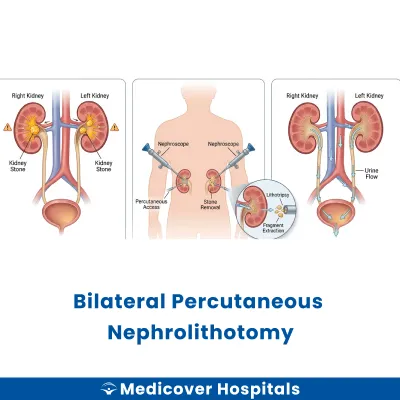
Bilateral Percutaneous Nephrolithotomy is a surgical procedure to remove kidney stones from both kidneys. It involves creating small incisions in the skin to access the kidneys (bean-shaped organs that filter waste from the blood). A nephroscope (a thin tube with a camera) is used to locate and remove the stones.
This surgery is needed when large or multiple stones are present in both kidneys. Conditions like recurrent urinary tract infections or severe pain can lead to this procedure. If untreated, kidney stones can cause infections or kidney damage. Modern approaches for this surgery include minimally invasive techniques that reduce recovery time and complications.
Bilateral Percutaneous Nephrolithotomy Doctors Near You
Discover skilled urologists for bilateral percutaneous nephrolithotomy at Medicover Hospitals across India. Choose your city and book a consultation to address your kidney stone concerns effectively.
Why Choose Medicover Hospitals for Bilateral Percutaneous Nephrolithotomy?
Get a second opinion from trusted experts and makeconfident, informed decisions.
 Get Second Opinion
Complete Guide To Bilateral Percutaneous Nephrolithotomy
Everything you need to know about the procedure, preparation, and recovery
Bilateral Percutaneous Nephrolithotomy Surgery Indications
Doctors recommend bilateral percutaneous nephrolithotomy when kidney stones are large, complex, or located in both kidneys. It is often considered when other treatments fail to provide relief or when stones cause significant symptoms.
Large Bilateral Kidney Stones
Patients may experience severe pain in the back or sides, blood in urine, and frequent infections. Imaging tests like CT scans reveal large stones in both kidneys. When medications and less invasive procedures do not work, surgery becomes necessary.
Recurrent Urinary Tract Infections
Frequent urinary tract infections with fever, chills, and painful urination can indicate kidney stones. Doctors find stones blocking urine flow in both kidneys through imaging. If antibiotics and other treatments fail, surgery is advised.
Obstructive Uropathy
Patients may have difficulty urinating, swelling, and flank pain. Ultrasound or CT scans show stones obstructing both kidneys. When obstruction persists despite conservative management, surgery is required.
Staghorn Calculi
Severe pain, hematuria, and infection are common symptoms. Imaging reveals large, branched stones filling the renal pelvis and calyces in both kidneys. When extracorporeal shock wave lithotripsy is ineffective, surgery is needed.
Failed Previous Treatments
Patients may have persistent pain and urinary symptoms despite previous stone removal attempts. Imaging shows residual stones in both kidneys. When other interventions fail, bilateral percutaneous nephrolithotomy is considered.
How to Prepare for Bilateral Percutaneous Nephrolithotomy?
Proper preparation is crucial for a successful Bilateral Percutaneous Nephrolithotomy. It ensures safety and enhances recovery. Follow these steps for optimal readiness.
- Medication Review: Stop NSAIDs, anticoagulants, and herbal supplements as advised by your doctor.
- Fasting: Do not eat or drink anything for at least 8 hours before the procedure.
- Pre-Procedure Tests: Complete all blood tests and imaging studies as scheduled by your healthcare provider.
- Hydration: Drink plenty of fluids the day before the procedure unless instructed otherwise.
- Clothing: Wear loose, comfortable clothing on the day of the surgery.
- Transport: Arrange for someone to drive you home post-procedure.
- Medication List: Bring a list of all medications with dosages to the hospital.
- Smoking and Alcohol: Avoid smoking and alcohol for at least 24 hours before the procedure.
Bilateral Percutaneous Nephrolithotomy Surgery (Step-by-Step)
Bilateral Percutaneous Nephrolithotomy is performed by urinary care experts. It typically lasts 3-4 hours and is done under general anaesthesia.
- Preparation: The patient is positioned on their abdomen. General anaesthesia is administered to ensure comfort and pain-free experience.
- Access Creation: A small incision of about 1-2 cm is made in the back. A trocar is used to access the kidney.
- Guide Wire Insertion: A guide wire is inserted through the incision to reach the kidney stones. This helps in guiding other instruments.
- Nephroscope Insertion: A nephroscope is inserted along the guide wire. This instrument helps the surgeon view and access the stones.
- Stone Fragmentation: Stones are broken down using a lithotripter or laser. The fragments are small enough to be removed easily.
- Stone Removal: A curette or suction device is used to remove stone fragments. The area is checked to ensure all stones are cleared.
- Closure: The instruments are removed, and the incision is closed with sutures or adhesive strips. A small dressing is applied.
Who Performs Bilateral Percutaneous Nephrolithotomy Surgery?
This procedure is performed by urologists. They are specialists in treating conditions related to the urinary tract and male reproductive organs. Their expertise ensures effective management of kidney stones through surgical interventions.
Recovery After Bilateral Percutaneous Nephrolithotomy Surgery
Recovery from Bilateral Percutaneous Nephrolithotomy (PCNL) involves gradual healing and resumption of daily activities. Patients can expect some discomfort and will need to follow specific guidelines to ensure a smooth recovery.
Day 1-3:
- Rest is crucial. Avoid strenuous activities.
- Stay hydrated. Drink plenty of water to help flush out any remaining stone fragments.
- Consume light, easily digestible foods like curd, dal-rice, and soups.
Day 4-7:
- Gradually increase light activities, such as walking, to promote circulation.
- Continue with a balanced diet. Include khichdi and moong dal for protein and energy.
- Monitor the surgical site for any signs of infection.
Day 8-14:
- Most patients can resume work or school, depending on their comfort and doctor's advice.
- Avoid heavy lifting and vigorous exercises until fully cleared by your healthcare provider.
- Maintain a diet rich in fluids and fibre to prevent constipation.
Phase 3: Week 3-4:
- Resume normal activities gradually, but continue to avoid high-impact exercises.
- Follow up with your doctor to ensure proper healing and discuss any concerns.
When to Seek Urgent Help:
- Severe pain not relieved by medication.
- Fever or chills, which may indicate an infection.
- Blood in urine that persists or increases.
- Difficulty urinating or any signs of urinary blockage.
Benefits of Bilateral Percutaneous Nephrolithotomy Surgery
Bilateral Percutaneous Nephrolithotomy (PCNL) is a procedure designed to remove kidney stones from both kidneys simultaneously.
- Simultaneous Treatment: Addresses stones in both kidneys in one procedure, reducing overall recovery time.
- Minimally Invasive: Involves small incisions, leading to less pain and quicker recovery compared to open surgery.
- High Success Rate: Effective in removing large or complex stones that may not be treatable with other methods.
- Reduced Hospital Stay: Patients often experience shorter hospital stays compared to traditional surgeries.
Risks and Complications of Bilateral Percutaneous Nephrolithotomy Surgery
While generally safe, Bilateral PCNL carries certain risks and potential complications.
- Bleeding may occur, sometimes requiring a blood transfusion.
- Infection risk, which may necessitate antibiotics.
- Injury to surrounding organs or tissues.
- Fluid accumulation around the lungs or heart.
- Need for additional procedures if stones are not completely removed.
Cost of Bilateral Percutaneous Nephrolithotomy Surgery
The cost of Bilateral Percutaneous Nephrolithotomy Surgery at Medicover Hospitals ranges from Rs. 73,000 to Rs. 1,34,000. The price varies based on the ward category chosen, ensuring options for different needs and preferences.
Medicover Hospitals offers transparent pricing with support for insurance and TPA, including CGHS, ESI, and major TPAs. Cashless facility is available for a hassle-free experience. Please contact the hospital for the latest insurance panel details as these may change periodically.
Frequently Asked Questions
1. How much does Bilateral Percutaneous Nephrolithotomy surgery cost at Medicover Hospitals?
The cost ranges from Rs. 73,000 to Rs. 1,34,000 across Medicover Hospitals. Prices vary based on room type and care level.
2. Is Bilateral Percutaneous Nephrolithotomy surgery covered under health insurance at Medicover?
Coverage may be available through CGHS, ESI, and major TPAs. Please contact the hospital for current panel details.
3. Will I need a stent after Bilateral PCNL?
Yes, a temporary stent may be placed to ensure proper urine drainage. It is usually removed within a few weeks.
4. Can I experience kidney infection post Bilateral PCNL?
There is a risk of kidney infection after the procedure. It's important to follow your doctor's advice and complete any prescribed antibiotics.
5. Will I have dietary restrictions after Bilateral PCNL?
Post-surgery, a diet of soft foods like curd, dal-rice, and khichdi is recommended. Avoid high-oxalate foods to prevent stone recurrence.
6. How soon can I return to work post Bilateral PCNL?
Most patients can resume work within 2-4 weeks, depending on recovery. Consult your doctor for personalised advice.
7. Can stones reoccur after Bilateral PCNL?
Yes, kidney stones can reoccur after surgery. Regular follow-ups and lifestyle changes, including increased water intake, can help prevent recurrence.


