 Call
Call Patient Reports
Bilateral Myringotomy with Grommet Insertion Surgery by Expert Ent
Bilateral Myringotomy with Grommet Insertion at Medicover Hospitals is an effective procedure performed using advanced endoscopic techniques. Our team of ENT experts, holding qualifications like MS and DNB, ensure precise care. This approach often results in shorter hospital stays and quicker recovery for patients.
Expert Surgeons
Yearly Surgeries
Patient Satisfaction
What is Bilateral Myringotomy With Grommet Insertion?
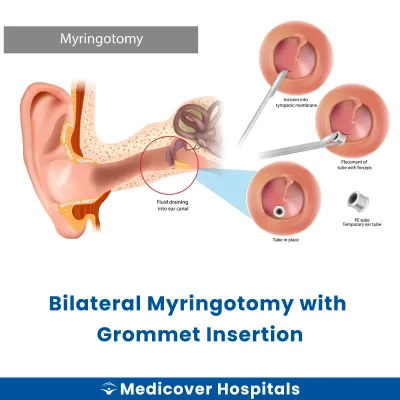
Bilateral Myringotomy with Grommet Insertion is a surgical procedure involving the ears. It involves making a small incision in the eardrum (tympanic membrane) to insert tiny tubes called grommets. These tubes help ventilate the middle ear and prevent fluid build-up. This procedure is often performed on both ears, hence the term 'bilateral'.
This surgery is needed to treat conditions like chronic otitis media with effusion (fluid in the middle ear) or recurrent ear infections. If left untreated, these conditions can lead to hearing loss or speech delays in children. Modern surgical approaches for this procedure include using microscopes for precision and minimal discomfort. This ensures a quicker recovery and reduces the risk of complications.
Bilateral Myringotomy With Grommet Insertion Doctors Near You
Find experienced ENT specialists for bilateral myringotomy with grommet insertion at Medicover Hospitals across India. Choose your city and book a consultation to address your ear health needs.
Why Choose Medicover Hospitals for Bilateral Myringotomy With Grommet Insertion?
Get a second opinion from trusted experts and makeconfident, informed decisions.
 Get Second Opinion
Complete Guide To Bilateral Myringotomy With Grommet Insertion
Everything you need to know about the procedure, preparation, and recovery
Bilateral Myringotomy with Grommet Insertion Surgery Indications
Doctors recommend bilateral myringotomy with grommet insertion when fluid accumulates behind the eardrum, causing hearing issues or infections. This procedure helps drain the fluid and ventilate the middle ear.
Recurrent Ear Infections
Patients experience frequent ear infections with symptoms like ear pain, fever, and irritability. Examination reveals fluid buildup and inflammation in the middle ear. When antibiotics and other treatments fail, surgery is considered.
Persistent Otitis Media with Effusion
Children or adults may have fluid in the middle ear without infection, leading to hearing difficulties. Doctors find fluid behind the eardrum during examination. If the condition persists for months despite medical management, surgery is advised.
Hearing Loss
Patients report reduced hearing ability, often due to fluid in the middle ear. Audiometric tests confirm conductive hearing loss. When hearing does not improve with medication, surgical intervention is recommended.
Speech or Developmental Delays
Children may show delayed speech or developmental milestones due to chronic ear fluid. Hearing tests and developmental assessments indicate the impact. Surgery is suggested when these delays are linked to ear fluid.
Chronic Eustachian Tube Dysfunction
Patients experience ear fullness, popping, or discomfort due to eustachian tube issues. Examination shows retracted eardrums and fluid. When symptoms persist despite treatment, surgery becomes necessary.
How to Prepare for Bilateral Myringotomy with Grommet Insertion?
Proper preparation for bilateral myringotomy with grommet insertion ensures a smooth procedure and recovery. It helps minimise risks and enhances the effectiveness of the surgery.
- Medication Review: Stop NSAIDs, anticoagulants, and herbal supplements as advised by your doctor.
- Fasting Guidelines: Follow a fasting period of 6-8 hours before the procedure, as it involves general anaesthesia.
- Health Check: Inform your doctor about any recent illnesses or infections.
- Clothing: Wear loose, comfortable clothing on the day of the surgery.
- Transportation: Arrange for someone to drive you home post-procedure.
- Medication List: Bring a list of your current medications, including dosages, to the hospital.
- Pre-Surgery Instructions: Follow any specific instructions given by your healthcare provider regarding ear care.
- Child Preparation: If the patient is a child, explain the procedure in simple terms to ease anxiety.
Bilateral Myringotomy with Grommet Insertion Surgery (Step-by-Step)
Overview: This procedure is performed by an ENT specialist. It typically takes about 15 to 30 minutes. General anaesthesia is usually administered to ensure the patient is comfortable and still during the surgery.
- Preparation: The patient is positioned on the operating table. General anaesthesia is administered to ensure they are asleep and pain-free.
- Ear Canal Cleaning: An ear speculum is used to gently open the ear canal. A small suction device or curette is used to clean any earwax or debris.
- Incision: A tiny incision, about 1-2 mm, is made in the eardrum using a myringotomy knife or blade. This allows fluid to drain from the middle ear.
- Fluid Removal: A suction device is used to remove any fluid present in the middle ear. This helps relieve pressure and clear any infection.
- Grommet Insertion: A small tube, known as a grommet, is inserted into the incision. This tube helps ventilate the middle ear and prevent fluid accumulation.
- Completion: The procedure is repeated on the other ear. The patient is then moved to a recovery area to wake up from anaesthesia.
- Recovery: Once awake, the patient is monitored for a short period before being discharged. They may experience mild discomfort or dizziness, which usually subsides quickly.
Who Performs Bilateral Myringotomy with Grommet Insertion Surgery?
This procedure is performed by an ENT Specialist. These doctors are trained to manage conditions related to the ear, including hearing issues and infections. They use precise instruments to ensure the procedure is done safely and effectively.
Recovery After Bilateral Myringotomy with Grommet Insertion Surgery
Recovery from bilateral myringotomy with grommet insertion is usually quick. Most children and adults feel better within a few days. It's important to follow post-operative care instructions for a smooth recovery.
Day 1:
- Rest is crucial. Avoid strenuous activities.
- Expect mild discomfort or ear drainage. This is normal.
- Stick to a soft diet. Include curd, dal-rice, and soups.
Day 2-3:
- Continue resting. Gradually increase light activities.
- Monitor for any unusual symptoms like excessive pain or fever.
- Maintain a balanced diet with khichdi and moong dal.
Day 4-7:
- Most can resume normal activities. Children may return to school.
- Avoid swimming and getting water in the ears.
- Continue with nutritious meals to aid recovery.
Week 2:
- Follow-up appointment to check the grommets.
- Resume regular diet. Ensure hydration and balanced nutrition.
- Gradually return to full activity levels.
When to Seek Urgent Help:
- Persistent or severe ear pain.
- High fever or signs of infection.
- Excessive or foul-smelling ear discharge.
- Hearing loss or dizziness.
Benefits of Bilateral Myringotomy with Grommet Insertion Surgery
This procedure can significantly improve ear health and hearing, especially in children with recurrent ear infections.
- Improved Hearing: Helps restore hearing by draining fluid from the middle ear.
- Reduced Infections: Lowers the frequency of ear infections by allowing air to enter the middle ear.
- Pain Relief: Alleviates ear pain associated with fluid build-up.
- Speech Development: Supports better speech and language development in children by improving hearing.
Risks and Complications of Bilateral Myringotomy with Grommet Insertion Surgery
While generally safe, this surgery carries some risks, as with any medical procedure.
Common Risks
- Temporary ear drainage or discomfort post-surgery.
- Grommets may fall out sooner than expected, requiring replacement.
Rare Risks
- Persistent perforation of the eardrum after grommet falls out.
- Scarring of the eardrum, which may affect hearing.
- Infection in the ear post-surgery, needing further treatment.
Cost of Bilateral Myringotomy with Grommet Insertion Surgery
The cost of Bilateral Myringotomy with Grommet Insertion Surgery at Medicover Hospitals ranges from ₹25,000 to ₹60,000. The price varies depending on the ward category chosen, such as day care, general, or private rooms. We offer transparent pricing to ensure clarity for our patients.
Insurance and TPA support are available, with acceptance of CGHS, ESI, and major TPAs. A cashless facility is also provided for added convenience. Please contact the hospital for the latest insurance panel details as these may change periodically.
Frequently Asked Questions
1. How much does Bilateral Myringotomy with Grommet Insertion surgery cost at Medicover Hospitals?
The cost ranges from ₹25,000 to ₹60,000 across Medicover Hospitals. Prices vary based on room type and other factors.
2. Is Bilateral Myringotomy with Grommet Insertion surgery covered under health insurance at Medicover?
Yes, it may be covered under CGHS, ESI, and major TPAs. Please contact the hospital for current panel details.
3. Will my child experience hearing improvement immediately after Bilateral Myringotomy with Grommet Insertion?
Yes, many children experience improved hearing shortly after the procedure. However, full recovery can take a few days.
4. Can my child swim after Bilateral Myringotomy with Grommet Insertion?
Swimming should be avoided for at least 4-6 weeks post-surgery. Consult your doctor for specific guidelines.
5. What foods should my child avoid after Bilateral Myringotomy with Grommet Insertion?
Avoid spicy and oily foods; opt for soft foods like curd, dal-rice, and khichdi. Ensure a balanced diet for smooth recovery.
6. Is ear drainage normal after Bilateral Myringotomy with Grommet Insertion?
Mild ear drainage is common and usually resolves within a few days. Contact your doctor if it persists or worsens.
7. Will my child need ear protection after Bilateral Myringotomy with Grommet Insertion?
Yes, ear protection is recommended during bathing and exposure to loud noises. Use earplugs or cotton balls as advised by your doctor.


