 Call
Call Patient Reports
Best Hospital for Bilateral Laparoscopic Inguinal Hernioplasty with Expert Care
At Medicover Hospitals, Bilateral Laparoscopic Inguinal Hernioplasty is performed using the laparoscopic approach. Our pediatric surgeons, with qualifications like MS and M.Ch, ensure precise surgical care. This minimally invasive technique results in smaller incisions and a shorter hospital stay for children.
Expert Surgeons
Yearly Surgeries
Patient Satisfaction
What is Bilateral Laparoscopic Inguinal Hernioplasty?
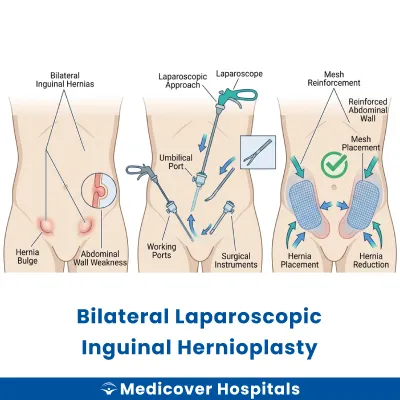
Bilateral Laparoscopic Inguinal Hernioplasty is a minimally invasive surgical procedure. It repairs hernias in the groin area on both sides of the body. The surgery involves the inguinal region, where a hernia occurs when tissue, like part of the intestine, protrudes through a weak spot in the abdominal muscles. This procedure uses small incisions and a camera (laparoscope) to guide the repair.
This surgery is needed when hernias cause pain or complications. Conditions like muscle weakness or strain can lead to hernias. If untreated, hernias may cause bowel obstruction or strangulation. Modern surgical approaches include the Transabdominal Preperitoneal (TAPP) and Totally Extraperitoneal (TEP) techniques. These methods offer quicker recovery and less postoperative pain.
Bilateral Laparoscopic Inguinal Hernioplasty Doctors Near You
Find experienced general surgeon for bilateral laparoscopic inguinal hernioplasty at Medicover Hospitals across India. Choose your city and book a consultation to ensure the best care for your child.
Why Choose Medicover Hospitals for Bilateral Laparoscopic Inguinal Hernioplasty?
Get a second opinion from trusted experts and makeconfident, informed decisions.
 Get Second Opinion
Complete Guide To Bilateral Laparoscopic Inguinal Hernioplasty
Everything you need to know about the procedure, preparation, and recovery
Bilateral Laparoscopic Inguinal Hernioplasty Surgery Indications
Bilateral Laparoscopic Inguinal Hernioplasty is often recommended for children with inguinal hernias on both sides. This minimally invasive procedure is considered when symptoms affect daily activities or when complications are likely.
Persistent Groin Swelling
Children may experience noticeable swelling in the groin area, which may increase with crying or straining. Doctors may find a bulge during a physical examination. If the swelling persists despite conservative measures, surgery is advised.
Pain and Discomfort
Some children report pain or discomfort in the groin, especially during physical activities. Upon examination, tenderness or a palpable mass may be noted. If pain continues and affects the child's quality of life, surgical intervention is necessary.
Recurrent Hernia
In cases where a hernia reappears after previous repair, children may show similar symptoms as before. Imaging may reveal hernia recurrence. Surgery is recommended when recurrence is confirmed and conservative management fails.
Risk of Incarceration
Signs like severe pain, vomiting, or a firm, tender bulge may indicate incarceration. Doctors may detect a non-reducible hernia during examination. Immediate surgery is crucial to prevent complications.
Failure of Non-Surgical Management
If non-surgical methods like watchful waiting do not alleviate symptoms or prevent complications, surgery becomes necessary. Persistent symptoms despite conservative treatment indicate the need for surgical repair.
How to Prepare for Bilateral Laparoscopic Inguinal Hernioplasty?
Proper preparation is crucial for a smooth Bilateral Laparoscopic Inguinal Hernioplasty. It helps minimise risks and ensures a quicker recovery.
- Medication Review: Inform your doctor about all medications. Stop NSAIDs, anticoagulants, and herbal supplements as advised.
- Fasting Guidelines: Do not eat or drink anything for at least 8 hours before the surgery to prepare for anaesthesia.
- Bowel Preparation: Follow any specific instructions given by your surgeon regarding bowel prep, if applicable.
- Clothing: Wear loose, comfortable clothing on the day of the surgery for ease and comfort.
- Transportation: Arrange for someone to drive you home post-surgery, as you may feel drowsy from anaesthesia.
- Medication List: Bring a list of your current medications, including dosages, to the hospital.
- Pre-Surgery Exercises: Engage in any recommended pre-surgery exercises, like pelvic floor exercises, if advised by your doctor.
- Personal Items: Pack essentials like toiletries and a change of clothes for your hospital stay.
Bilateral Laparoscopic Inguinal Hernioplasty Surgery (Step-by-Step)
This procedure is performed by a pediatric surgeon. It typically lasts 1-2 hours and is done under general anaesthesia.
- Preparation: The patient is given general anaesthesia to ensure comfort and sleep throughout the surgery.
- Incision and Access: Small incisions, about 1-2 cm, are made in the abdomen. A trocar is inserted through these incisions to provide access for surgical instruments.
- Insertion of Laparoscope: A laparoscope, a thin tube with a camera, is inserted through one of the incisions. This provides a clear view of the hernia on a monitor.
- Hernia Repair: The surgeon uses instruments like a harmonic scalpel and bipolar cautery to carefully reposition the protruding tissue and repair the hernia.
- Mesh Placement: A synthetic mesh is placed over the weakened area to reinforce it, preventing future hernias.
- Closure: The instruments and laparoscope are removed. The incisions are closed with sutures or surgical glue.
- Recovery: The patient is taken to the recovery room. They may feel groggy as the anaesthesia wears off.
Who Performs Bilateral Laparoscopic Inguinal Hernioplasty Surgery?
This surgery is performed by general surgeons who specialise in minimally invasive procedures. They have expertise in using laparoscopic techniques to treat hernias in children effectively.
Recovery After Bilateral Laparoscopic Inguinal Hernioplasty Surgery
Recovery from bilateral laparoscopic inguinal hernioplasty is generally smooth, with most patients resuming normal activities within a few weeks. It's important to follow your surgeon's instructions to ensure a safe and effective recovery.
Day 1-3:
- Rest is crucial. Avoid strenuous activities.
- Start with a liquid diet and gradually introduce soft foods like curd, dal-rice, and soups.
- Manage pain with prescribed medications.
Day 4-7:
- Begin light walking to promote circulation.
- Continue with a soft diet, including khichdi and moong dal.
- Avoid lifting heavy objects or bending.
Day 8-14:
- Gradually increase activity levels, but avoid strenuous exercise.
- Return to work or school if your job is not physically demanding.
- Introduce more solid foods as tolerated.
Phase 3 (Week 3-4):
- Resume normal diet, but maintain a balanced intake.
- Engage in light exercises, avoiding abdominal strain.
- Most patients can return to full activities by the end of this phase.
When to Seek Urgent Help:
- Severe pain unrelieved by medication.
- Fever or signs of infection at the incision site.
- Swelling or redness around the surgical area.
- Difficulty urinating or any unusual symptoms.
Benefits of Bilateral Laparoscopic Inguinal Hernioplasty Surgery
Bilateral laparoscopic inguinal hernioplasty offers several advantages for patients with hernias on both sides.
- Minimally Invasive: The procedure involves small incisions, leading to less postoperative pain.
- Faster Recovery: Patients often experience quicker recovery times compared to open surgery.
- Reduced Scarring: Smaller incisions result in minimal scarring.
- Simultaneous Repair: Both hernias can be repaired in a single surgery, reducing overall recovery time.
Risks and Complications of Bilateral Laparoscopic Inguinal Hernioplasty Surgery
While generally safe, like any surgery, this procedure carries certain risks and potential complications.
- Pain or discomfort at the incision sites may occur post-surgery.
- There is a risk of infection at the incision sites.
- Injury to surrounding organs or tissues may occur during the procedure.
- Recurrence of the hernia is possible, though less likely with proper technique.
- Complications related to anaesthesia may arise.
What is the Cost of Bilateral Laparoscopic Inguinal Hernioplasty Surgery?
The cost of bilateral laparoscopic inguinal hernioplasty surgery typically ranges from Rs.1,64,000 to Rs. 2,62,000, depending on several factors such as the surgical approach, duration of hospital stay, room category, required diagnostics, and post-operative care.
At Medicover Hospitals, we offer transparent pricing and support for insurance and TPA, including CGHS, ESI, and major TPAs. A cashless facility is also available for your convenience. Please contact the hospital for the latest insurance panel details as these may change periodically.
Frequently Asked Questions
1. How much does Bilateral Laparoscopic Inguinal Hernioplasty surgery cost at Medicover Hospitals?
The cost of bilateral laparoscopic inguinal hernioplasty surgery ranges from Rs. 1,64,000 to Rs. 2,62,
2. Contact Medicover Hospitals for a detailed estimate and personalized pricing. 2. Is Bilateral Laparoscopic Inguinal Hernioplasty surgery covered under health insurance at Medicover?
Many insurance plans, including CGHS and ESI, may cover this surgery. Please contact the hospital for current panel details.
3. Will I need a support belt after hernioplasty?
Wearing a support belt may be recommended post-surgery to aid recovery. Consult your doctor for personalized advice based on your condition.
4. Can I lift weights after inguinal hernioplasty?
Avoid lifting heavy weights for at least 6 weeks post-surgery. Gradually resume physical activities as advised by your healthcare provider.
5. Is there a risk of hernia recurrence after surgery?
While the risk is low, hernia recurrence can occur. Regular follow-ups and adhering to post-operative care can help minimize this risk.
6. What foods should I eat post-surgery?
Post-surgery, a diet of soft foods like curd, dal-rice, and khichdi is recommended. Gradually reintroduce other foods as your recovery progresses.
7. How soon can I return to work after hernioplasty?
Most patients can return to light work within 1-2 weeks. However, this depends on individual recovery and the nature of your job.


